The Rise of India as a Global Chess Superpower A State-by-State Breakdown of the Nations 94 Grandmasters

India has officially cemented its status as a premier global powerhouse in the world of chess, achieving a monumental milestone with the induction of its 94th Grandmaster, Mayank Chakraborty. This achievement is not merely a numerical success but a testament to a decades-long transformation that has seen the nation evolve from a peripheral participant into a dominant force that currently challenges the traditional hegemony of Russia and the United States. The recent surge in talent, characterized by a blend of teenage prodigies and seasoned veterans, reflects a deep-rooted infrastructure and a cultural shift that has embraced chess as a viable and prestigious professional career.
As of late 2024, the distribution of Grandmasters (GMs) across the Indian subcontinent reveals a fascinating geographical concentration of talent, largely influenced by historical legacy, state-sponsored support, and the presence of localized coaching ecosystems. From the coastal cities of Tamil Nadu to the burgeoning hubs in the Northeast, the Indian chess map is more diverse and competitive than ever before.
A Historical Chronology: From a Lone Pioneer to a National Movement
The journey of Indian chess can be divided into distinct eras. The "Pioneer Era" began in 1988 when Viswanathan Anand became the country’s first Grandmaster. For nearly a decade, Anand remained the sole flagbearer of Indian chess on the world stage. The "Growth Era" followed in the 1990s and early 2000s, spearheaded by Dibyendu Barua (India’s second GM, 1991) and Praveen Thipsay (the third GM, 1997). During this period, the All India Chess Federation (AICF) began professionalizing the domestic circuit, leading to a steady increase in the number of players achieving the coveted title.
The "Prodigy Era," which began around 2010, saw a collapse in the average age of Indian Grandmasters. With the advent of powerful chess engines and online platforms, young talents began achieving the GM title in their early teens. This era has culminated in the current "Superpower Era," where India does not just produce Grandmasters but world title contenders. The 2024 Chess Olympiad, where the Indian men’s and women’s teams both secured historic gold medals, serves as the ultimate validation of this trajectory.
Tamil Nadu: The Undisputed Capital of Indian Chess
Tamil Nadu remains the heart of the Indian chess revolution, accounting for a staggering 35 of the nation’s 94 Grandmasters. This concentration of talent is often attributed to the "Anand Effect," as the state capital, Chennai, served as the training ground for Viswanathan Anand. The state government’s proactive stance, including early inclusion of chess in school curricula and significant financial rewards for international achievers, has created a self-sustaining ecosystem.
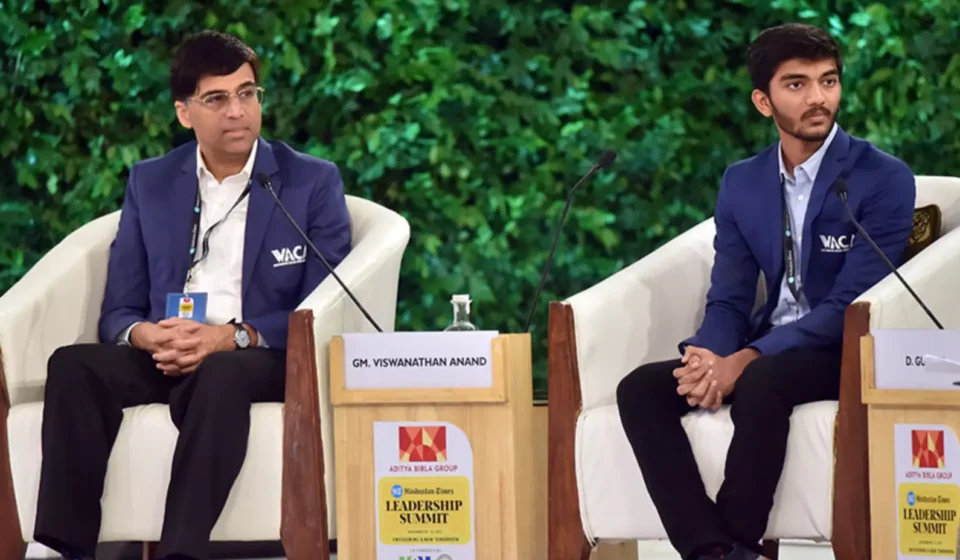
The state’s roster includes some of the most prominent names in modern chess. Dommaraju Gukesh, who recently became the youngest-ever challenger for the World Chess Championship, leads the new guard alongside Rameshbabu Praggnanandhaa. The state also made history when Rameshbabu Vaishali earned her GM title, making her and Praggnanandhaa the first brother-sister duo to both hold the Grandmaster title.
The Full Roster of Tamil Nadu GMs:
Viswanathan Anand, Krishnan Sasikiran, Ramachandran Ramesh, Magesh Chandran Panchanathan, J Deepan Chakkravarthy, Subramaniam Arun Prasad, Sundaranjan Kidambi, RR Laxman, Baskaran Adhiban, SP Sethuraman, MR Venkatesh, Shyam Sundar, Vishnu Prassanna, Aravindh Chitambaram, Karthikeyan Murali, Ashwin Jayram, Priyadarshan Kannappan, Srinath Narayanan, Rameshbabu Praggnanandhaa, P Karthikeyan, NR Visakh, Gukesh Dommaraju, P Iniyan, G Akash, Arjun Kalyan, Bharath Subramaniyam, Pranesh M, Vignesh NR, Rameshbabu Vaishali, Shyaam Nikhil P, Srihari LR, Harikrishnan RA, Rohith Krishna S, Ilamparthi AR, and Raahul VS.
Maharashtra and West Bengal: The Traditional Strongholds
Maharashtra holds the second position with 14 Grandmasters. The state’s success is built upon a robust club culture and the presence of cities like Pune and Mumbai, which serve as major competitive hubs. Players like Vidit Gujrathi, a mainstay in the world’s top 20, and Raunak Sadhwani represent the state’s modern excellence. Furthermore, Maharashtra’s Divya Deshmukh has emerged as one of the brightest talents in women’s chess globally.
GMs from Maharashtra: Praveen Thipsay, Abhijit Kunte, Vidit Gujrathi, Akshyaraj Kore, Swapnil Dhopade, Shardul Gagare, Abhimanyu Puranik, Raunak Sadhwani, Harshit Raja, Sankalp Gupta, Aditya Mittal, Aditya Samant, Divya Deshmukh, and Aarav Dengla.
West Bengal, with 11 Grandmasters, possesses a rich intellectual history with the game. Kolkata was the site of India’s second GM title, earned by Dibyendu Barua. The state continues to produce technically sound players who excel in both domestic and international circuits.
GMs from West Bengal: Dibyendu Barua, Surya Sekhar Ganguly, Sandipan Chanda, Neelotpal Das, Deep Sengupta, Saptarshi Roy Chowdhury, Diptayan Ghosh, Saptarshi Roy, Mitraba Guha, Koustav Chhaterjee, and Sayantan Das.
The Rise of the North and the Telugu States
Delhi has emerged as the primary center for chess in North India, producing 8 Grandmasters. The capital region has benefited from high-profile coaching academies and a high density of International Master (IM) and GM-level tournaments. Parimarjan Negi, who was once the second-youngest GM in history, remains the most famous export from this region.
GMs from Delhi: Parimarjan Negi, Abhijeet Gupta, Sriram Jha, Vaibhav Suri, Sahaj Grover, Aryan Chopra, Prithu Gupta, and Aaryan Varshney.
The Telugu-speaking regions of Andhra Pradesh and Telangana have also made significant contributions. Andhra Pradesh (7 GMs) is home to legendary figures like Pentala Harikrishna and Koneru Humpy. Telangana, while newer as a state entity, has produced Arjun Erigaisi, who recently crossed the elite 2800 ELO rating mark, joining an exclusive club of the world’s greatest players.
GMs from Andhra Pradesh: Pentala Harikrishna, Koneru Humpy, Harika Dronavalli, Lalith Babu, Karthik Venkataraman, Harsha Bharatakoti, and Rahul Srivatsav.
GMs from Telangana: Arjun Erigaisi, Raja Rithvik, and Prraneeth Vuppala.
Expanding the Map: Kerala, Karnataka, and the Emerging Frontiers
In South India, Kerala and Karnataka continue to grow their tallies. Kerala (3 GMs) is notable for producing Nihal Sarin, a speed-chess specialist and one of the most naturally gifted players of his generation. Karnataka (5 GMs) recently celebrated Pranav Venkatesh’s ascent to the top of the junior world rankings.
GMs from Kerala: Geetha Narayan Gopal, Nihal Sarin, and SL Narayanan.
GMs from Karnataka: MS Thejkumar, Stany GA, Girish Koushik, Pranav V, and Pranav Anand.
The most significant recent development, however, is the diversification of the GM list into regions previously underrepresented. Mayank Chakraborty’s achievement is historic as he becomes the first Grandmaster from Assam and the entire Northeast region. Similarly, states like Gujarat, Odisha, and Goa are now consistently producing top-tier talent.
Other Regional GMs:
- Gujarat: Tejas Bakre, Ankit Rajpara.
- Odisha: Debashish Das, Swayams Mishra.
- Goa: Anurag Mhamal, Leon Luke Mendonca.
- Haryana: Himanshu Sharma.
- Assam: Mayank Chakraborty.
Supporting Data and the "Youth Wave"
The data regarding India’s 94 Grandmasters reveals a startling trend: the age of attainment. While it took India decades to reach its first 10 GMs, the jump from 50 to 94 occurred in less than seven years. This "youth wave" is supported by the fact that India currently has more teenagers in the FIDE Top 100 than any other nation.
Official responses from the All India Chess Federation emphasize a "bottom-up" approach. "Our focus has been on increasing the number of rated tournaments at the district level," an AICF official noted during a recent briefing. "By providing young players with opportunities to earn ELO points and GM norms within India, we have reduced the financial burden of traveling to Europe for titles."
The impact of corporate sponsorship cannot be understated. Organizations like the Tata Group and various Public Sector Undertakings (PSUs) have provided employment and stipends to players, allowing them to focus entirely on their craft.
Broader Implications: Chess as a National Identity
The transformation of India into a chess superpower has significant socio-economic and cultural implications. Firstly, it has shifted the narrative of Indian sports beyond cricket. The global success of players like Gukesh and Praggnanandhaa has made them household names, inspiring a new generation of parents to enroll their children in chess academies for cognitive development and career prospects.
Secondly, the rise of Indian chess reflects the nation’s technological proficiency. Indian players were among the first to fully integrate high-level AI analysis into their training regimens, a factor that has leveled the playing field against countries with longer chess traditions.
As India approaches the century mark of 100 Grandmasters, the focus is shifting from quantity to quality. The goal is no longer just to produce GMs, but to bring the World Championship crown back to India. With Gukesh set to compete for the title and the national teams reigning supreme at the Olympiad, the "Indian Era" of chess is not just a possibility—it is the current reality of the royal game.