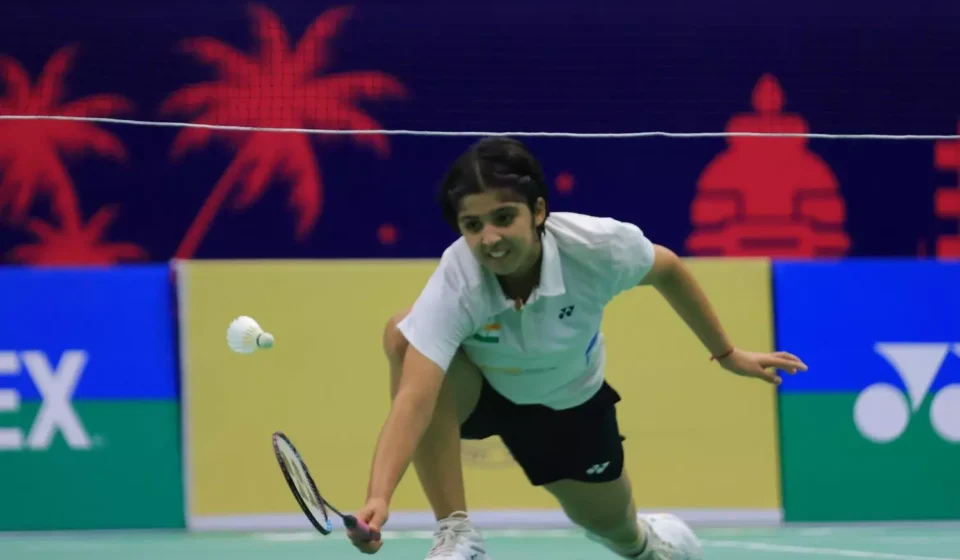
Indian Campaign at the 2026 Orleans Masters Concludes as Tanvi Sharma and Isharani Baruah Exit in Semi-Finals

The Indian challenge at the 2026 Orleans Masters Super 300 came to an abrupt conclusion on Saturday at the Palais des Sports, as both Tanvi Sharma and Isharani Baruah faltered in their respective semi-final encounters. While the tournament had served as a promising showcase for India’s burgeoning talent in the women’s singles category, the penultimate stage proved a bridge too far against world-class opposition. Tanvi Sharma was defeated in straight games by the seasoned Japanese veteran and former world champion Nozomi Okuhara, while Isharani Baruah succumbed to a narrow defeat against Thailand’s rising star, Pitchamon Opatniputh, in a match characterized by grueling rallies and physical exhaustion.
The exits of Sharma and Baruah mark the end of India’s podium aspirations in the French city, leaving the national contingent to reflect on a week of significant growth tempered by the harsh realities of top-tier international competition. As the BWF World Tour continues its European leg, the performances in Orleans provide a critical barometer for the health of Indian badminton’s developmental pipeline, particularly in the post-Olympic cycle of 2026.
Okuhara’s Clinical Masterclass Against Tanvi Sharma
In the first semi-final of the day involving an Indian shuttler, the teenage sensation Tanvi Sharma faced the daunting task of overcoming Nozomi Okuhara. The Japanese stalwart, a former World No. 1 and 2017 World Champion, demonstrated that despite the advancing years of her career, her tactical acumen and defensive resilience remain world-class. Sharma, who had entered the match on the back of several high-intensity victories in the earlier rounds, found herself unable to breach the "Great Wall" of Japanese defense.
The match, which lasted only 35 minutes, saw Okuhara take control from the opening serve. The first game was a one-sided affair, with Okuhara utilizing her signature relentless retrieval skills to force Sharma into making premature attacking decisions. Sharma’s attempts to find the corners were met with precise lifts and deceptive net play, leading to a lopsided 21-9 scoreline in favor of the Japanese veteran.
In the second game, Sharma showed flashes of the talent that has seen her rise through the national rankings. She managed to sustain longer rallies and found success with her cross-court smashes, keeping the score competitive in the early exchanges. However, Okuhara’s experience became the deciding factor during the mid-game interval. Leading 11-8, Okuhara tightened her grip on the match, varying the pace of the shuttle to disrupt Sharma’s rhythm. Despite a spirited effort to close the gap at 16-18, Sharma committed three consecutive unforced errors, allowing Okuhara to seal the match 21-16 and secure her place in the final.
Baruah’s Heartbreak in a High-Stakes Thriller
The second semi-final featured Isharani Baruah against Thailand’s 19-year-old sensation, Pitchamon Opatniputh. Unlike the tactical dismantling seen in the Sharma-Okuhara match, this contest was a physical battle of attrition that lasted 52 minutes. Opatniputh, often hailed as the future of Thai badminton and a former World Junior Champion, brought a combination of height, reach, and deceptive wristwork to the court.
The opening game saw Baruah struggle to adapt to Opatniputh’s steep angles. The Thai player raced to an early lead, utilizing her superior reach to cut off Baruah’s clears. The Indian shuttler appeared sluggish in her lateral movement, dropping the first game 12-21.
However, the second game witnessed a remarkable transformation. Baruah, showing immense grit, began to engage Opatniputh in extended rallies, some exceeding 30 shots. By forcing the Thai player into the back corners and following up with tight net shots, Baruah turned the tide. The Indian held multiple game points at 20-18 and again at 21-20, hovering on the verge of forcing a decider.
Ultimately, the match was decided by physical conditioning and composure under pressure. As the rallies lengthened, Baruah’s stamina appeared to wane. A series of long-distance exchanges left both players visibly winded, but it was Opatniputh who remained more clinical at the net. A crucial net cord in favor of the Thai player followed by a wide smash from Baruah handed Opatniputh the game 23-21, ending the Indian’s hopes of a comeback.
Tactical Analysis and Technical Deficits
The twin defeats in Orleans highlight several technical areas where the young Indian contingent requires refinement. Analysts observing the matches noted that while both Sharma and Baruah possess high-quality stroke play, the transition from the junior circuit to the senior Super 300 level demands a higher threshold of physical endurance and tactical patience.
Against Okuhara, Sharma struggled with "shot selection under duress." The Japanese player’s ability to return "winning" shots forced Sharma to play an extra two or three strokes in every rally, eventually leading to a breakdown in technique. In senior international badminton, the ability to reset after a failed kill shot is paramount—a skill Okuhara has mastered over a decade of elite competition.
For Isharani Baruah, the primary takeaway is the management of game points. Having held the lead in the second game against Opatniputh, the inability to close out the set points points toward a psychological and physical fatigue. The data from the match indicated that Baruah’s smash velocity dropped by nearly 15% in the final five points of the second game, suggesting that her cardiovascular output was reaching its limit. This "stamina gap" is often the difference between a semi-final finish and a tournament title in the modern, fast-paced game.
Chronology of the 2026 Orleans Masters Campaign
The 2026 edition of the Orleans Masters began with a strong Indian presence, featuring a mix of established names and upcoming youngsters. The tournament is a key fixture in the BWF calendar, often serving as a springboard for players ranked between 30 and 70 in the world to accumulate the points necessary for entry into Super 500 and Super 750 events.
- Round of 32: Both Sharma and Baruah secured comfortable straight-game wins against European opponents, signaling their intent early in the week.
- Round of 16: Sharma pulled off a significant upset by defeating the fourth seed from Denmark, while Baruah showcased her defensive prowess in a three-game marathon against a higher-ranked opponent from Chinese Taipei.
- Quarter-finals: On Friday, Sharma displayed clinical precision to dismiss her opponent in 40 minutes. Baruah, meanwhile, survived a scare in the second game of her quarter-final to win 21-19, 22-20, setting up the semi-final clashes that would eventually conclude the Indian run.
The progression of these two athletes to the final four is, in itself, a testament to the depth of talent currently available in the Indian domestic circuit. However, the step up to face players like Okuhara—who represents the gold standard of consistency—remains a significant hurdle.
Official Perspectives and Future Implications
While official statements from the Badminton Association of India (BAI) usually follow the conclusion of a tournament, coaching staff traveling with the team indicated that the focus remains on the long-term development of these players. The primary objective for the 2026 season has been to provide Sharma and Baruah with maximum exposure to different styles of play—specifically the defensive tenacity of the Japanese school and the deceptive fluidity of the Southeast Asian players.
"Reaching the semi-finals of a Super 300 is a positive result for Tanvi and Isharani," a member of the coaching staff noted anonymously. "But playing against a legend like Okuhara provides a lesson that no amount of training can replicate. It shows Tanvi exactly where the bar is set. For Isharani, the match against Pitchamon was a reminder that at this level, fitness is just as important as technique."
The points earned in Orleans will likely see both players climb in the BWF World Rankings, potentially moving them closer to the top 40. This is crucial for securing direct entries into the larger tournaments in the second half of the year, including the Japan Open and the China Open.
Broader Impact on Indian Women’s Singles
The 2026 Orleans Masters results come at a time when Indian women’s singles is undergoing a generational shift. With the legendary careers of PV Sindhu and Saina Nehwal moving into their final chapters, the pressure to find successors has intensified. The emergence of Sharma and Baruah, alongside others like Anupama Upadhyaya, suggests that the "post-Sindhu" era may be more competitive than previously feared.
However, the gap between the Indian "next gen" and the world’s elite remains visible. Countries like Thailand, Japan, and South Korea continue to produce teenagers who are physically ready for the rigors of the senior tour by age 18. India’s developmental programs are currently being recalibrated to emphasize sports science, nutrition, and endurance training to ensure that Indian shuttlers do not "fade out" during the high-intensity rallies that define the modern game.
The 2026 Orleans Masters will be remembered as a missed opportunity for a title, but more importantly, as a vital learning experience for two of India’s brightest prospects. As Tanvi Sharma and Isharani Baruah return to the training centers in Hyderabad and Bangalore, the focus will undoubtedly be on closing the physical gap that separated them from the final in France. The road to the top of the podium is long, and in Orleans, the Indian duo took another necessary, albeit painful, step forward.