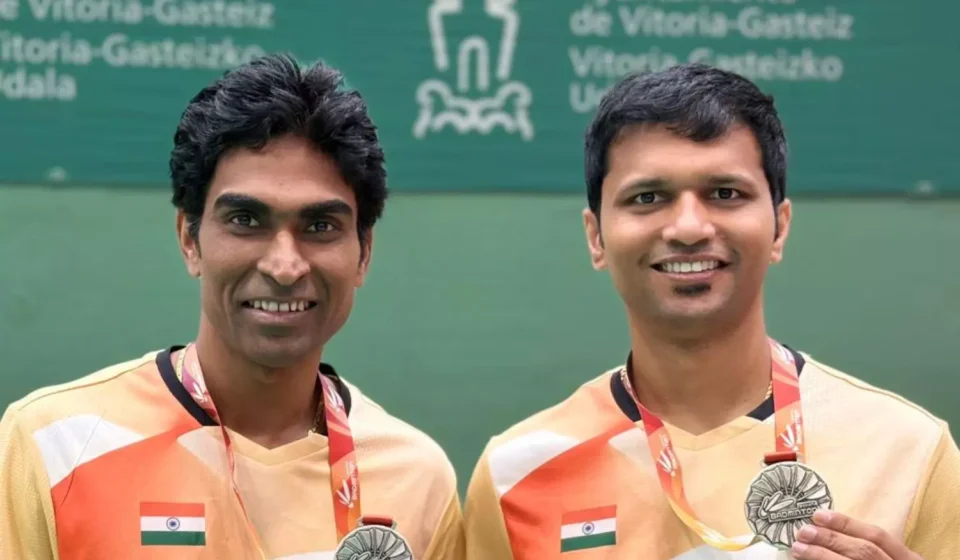
Indian Shuttlers Dominate Spanish Para Badminton International 2026 as Pramod Bhagat and Sukant Kadam Lead Medal Charge

The Spanish Para Badminton International 2026, held in the historic city of Vitoria, concluded with a resounding statement of intent from the Indian contingent, as the nation’s elite para-athletes secured a massive haul of medals, including multiple golds. Leading the expedition was the legendary Pramod Bhagat, whose storied career added more chapters of success with a triple-medal performance. Bhagat, a reigning Paralympic champion, demonstrated his enduring class by clinching two gold medals and one silver, while his compatriot Sukant Kadam complemented the tally with a gold and a silver. The tournament, a crucial fixture on the Badminton World Federation (BWF) Para-Badminton circuit, saw India asserting its status as a global powerhouse in the sport, sweeping several categories and featuring all-Indian finals that highlighted the depth of talent within the national program.
Pramod Bhagat’s Strategic Masterclass in Vitoria
Pramod Bhagat entered the Spanish International as the favorite in the Men’s Singles SL3 category, a classification for athletes with impairment in one or both lower limbs and poor walking/running balance. The final was a high-stakes encounter against fellow Indian Nitesh Kumar, a rivalry that has become one of the most anticipated matchups in the sport. The match lived up to its billing, stretching to three grueling games. Bhagat took the early initiative, utilizing his superior court coverage and deceptive net play to win the opening game 21-17. However, Nitesh Kumar responded with a dominant second game, exploiting gaps in Bhagat’s defense to level the match with a convincing 21-10 scoreline.
In the deciding set, Bhagat’s experience and mental fortitude came to the fore. Despite the physical toll of the previous games, he maintained a high tempo, forcing Nitesh into errors at the net. The decider remained close until the final points, but Bhagat eventually pulled away to secure a 21-18 victory. This win not only earned him the gold but also reinforced his ranking as the world’s premier SL3 player.
Bhagat’s success was not limited to singles. In the Mixed Doubles SL3-SU5 category, he partnered with Manisha Ramdass to face the Brazilian duo of Rogerio Junior Xavier de Oliveira and Edwarda De Oliveira Dias. The Indian pair faced an early setback, dropping the first game 13-21 as the Brazilians found their rhythm early. However, Bhagat and Ramdass orchestrated a tactical comeback in the second game, winning 21-12. The third game was a see-saw battle that kept the Vitoria crowd on the edge of their seats, with the Indians eventually prevailing 21-19 to secure Bhagat’s second gold of the tournament.
Sukant Kadam and the Rise of Indian SL4 Dominance
In the Men’s Singles SL4 category—reserved for athletes with lower limb impairments who have better balance and movement compared to the SL3 class—Sukant Kadam delivered a performance of clinical precision. Facing Korea’s Cho Nadan in the final, Kadam displayed a blend of power and agility. Throughout the match, Kadam dictated the pace, preventing the Korean shuttler from establishing his signature defensive game. Kadam’s ability to transition from defense to attack was the deciding factor as he wrapped up the match in straight games, 21-16, 21-17.
Kadam also featured prominently in the Men’s Doubles SL3-SU5 final, where he teamed up with Pramod Bhagat. In a match that showcased the internal competition within the Indian camp, they faced the duo of Nitesh Kumar and Ruthick Ragupathi. While Kadam and Bhagat fought valiantly, the synergy between Kumar and Ragupathi proved superior on the day. The latter pair took the gold, leaving Kadam and Bhagat with a well-deserved silver medal. For Kadam, the tournament represented a significant step forward in his quest for Paralympic qualification points, proving that he remains a top-tier contender on the international stage.
Comprehensive Medal Tally and Category Breakdown
The Indian success story in Vitoria extended far beyond the headline acts. The breadth of the medal haul suggests a robust developmental system that is producing world-class athletes across all classifications.
In the Women’s Singles SU5 category (standing/upper limb impairment), Manisha Ramdass continued her ascent in the world rankings by securing the gold medal. She faced her compatriot Thulasimathi Murugesan in the final, a match that showcased the elite level of Indian women’s para-badminton. Ramdass’s victory, combined with Murugesan’s silver, ensured that India occupied the top two spots on the podium.
The Men’s Singles SL3 category was almost entirely dominated by India. In addition to Bhagat’s gold and Nitesh Kumar’s silver, Jagdish Dilli secured the bronze medal, completing a rare podium sweep for a single nation in an international event of this magnitude.
The Mixed Doubles and Men’s Doubles categories further padded India’s statistics, with the nation featuring in nearly every final across the standing classes. This collective performance is indicative of the strategic investment made by the Sports Authority of India (SAI) and the Badminton Association of India (BAI) in para-sports over the last five years.
Chronology of the Tournament
The Spanish Para Badminton International 2026 followed a rigorous six-day schedule, beginning with group-stage matches that tested the stamina of the athletes.
- Days 1-2: Group Qualifications: The opening days saw Indian shuttlers navigate through their respective groups with minimal upsets. Pramod Bhagat and Sukant Kadam both finished at the top of their groups, ensuring favorable draws for the knockout stages.
- Day 3: Quarter-Finals: The intensity ramped up as the tournament moved into the elimination rounds. It was during this phase that the Indian doubles pairs began to show their dominance, with three out of four semi-finalists in the SL3-SU5 category representing India.
- Day 4: Semi-Finals: A pivotal day that saw Bhagat survive a scare in the singles semi-final, while Manisha Ramdass comfortably dispatched her international opponents to set up an all-Indian final.
- Day 5: Finals and Podium Ceremonies: The final day was a showcase of Indian badminton. The matches were played in front of a knowledgeable audience in Vitoria, with the Indian national anthem playing multiple times throughout the afternoon.
Athlete Reactions and Official Statements
Following his double-gold performance, Pramod Bhagat emphasized the psychological aspect of the competition. “This tournament was a true test of patience and resilience. The singles final was very intense, and I had to dig deep after losing the second set. I’m happy with the way I stayed composed in crucial moments. Winning two golds here gives me great confidence moving forward,” Bhagat remarked. His comments reflect the increasing level of competition within the Indian circuit, where the margin for error against teammates like Nitesh Kumar is razor-thin.
Sukant Kadam expressed satisfaction with his tactical execution. “I felt in control throughout the match and was able to execute my game plan well. This gold reflects the hard work I’ve been putting in, and I’m motivated to build on this momentum in the upcoming tournaments,” Kadam said. His victory in the SL4 category is seen by analysts as a vital confidence booster ahead of the continental championships later this year.
While official statements from the Paralympic Committee of India (PCI) are expected in the coming days, sources close to the federation suggest that the performance in Vitoria will likely result in increased funding and support for the para-badminton program. The consistency of athletes like Ramdass and Murugesan has particularly impressed the technical directors, who view the women’s SU5 category as a primary medal prospect for the 2028 Los Angeles Paralympics.
Technical Analysis: The Evolution of Para-Badminton
The results at the Spanish International highlight several technical trends in the sport. First, the speed of the game in the SL3 and SL4 categories has increased significantly. Athletes are now employing more aggressive jump smashes and sophisticated cross-court drops, moves that were previously less common in these classifications.
India’s dominance can be attributed to several factors:
- Centralized Training: Most of the top-tier para-shuttlers now train at elite academies, such as the Pullela Gopichand Badminton Academy or specialized para-centers in Lucknow and Bangalore, providing them with world-class coaching and recovery facilities.
- Tournament Exposure: The BWF’s expanded calendar allows players to gain international experience, which is crucial for ranking points and match-day temperament.
- Data-Driven Coaching: The use of video analysis to study opponents, particularly from powerhouses like Indonesia and China, has allowed Indian players to develop specific counter-strategies.
Broader Impact and Future Implications
The success in Vitoria carries significant weight for the 2026 international season. As a Level 1 tournament, the points gathered here will play a decisive role in the world rankings, which determine seeding for the World Championships and major multi-sport events.
Furthermore, the performance of the younger athletes, such as Ruthick Ragupathi and Thulasimathi Murugesan, indicates that the "golden generation" of Bhagat and Kadam has successfully inspired a second wave of talent. This ensures sustainability for the sport in India, preventing a vacuum once the senior legends eventually transition into coaching or retirement.
For the global para-badminton community, India’s performance serves as a benchmark. The sheer volume of medals won in Spain sends a clear message to rivals in England, France, and East Asia: the path to gold in para-badminton increasingly runs through the Indian contingent. As the athletes return home, the focus will shift to the next leg of the international circuit, with the ultimate goal being the continued dominance of the podium on the road to the next Paralympic cycle. The Vitoria campaign will be remembered not just for the medals, but for the clinical manner in which the Indian team dismantled the international field.