The Evolution of Modern Branding: How Identity-Driven Consumption and Creator Partnerships Are Redefining the Global Marketplace

The global consumer landscape is currently undergoing a fundamental transformation, shifting away from a focus on product utility toward a model defined by identity, belonging, and the construction of "brand worlds." In an era where functional differences between products are often marginal, the most successful enterprises are no longer competing on price or features alone. Instead, they are leveraging psychological frameworks and creator-led strategies to offer consumers entry into aspirational lifestyles. This shift marks the end of traditional transactional advertising and the rise of the "brand ecosystem," where every purchase serves as a social signal and a tool for self-actualization.
The Shift from Utility to Identity-Based Consumption
For much of the 20th century, marketing was rooted in the "Reason Why" philosophy—the idea that consumers could be persuaded by logical arguments regarding a product’s quality, durability, or price. However, as the 21st-century marketplace became saturated with high-quality alternatives in every category, the functional value of goods began to commoditize. Today, the choice between a Dyson Airwrap and a standard hair dryer, or a Loewe tank top and a generic equivalent, is rarely based on technical specifications alone.
Market analysts observe that modern consumers, particularly those in the Millennial and Gen Z cohorts, view their purchases as "identity signals." A Dairy Boy sweatshirt or a Canon PowerShot G7 X is not merely a piece of apparel or a camera; it is a ticket to a specific cultural milieu. These products act as shortcuts to the person the consumer aspires to become, providing a tangible connection to a desired aesthetic or social group. This phenomenon explains why "wellness smoothies" at high-end boutiques can command premium prices that defy traditional economic logic; the consumer is not paying for fruit and protein, but for the internal and external validation of belonging to a health-conscious, elite subculture.
The Psychological Underpinnings of the Brand World
To understand why certain brands become irresistible, it is necessary to examine the sociological and psychological theories that govern human behavior. The concept of the "extended self," introduced by psychologist Russell Belk in 1988, posits that humans do not view their possessions as external objects but as integral parts of their own identities. When a brand successfully integrates into a consumer’s "extended self," the brand’s successes and failures are felt personally by the individual.
This is further supported by M. Joseph Sirgy’s self-congruity theory, which suggests that consumers gravitate toward brands that mirror their actual or ideal self-image. For instance, a consumer may purchase Nike products because they view themselves as an athlete (actual self-congruity) or because they wish to adopt the discipline and vigor associated with the "Just Do It" ethos (ideal self-congruity).
Furthermore, Pierre Bourdieu’s 1979 work on "cultural capital" provides a framework for understanding consumption as a form of social currency. In the digital age, knowing which brands are "in" and participating in their specific rituals allows individuals to signal their status and taste to their peers. This is amplified by Aron & Aron’s self-expansion theory, which argues that humans have an innate drive to expand their identities through new experiences and associations. Brands that offer an immersive "world" provide a safe and accessible platform for this self-expansion.
The Chronology of Brand Evolution: From Product to Universe
The transition to "world-building" has occurred in distinct phases over the last several decades:
- The Functional Era (Pre-1960s): Marketing focused on the "Unique Selling Proposition" (USP). Advertisements highlighted durability, cost-savings, and basic utility.
- The Lifestyle Era (1960s–1990s): Led by the "Creative Revolution" on Madison Avenue, brands began associating products with broad lifestyles (e.g., the Marlboro Man, the Pepsi Generation).
- The Community Era (2000s–2010s): The rise of social media allowed brands to foster direct communities. The focus shifted to engagement and "likability."
- The World-Building Era (2020s–Present): Brands now function as multidimensional universes. Through a combination of aesthetics, creator partnerships, and niche cultural moments, they create immersive environments that consumers inhabit rather than just visit.
In this current phase, the "product" is often secondary to the "vibe." A brand like Loewe does not just sell luxury leather goods; it sells a specific, intellectual, and artistic perspective on the world. This perspective is reinforced through art collaborations, specific social media filters, and carefully curated influencer rosters.
The Strategic Role of Creators as Cultural Architects
The rise of the "brand world" has coincided with the professionalization of the creator economy. Modern creators are no longer viewed by sophisticated brands as mere distribution channels or digital billboards. Instead, they are being utilized as co-architects of a brand’s cultural identity.
Data from the influencer marketing sector indicates a massive shift in budget allocation. According to recent industry reports, the global influencer marketing market size is expected to reach approximately $24 billion by the end of 2024. However, the nature of these partnerships is changing. The most effective collaborations are those where the creator "lends" their world to the brand. When a creator features a product within the context of their daily rituals, aesthetic preferences, and community interactions, the product gains a level of authenticity that traditional advertising cannot replicate.
For enterprise-level brands, this represents a significant challenge and opportunity. While large corporations possess the capital and distribution networks, they often lack the "cultural fluency" required to build a world that feels organic. Creators bridge this gap. They provide the human element and the aesthetic "glue" that makes a corporate entity feel like a living, breathing community.
Challenges for Enterprise Brands: The Gap in Cultural Fluency
Despite having significant resources, many enterprise brands struggle to transition from traditional media planning to world-building. Historically, these brands have treated creator partnerships as a line item on a media plan, focusing on reach and frequency rather than resonance and cultural integration.
Industry analysts point out that the brands winning in the current market are those that allow creators to maintain their creative autonomy. When a brand attempts to force a corporate script onto a creator, the "world" collapses because the audience detects a lack of authenticity. The brands that succeed are those that treat creators as strategic partners who understand the nuances of their specific audience’s language, rituals, and aspirations.
Furthermore, enterprise brands often suffer from "performance media" myopia, where every dollar spent must be immediately tied to a direct sale. While measurable performance is essential, world-building requires a long-term investment in cultural relevance. Brands that ignore the "identity" aspect of consumption find themselves competing solely on price—a race to the bottom that erodes profit margins and brand equity over time.
Broader Impact and Market Implications
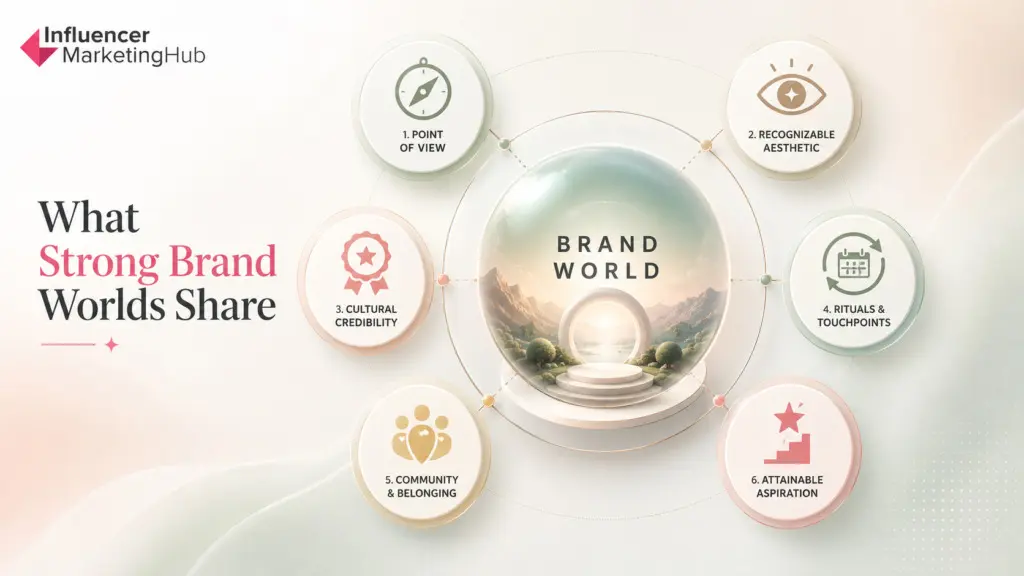
The shift toward brand worlds has profound implications for the future of commerce. As consumers become more discerning, the barrier to entry for new brands has changed. It is no longer enough to have a good product; a brand must have a "soul" or a distinct point of view.
This trend is also driving a move toward "niche" dominance. Rather than trying to appeal to everyone, successful brands are building deep, immersive worlds for specific subcultures. This creates a more fragmented but highly loyal marketplace. For the consumer, this offers a sense of belonging in an increasingly digital and often isolating world.
Moreover, the integration of physical and digital experiences is accelerating. A "brand world" is not confined to an Instagram feed; it extends to pop-up events, physical retail spaces that feel like galleries, and community-led rituals. This holistic approach ensures that the brand remains a constant presence in the consumer’s life, reinforcing their identity at every touchpoint.
Conclusion: The Future of the Brand-Consumer Relationship
The brands that will define the next decade are those that understand they are in the business of identity construction. By leveraging the psychological drivers of belonging and aspiration, and by partnering with creators who act as cultural navigators, these brands are moving beyond the transactional.
The smartest enterprise brands are beginning to realize that they cannot build these worlds in isolation within a boardroom. They must be built "in the wild," through authentic engagement with communities and a deep understanding of the cultural moments that define modern life. As the marketplace continues to evolve, the distinction between "selling a product" and "inviting someone into a world" will become the primary factor that determines market leadership. In this new paradigm, the most valuable asset a brand can possess is not its patent or its supply chain, but its ability to make a consumer feel like they finally belong.