Meta Revolutionizes Social Commerce with Direct Checkout and Enhanced Creator Affiliate Tools at Cannes Lions 2026

At the Cannes Lions International Festival of Creativity 2026, Meta unveiled a comprehensive suite of commerce updates that signal a fundamental shift in how products are discovered and purchased on social media. Nicola Mendelsohn, Meta’s Head of Global Business Group, declared to an audience of industry leaders that the "era of link in bio is finally over," marking the beginning of a more integrated, frictionless shopping experience across Facebook and Instagram. This strategic pivot aims to transform social media from a mere discovery platform into a full-funnel commerce ecosystem where the distance between a creator’s recommendation and a completed transaction is virtually eliminated.
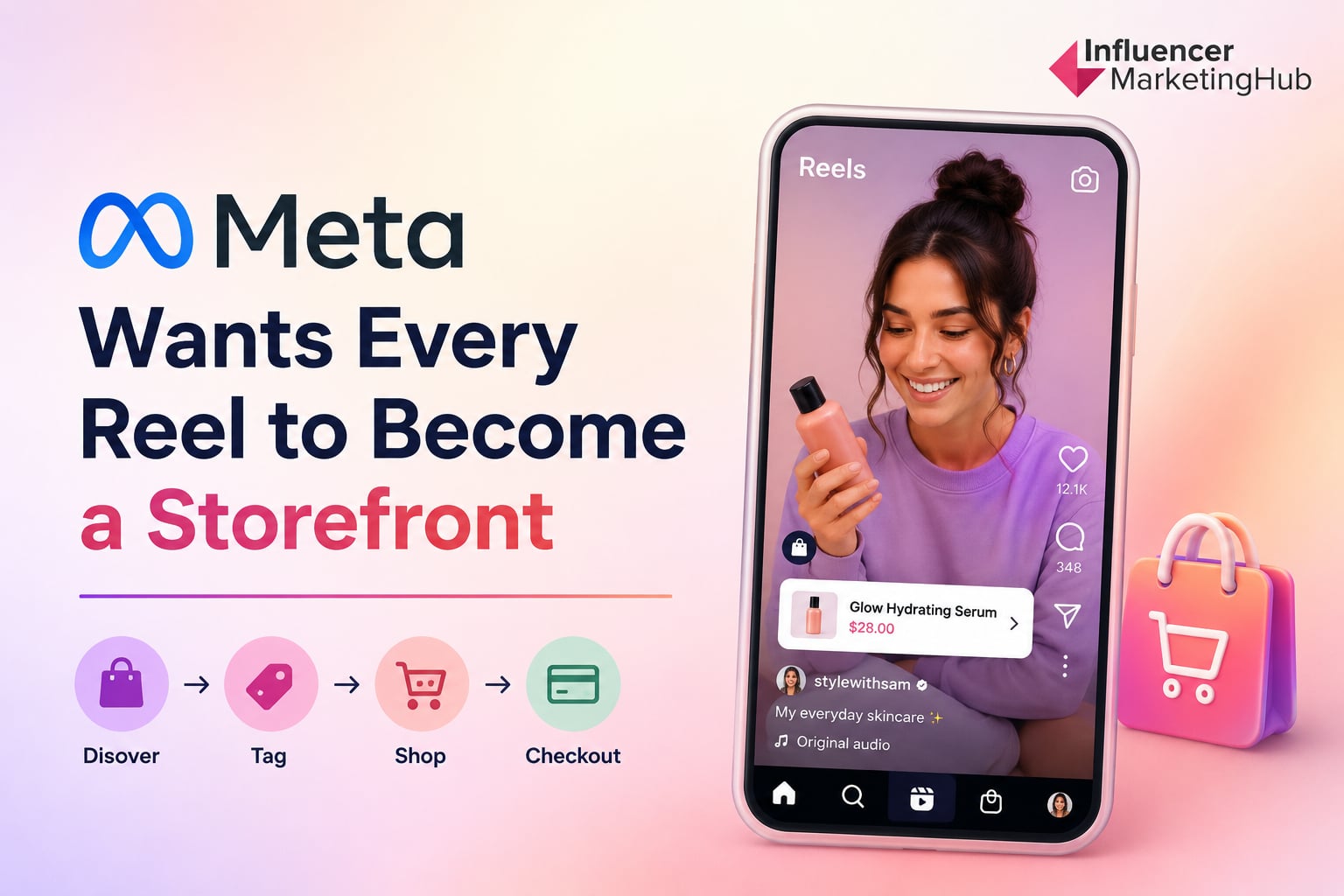
The centerpieces of the announcement are new tools that allow eligible creators in 22 countries to tag products directly from a business’s catalog or embed affiliate links within Instagram Reels and Feed posts. By removing the traditional necessity of navigating to a profile page and clicking an external link, Meta is addressing one of the most significant pain points in digital marketing: consumer drop-off caused by multi-step checkout processes.
The Evolution of the Creator-to-Consumer Pipeline
For years, the "link in bio" has been a staple of the creator economy, serving as a makeshift bridge between social content and e-commerce websites. However, this method has long been criticized for its inherent friction. Data suggests that every additional click in a mobile shopping journey can lead to a significant percentage of potential buyers abandoning their carts. By enabling direct product tagging in Reels, Meta is attempting to capture the "impulse of discovery" the moment it occurs.
Under the new system, a single Reel can feature up to 30 tagged products. This capability is specifically designed to support high-engagement content formats such as "Get Ready With Me" (GRWM) videos, fashion lookbooks, and comprehensive product reviews. When a viewer interacts with a tag, they are presented with product details immediately, allowing them to proceed to checkout without losing their place in the content feed. For creators, this translates to higher conversion rates and more transparent attribution for the sales they drive, while brands benefit from a more direct path to revenue.
Strategic Global Expansion and Strategic Partnerships
Meta’s strategy extends far beyond simple interface updates; it involves a massive expansion of its affiliate infrastructure and payment security. To support creators on a global scale, Meta has formalized partnerships with major regional e-commerce powerhouses, including Flipkart in India, Mercado Libre in Latin America, and Lazada in Southeast Asia. These collaborations allow creators in those regions to earn commissions through localized affiliate programs that are already integrated into the shopping habits of their respective audiences.
Furthermore, Meta is addressing the psychological barriers to social commerce—namely, security concerns. In partnership with Mastercard and Visa, the company introduced new virtual card technology. This feature allows shoppers to complete purchases within the Meta ecosystem without sharing their actual credit card numbers with individual third-party merchants. By providing a layer of tokenized security, Meta hopes to build the consumer trust necessary to move high-value transactions away from traditional browser-based e-commerce and into the social sphere.
The Role of Artificial Intelligence in Ad Delivery
One of the most significant technical shifts mentioned at Cannes Lions involves the backend of Meta’s advertising platform. Starting this summer, Meta will transition to using product catalog data as the "foundational input" for all Sales-focused campaigns. This move represents an evolution of Meta’s Advantage+ AI tools.
In the previous iteration of social advertising, marketers had to manually select specific ad formats and match them with creative assets. Under the new AI-driven model, advertisers provide their entire product catalog and a library of creative assets to the platform. Meta’s machine learning algorithms then dynamically assemble the most relevant shopping experience for each individual user in real-time. For example, if a user frequently engages with video content, the AI might serve them a shoppable Reel featuring a product from the catalog that matches their browsing history. This automation reduces the administrative burden on brands while theoretically increasing the return on ad spend (ROAS) through hyper-personalization.
Chronology of Meta’s Commerce Integration
The path to the 2026 announcements has been a multi-year journey of trial, error, and refinement.
- 2021-2022: The Discovery Phase. Meta focused on "Instagram Shop" tabs and early iterations of Live Shopping, though consumer adoption was initially slow in Western markets compared to Asia.
- 2023-2024: The Shift to Reels. As short-form video became the dominant content format, Meta began prioritizing Reels as the primary vehicle for discovery. The company phased out certain legacy shopping features to focus on "native" experiences.
- 2025: Infrastructure Hardening. Meta invested heavily in its "Advantage+" AI suite and began testing direct checkout integrations with select "closed beta" brands.
- 2026: The Full Ecosystem Launch. The Cannes Lions announcement represents the culmination of these efforts, moving from experimental features to a standardized global commerce infrastructure.
Market Context and Data Insights
The push toward frictionless social commerce is supported by shifting consumer behavior. According to industry research, approximately 27% of beauty and luxury shoppers now report that influencer recommendations are the primary driver of their purchasing decisions. In the fashion and home decor sectors, this influence is even more pronounced among Gen Z and Millennial demographics.
However, the "conversion gap"—the difference between seeing a product and buying it—has remained a challenge. In 2025, social commerce sales were estimated to account for a growing but still minority share of total e-commerce. By removing the "link in bio" barrier, Meta is positioning itself to capture a larger slice of the global e-commerce market, which is projected to continue its upward trajectory through the end of the decade.
Expansion of Live Video Advertising
In addition to the updates for Reels, Meta announced the global expansion of Live Video Ads on Facebook and their official introduction to Instagram. Live shopping has already proven to be a massive industry in markets like China, where it generates hundreds of billions of dollars in annual revenue. By bringing robust advertising tools to Live sessions, Meta is giving brands the ability to "boost" their livestreams to a wider audience, moving beyond just their existing followers.
The updated Live Shopping Tools allow viewers to browse a pinned carousel of products, compare prices, and view specifications without the video stream being interrupted. This "picture-in-picture" shopping experience ensures that the entertainment value of the livestream remains the primary draw while the commerce functionality remains easily accessible.

Implications for Brand Strategy and Content Creation
The shift toward direct product tagging necessitates a change in how brands approach their digital presence. Marketing experts suggest that the quality of a brand’s product catalog data is now just as critical as the quality of their video production. For a shoppable Reel to be effective, the underlying data—including pricing, stock levels, and product descriptions—must be accurate and synced in real-time.
Furthermore, the relationship between brands and creators is expected to become more performance-oriented. With better attribution tools, brands can move away from "flat fee" influencer contracts toward "hybrid models" that include performance-based commissions. This aligns the incentives of the creator with the sales goals of the brand, potentially leading to more authentic and effective product demonstrations.
Official Responses and Industry Outlook
While Meta’s executives are optimistic, industry analysts are watching closely to see how consumers react to the increased "shoppability" of their feeds. Some critics argue that turning every piece of content into a potential ad could lead to user fatigue. However, Meta’s counter-argument is that by using AI to ensure the products are relevant to the user’s interests, the shopping experience becomes a value-add rather than an interruption.
Representatives from the retail sector have largely welcomed the updates. "The ability to close the loop within the app is something we have been asking for since the inception of social commerce," noted one retail executive during a panel at Cannes. "It allows us to treat social media as a genuine storefront rather than just a digital billboard."
As these features roll out across the 22 initial markets, the success of Meta’s "link in bio-free" world will likely depend on the seamlessness of the technical integration. If the checkout process is as fast and secure as promised, the 2026 Cannes Lions announcement may indeed be remembered as the moment the boundary between social media and e-commerce finally disappeared.
Conclusion: A Unified Commerce Vision
Meta’s latest updates represent a holistic attempt to own the entire consumer journey. From the initial moment of discovery in a Reel to the AI-powered recommendation in a Feed post, and finally to the secure, virtual-card-enabled checkout, every step is now contained within a single ecosystem. By empowering creators with affiliate tools and brands with automated AI sales campaigns, Meta is betting that the future of retail is not found on a separate website, but within the palm of the consumer’s hand, integrated directly into the content they consume daily. For the marketing world, the message is clear: the path to purchase is no longer a journey; it is a single tap.