
Analyzing the Shift in Artificial Intelligence Investment from Public Markets to Private Unicorn Valuations and Strategic Acquisitions

The financial landscape surrounding initial public offerings (IPOs) has entered a period of intense scrutiny as market analysts observe a growing disconnect between the high-profile excitement of new stock launches and their subsequent performance on the public exchange. This trend was recently highlighted by the market entry of Space Exploration Technologies Corp. (SPCX) on June 12, which has since seen its share price fluctuate below its initial offering levels, leaving many early public investors in a position of unrealized loss. Financial experts and market historians suggest that this pattern reflects a broader structural change in how technology companies create and distribute wealth, moving away from the traditional public listing model toward a more insular private ecosystem. The current environment, dominated by the rapid acceleration of artificial intelligence (AI), has forced a reevaluation of investment strategies as the most significant value creation increasingly occurs long before a company reaches Wall Street.
The Historical Context of the IPO Market
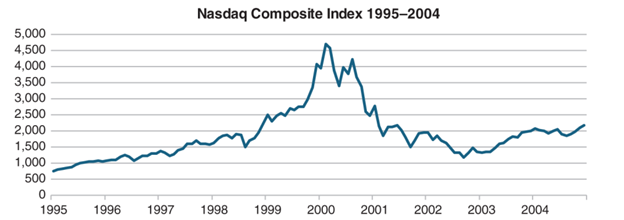
To understand the current volatility in the IPO sector, one must examine the historical precedents set during the late 1990s and early 2000s. During the dot-com bubble, the role of venture capital underwent a fundamental transformation. Originally designed to provide essential funding and mentorship to nascent technology firms that were too high-risk for traditional banking institutions, the venture capital system eventually became a mechanism for rapid exits. As speculative fervor increased, the focus shifted from building sustainable, revenue-generating businesses to rushing companies to the public market to capitalize on investor demand for anything related to the burgeoning internet.
The collapse of this speculative bubble serves as a cautionary tale for modern investors. From its peak in March 2000 to its low in October 2002, the NASDAQ Composite index plummeted by approximately 77.9%. This era was characterized by companies with negligible revenue and no clear path to profitability being awarded multibillion-dollar valuations based solely on "eyeballs" or future potential. When the liquidity dried up and investors began demanding concrete earnings, the market corrected violently. The primary victims of this correction were individual retail investors who purchased shares at the height of the frenzy, while founders and early-stage venture capitalists often managed to secure their returns through the IPO "exit ramp."
The Evolution of the Unicorn Phenomenon
In the decades following the dot-com crash, the trajectory of technology startups has changed significantly. In 2013, venture capitalist Aileen Lee coined the term "unicorn" to describe privately held startup companies valued at $1 billion or more. At the time, such companies were statistical anomalies. However, the modern financial landscape has seen a proliferation of these high-value private entities. According to recent data from Crunchbase, there are now 1,821 unicorn companies globally, representing a staggering combined valuation of approximately $8.8 trillion.

This shift indicates that the private market is no longer a niche segment of the economy but a massive engine of wealth creation that operates independently of public oversight for much longer than in previous cycles. Companies are now able to raise billions of dollars in private funding rounds, hire thousands of employees, and dominate entire industries without ever issuing a single share to the general public. Consequently, by the time a company like SpaceX or a major AI developer decides to go public, a substantial portion of its growth phase has already concluded, and the IPO serves more as a liquidity event for insiders than a growth opportunity for new shareholders.
Staggering Private Valuations in the AI Era
The emergence of generative artificial intelligence has accelerated the growth of private valuations to unprecedented levels. The current leaders in the AI space command valuations that rival or exceed those of long-established members of the S&P 500. For instance, Anthropic, the AI safety and research company behind the Claude chatbot, has reached a post-money valuation of $965 billion. OpenAI, the creator of ChatGPT, follows closely with a valuation of $852 billion. These figures are particularly notable given that these companies remain private, shielded from the daily volatility and quarterly reporting requirements of the public stock market.
Other major players in the private sector continue to expand the boundaries of the "unicorn" definition. ByteDance, the parent company of TikTok, maintains a valuation of $480 billion, while the payments processing giant Stripe is valued at $159 billion. In the autonomous vehicle sector, Waymo has secured a valuation of $126 billion. These valuations are supported by massive infusions of capital from both traditional venture firms and "Big Tech" corporations seeking to secure a foothold in the next generation of computing.
The Strategic Shift: Buying vs. Building Innovation
A critical component of the modern AI boom is the "buy vs. build" dilemma facing technology giants such as Alphabet Inc. (GOOG), Meta Platforms, Inc. (META), and Microsoft Corporation (MSFT). The pace of innovation in machine learning and neural networks is moving so rapidly that even companies with hundreds of billions of dollars in cash reserves cannot always keep up with internal research and development. In many cases, it is more efficient and cost-effective for a large corporation to acquire a smaller, specialized startup that has already solved a specific technical challenge or developed a unique proprietary dataset.
This corporate strategy has profound implications for investors. The traditional goal of identifying the next "Amazon" or "Google" in the public market is being superseded by the need to identify smaller, private, or micro-cap companies that are developing "must-have" technologies for the industry leaders. When a technology giant like Microsoft or Google acquires a smaller firm, the deal often happens at a significant premium, but the majority of that premium is captured by the private investors who backed the company in its early stages.
Expert Analysis of the AI Investment Cycle
Market analysts, including Louis Navellier and Luke Lango, have noted that the AI investment cycle is entering a new, more complex phase. While the initial phase was characterized by a "land grab" for hardware (such as NVIDIA GPUs) and foundational models, the current phase focuses on application, integration, and specialized tools. Navellier, known for his data-driven "Stock Grader" system, emphasizes that while public data like sales growth and institutional buying pressure are vital for evaluating established stocks, they are often lagging indicators in the fast-moving AI sector.
To bridge this information gap, analysts are increasingly looking toward experts with deep roots in technical hubs like Silicon Valley. Luke Lango, a Caltech graduate and technology analyst, argues that the real opportunities lie in the companies that are currently "solving the bottlenecks" of AI. This includes firms working on energy-efficient computing, data labeling, AI security, and specialized software-as-a-service (SaaS) platforms. Lango suggests that the "megadeals" of the near future will likely involve these smaller, often overlooked players being absorbed into the ecosystems of the "Magnificent Seven" tech stocks.
Implications for the Future of Retail Investing
The privatization of high-growth technology companies poses a challenge for the average retail investor. As companies stay private longer, the public market is increasingly populated by mature firms with slower growth profiles or overvalued IPOs that struggle to maintain momentum. This has led to a call for greater transparency and potentially new avenues for individual investors to gain exposure to private markets, though regulatory hurdles remain significant.
On Thursday, July 30, industry experts are expected to convene for "The 2026 AI Megadeal Event" to discuss these shifts in detail. The presentation aims to outline the specific criteria that make a smaller AI company an attractive acquisition target and how the current cycle of corporate spending will dictate the next wave of market winners. The event reflects a growing consensus that the traditional "buy and hold" strategy for new IPOs may no longer be the most effective path to wealth in a market where the most lucrative deals are happening behind closed doors.
As the AI revolution continues to unfold, the distinction between "building a business" and "telling a story" remains the most critical factor for long-term success. While the excitement surrounding new technologies is justified by their potential to transform global productivity, the lessons of the dot-com era suggest that price and valuation still matter. For the modern investor, the challenge is no longer just finding a great company, but finding it at a stage where the value hasn’t already been fully extracted by the private market.