Apple Strategic Acquisitions and the Shift Toward Applied Artificial Intelligence Signal a New Era for Private Market Investment

The landscape of artificial intelligence is undergoing a fundamental transformation, moving from the theoretical "frontier" of massive large language models toward the practical application of specialized technologies. This shift was underscored in early 2024 when Apple Inc. (AAPL) finalized the acquisition of the Israeli startup Q.ai for a reported sum approaching $2 billion. The deal, which remained largely shielded from public view until after its completion, highlights a growing trend among technology giants to secure foundational intellectual property in audio processing, machine learning, and biometric movement analysis. For the broader investment community, the acquisition serves as a case study in the divergence between public market sentiment and private market value creation.
The PrimeSense Legacy and the Genesis of Q.ai
The connection between Apple and the founders of Q.ai dates back more than a decade, rooted in the development of 3D sensing technology. In 2009, Eden Shochat, a prominent Israeli venture capitalist, witnessed an early demonstration from a startup called PrimeSense. The technology utilized infrared sensors to map human movements in real-time, creating a digital skeleton that mirrored the user. While initially met with skepticism regarding its technical feasibility, the technology proved revolutionary.
PrimeSense eventually provided the core hardware and software for Microsoft’s Kinect gaming system, a milestone in consumer-grade motion tracking. However, the strategic value of the technology was truly realized in 2013 when Apple acquired PrimeSense for approximately $350 million. This acquisition is widely credited with providing the technological foundation for FaceID and the TrueDepth camera systems now standard across the iPhone and iPad lineups.
Aviad Maizels, one of the co-founders of PrimeSense, subsequently transitioned to his next venture, Q.ai. Unlike the broad motion-tracking focus of his previous company, Q.ai pivoted toward the nuances of human interaction: audio intelligence, subtle facial micro-movements, and advanced machine learning. When Shochat viewed the prototype for Q.ai, he noted a level of ambition similar to the early days of PrimeSense. His decision to invest early reflected a belief in the founder’s ability to execute on complex, multi-disciplinary engineering challenges. By January 2024, Apple’s second multi-million—and eventually multi-billion—dollar bet on Maizels’ team was confirmed, signaling that the "quiet" acquisition of specialized AI startups remains a cornerstone of Apple’s R&D strategy.
The Great AI Debate: Frontier Development vs. Practical Utility
The Q.ai acquisition comes at a time when the AI industry is embroiled in a debate over the speed of development. On September 12, 2024, Dario Amodei, CEO of Anthropic, published a manifesto calling for a more "deliberate pace" of frontier AI development. Amodei’s concerns, often referred to as an "Oppenheimer moment" for the industry, focus on the potential risks of scaling large-scale models without adequate safety guardrails.
For Wall Street, this call for a slowdown has sparked concerns regarding the growth trajectories of publicly traded AI companies. If the next breakthrough in general intelligence is delayed, investors question whether current valuations—often based on exponential progress—can be sustained. However, a growing cohort of analysts argues that the industry’s next phase of growth will not come from "bigger" models, but from "better" implementation.
While frontier labs like OpenAI and Anthropic focus on the limits of machine intelligence, smaller, private companies are focusing on the "last mile" of AI integration. This involves:
- Reliability: Ensuring AI systems perform consistently in industrial and consumer environments.
- Cost-Efficiency: Reducing the massive compute requirements of AI to make it affordable for small to medium-sized enterprises.
- Specialization: Tailoring models to perform specific tasks, such as defect detection in manufacturing or real-time audio translation in telecommunications.
This shift toward "Applied AI" suggests that even if the development of trillion-parameter models slows down, the economic value generated by existing AI technology is only beginning to be realized.
Private Markets as a Hedge Against Public Volatility
One of the primary advantages of private market investment during a public-market "cooldown" is the insulation from daily sentiment shifts. Publicly traded AI stocks are often subject to extreme volatility based on interest rate fluctuations, quarterly earnings reports from unrelated tech sectors, or geopolitical tensions.
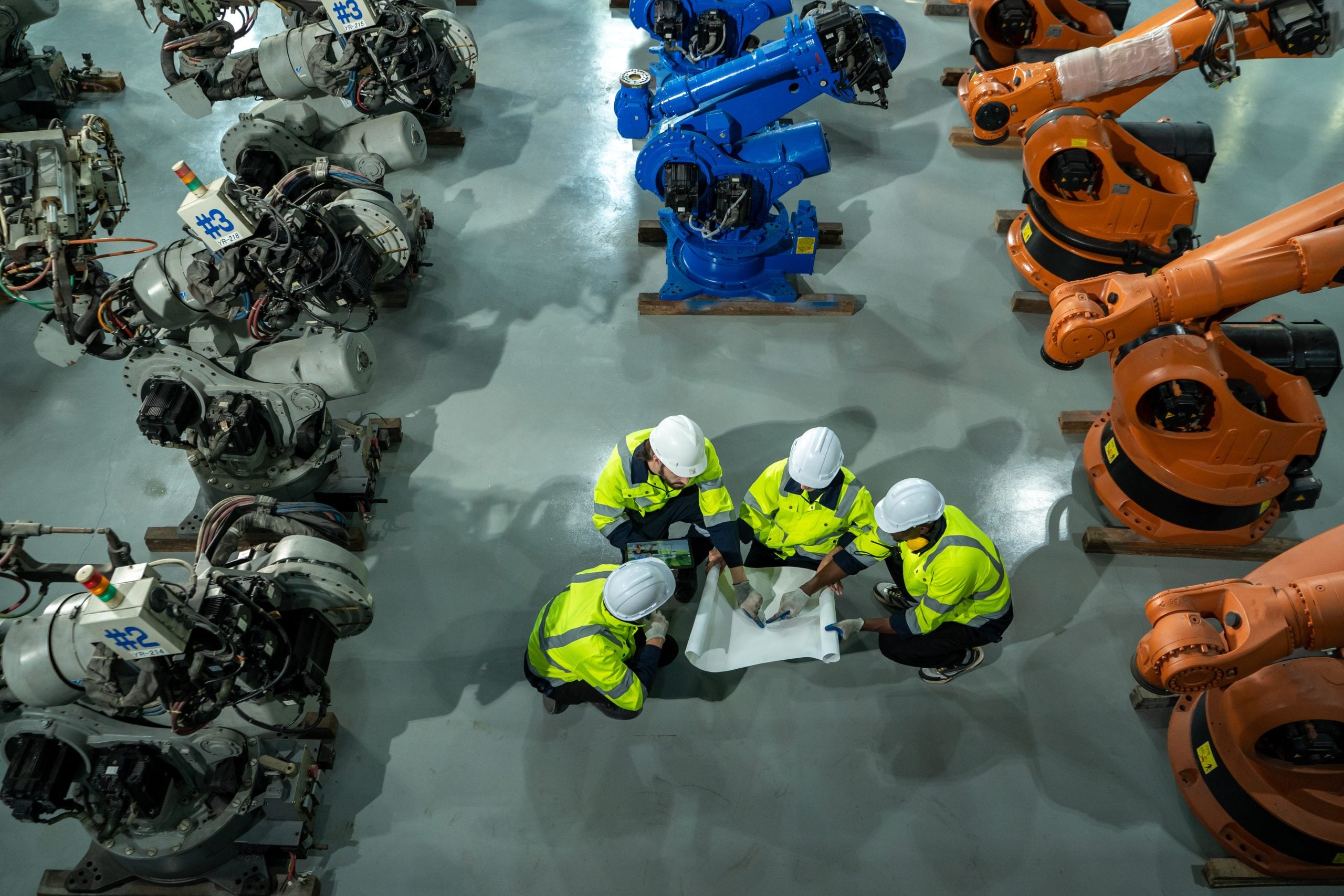
In contrast, a private startup’s valuation is typically tied to its operational milestones. A company that develops an AI-driven system for a factory to spot defective parts can continue to increase its revenue, expand its customer base, and refine its product regardless of how the Nasdaq performs on a given Tuesday. For these companies, the path to a liquidity event—either an Initial Public Offering (IPO) or an acquisition—is paved by tangible business progress.
Historical data suggests that technology giants like Alphabet (GOOGL), Meta (META), and Apple prefer to acquire these companies when they have proven a specific capability. Alphabet’s acquisition of Android and YouTube, and Meta’s acquisition of Instagram, were strategic moves to buy existing, functional ecosystems rather than building them from scratch. The $2 billion paid for Q.ai suggests that Apple valued the "ready-to-deploy" nature of the startup’s audio and ML technology over the potential of a generic, unproven model.
The "Nvidia of Robotics" and the Future of Training Platforms
The principles that guided the Q.ai acquisition are now being applied to the burgeoning field of robotics. Industry analysts are closely watching a new generation of private companies that are moving beyond simple automation toward intelligent, trainable machines.
One specific area of interest is the development of robot-training platforms. In a recent research framework, experts have highlighted a private robotics company that began its journey by automating the precise movements required to make coffee. While a coffee-making robot may seem like a novelty, the underlying technology required—object recognition, precise motor control, and sequence reliability—is highly sophisticated.
The true value of such a company lies not in the hardware (the robot arm), but in the software "brain" that allows the robot to learn new tasks. By creating a platform that allows other businesses to train robots more efficiently, such a company could become the "Nvidia of Robotics." Just as Nvidia (NVDA) provides the essential processing power for AI, a dominant robotics training platform would provide the essential "intelligence" for the global automation market.
The PPT Framework: Evaluating Private AI Opportunities
To navigate the complex world of private AI investments, seasoned venture capitalists often employ the "People, Product, and Timing" (PPT) framework. This methodology is designed to identify high-potential startups before they become obvious targets for acquisition.
- People: In the early stages of a startup, the founders’ ability to adapt is more critical than the initial business plan. Investors look for serial entrepreneurs—like Aviad Maizels—who have a track record of building and selling companies to major tech players.
- Product: Beyond an "impressive demo," a product must solve a high-value problem that customers are willing to pay for. In the case of Q.ai, the product wasn’t just "AI," it was a specific suite of audio and biometric tools that solved a hardware integration problem for Apple.
- Timing: The most advanced technology will fail if the market is not ready. Successful investments often occur when hardware costs have dropped sufficiently to make a new software application viable, or when a regulatory change creates a sudden demand for a new solution.
Economic Implications and the 2026 Outlook
As we look toward 2026, the integration of AI into the physical world is expected to accelerate. The "Megadeal" era of AI is likely to transition from the acquisition of massive data centers to the acquisition of specialized application layers.
The broader economic impact of this shift is significant. According to recent industrial reports, the transition to AI-enhanced manufacturing and logistics could add trillions of dollars to global GDP by the end of the decade. Companies that can provide the "shovels" for this gold mine—whether through robotics training platforms, audio intelligence, or specialized sensors—are positioned to be the primary beneficiaries of the next wave of corporate acquisitions.
For individual investors, the challenge remains access. While the Q.ai deal was finalized behind closed doors, the lessons it provides are public: look for companies solving practical problems, evaluate the pedigree of the leadership, and recognize that the most valuable AI progress is often the work that happens away from the headlines of Wall Street. The closing of the "window" for the 2026 AI Megadeal Event on September 21 serves as a reminder that in the fast-moving world of private equity, the opportunity to participate in a company’s growth often expires long before the company reaches the public stock exchange.