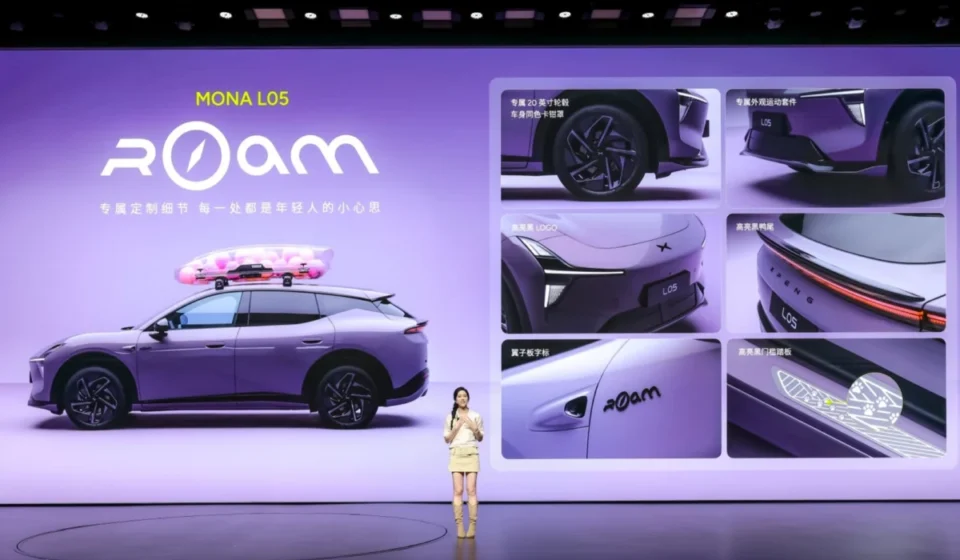
China’s $20,800 Xpeng Mona L05 Makes the US EV Price Problem Look Even Worse

Xpeng has officially entered the mass-market electric vehicle segment with the launch of its Mona L05 crossover in China, starting at a remarkably low price of 139,800 yuan, approximately $20,800 USD. This new offering, boasting a claimed range of up to 635 kilometers (395 miles) and a technologically advanced interior, is poised to intensify the competitive landscape for electric vehicles globally, prompting a closer look from American automakers about the pricing strategies and feature sets emerging from China. While Xpeng has not yet confirmed a U.S. market launch for the Mona L05, its introduction highlights a significant affordability gap and challenges the prevailing cost of electric SUVs in the United States.
The Mona L05 is positioned as a five-seat, mid-size SUV and is available in both fully electric and extended-range electric powertrain configurations. This strategic rollout underscores Xpeng’s ambition to capture a larger share of the global EV market, with the company signaling intentions to expand the Mona L05’s availability to 65 countries and regions. This aggressive international expansion strategy, coupled with the vehicle’s competitive pricing and feature set, suggests a deliberate effort by Chinese automakers to disrupt established markets and offer compelling alternatives to consumers worldwide. The current average transaction price for a new electric vehicle in the U.S. hovers significantly higher, making the Mona L05’s price point particularly striking. Data from Kelley Blue Book indicated that in the first quarter of 2024, the average price of a new EV in the U.S. was over $55,000, more than double the starting price of the Mona L05.
Xpeng Mona L05: A Deep Dive into Range, Technology, and Affordability
The exterior design of the Mona L05 features a modern aesthetic characterized by distinctive Y-shaped headlights, a sleek, closed front fascia, semi-hidden door handles, and a contemporary floating roofline. Dimensions place it as a substantial mid-size offering, with a length of 4,870 mm and a wheelbase of 2,940 mm, promising ample interior space.

Inside the cabin, Xpeng has emphasized a technology-rich environment. Dominating the dashboard is a large 17.3-inch central touchscreen, complemented by a 26.8-inch head-up display, providing drivers with critical information and intuitive control. Adding a unique element to the interior is a separate 17.3-inch ceiling-mounted screen, which could be utilized for entertainment or passenger-focused information. The audio experience is enhanced by a 20-speaker sound system, and comfort is prioritized with features like a massage-equipped front passenger seat. Practicality is also a key consideration, with the vehicle offering an impressive 41 storage compartments, catering to the diverse needs of families and everyday commuters.
Powertrain Options and Performance Metrics
The fully electric variants of the Mona L05 are powered by a rear-mounted 183 kW (approximately 245 horsepower) electric motor. Buyers can choose between two lithium iron phosphate (LFP) battery options: a 58.2 kWh unit and a larger 71.1 kWh unit. Xpeng claims a maximum CLTC (China Light-Duty Vehicle Test Cycle) range of 635 kilometers (about 395 miles) for these models, a figure that positions it competitively within its segment, especially considering its price point.
For consumers seeking extended operational range or a hybrid solution, Xpeng offers an extended-range electric version. This configuration pairs the same 183 kW electric motor with a 37.2 kWh battery and a 1.5-liter petrol engine acting as a generator. This setup provides a CLTC-rated electric-only range of 310 kilometers (approximately 193 miles), but its true strength lies in its combined range capability, which Xpeng estimates to be up to 1,310 kilometers (about 814 miles) on a full charge and a tank of fuel. This dual-powertrain approach broadens the appeal of the Mona L05, addressing range anxiety for longer journeys while still offering the benefits of electric driving for daily commutes.

Advanced Driver-Assistance Systems (ADAS) and Computing Power
The higher-specification Ultra SE variant of the Mona L05 is equipped with advanced driver-assistance features, powered by two Turing chips. These chips deliver a combined computing capability of 1,500 TOPS (tera operations per second), enabling sophisticated assisted-driving functions. While Xpeng emphasizes the capabilities of its ADAS, it is crucial to note that, in line with current regulatory frameworks and industry standards, drivers are still required to supervise the system and remain prepared to take manual control at any time. The integration of such powerful computing hardware at this price point is indicative of the rapid advancements in automotive AI and sensor technology being deployed by Chinese manufacturers.
Market Positioning and Global Ambitions
In China, the Mona L05 is offered in six distinct variants, with prices ranging from 144,800 yuan to 176,800 yuan. However, introductory discounts have further reduced the effective starting price to 139,800 yuan, with the top-tier models available for up to 171,800 yuan (approximately $20,800 to $25,600 USD). Deliveries in the Chinese market are slated to commence on November 1st.
The significance of the Mona L05 for the global automotive industry, particularly for U.S. automakers, lies not solely in its converted price but in the comprehensive package of range, cabin technology, and overall equipment offered at this price point. For context, a comparable compact or mid-size electric SUV in the U.S. market typically commands a significantly higher price tag. For example, the Chevrolet Bolt EUV, one of the more affordable EVs in the U.S., had a starting MSRP of around $27,800 for the 2023 model year, offering less range and fewer advanced features than the Mona L05. Similarly, the Hyundai Kona Electric starts around $33,500 with a shorter range.

It is important to acknowledge that the stated Chinese price should not be directly extrapolated to a potential U.S. sticker price. Several factors would influence the final cost for American consumers, including import duties, compliance with U.S. safety and emissions regulations, established distribution networks, marketing expenses, and regional economic conditions. Nevertheless, the Mona L05 serves as a potent benchmark, demonstrating the production capabilities and cost efficiencies that Chinese EV manufacturers are achieving.
Xpeng’s strategic global expansion plan, which includes targeting 65 countries and regions for the Mona L05, signals a clear intent to challenge established automotive players on their home turf. While a U.S. launch for this specific model has not been officially announced, the company’s broader market entry aspirations mean that American consumers may eventually see Xpeng vehicles on their shores. The Mona L05’s unveiling is a clear indicator that the competitive dynamics of the global EV market are rapidly evolving, with affordability and feature-rich offerings from Chinese manufacturers posing a growing challenge to legacy automakers.
Industry Context and the Evolving EV Landscape
The introduction of the Mona L05 occurs within a broader context of intense competition and rapid innovation in the electric vehicle sector. Chinese automakers, in particular, have demonstrated remarkable agility in developing and bringing to market a diverse range of EVs, from ultra-affordable micro-cars to sophisticated luxury models. This has been facilitated by government support, a robust domestic supply chain for batteries and components, and a strong consumer appetite for electric mobility.

Companies like BYD, Nio, and XPeng have consistently pushed the boundaries of what is possible in terms of range, performance, and technology, often at price points that were previously unimaginable for comparable vehicles in Western markets. This trend is not limited to passenger cars; the burgeoning electric motorcycle market also sees similar competitive pressures, as evidenced by the challenges faced by Harley-Davidson’s LiveWire, which, despite growing sales, is grappling with significant financial losses.
Furthermore, advancements in battery technology, such as the widespread adoption of LFP batteries, have contributed to cost reductions and improved safety profiles, making EVs more accessible. The development of dedicated EV platforms and the integration of advanced software and connectivity features are also key differentiators. Volkswagen’s recent EV launches in China, for instance, showcase advanced software and charging technologies that are not yet fully available in their Western counterparts, highlighting a strategic focus on the Chinese market for deploying cutting-edge innovations.
Implications for U.S. Automakers
The Mona L05’s arrival serves as a wake-up call for U.S. automakers. It underscores the need to accelerate efforts in cost reduction, enhance manufacturing efficiencies, and potentially rethink pricing strategies for their EV offerings. The ability of Chinese manufacturers to deliver a compelling product with substantial range, advanced technology, and a modern design at such a low price point challenges the existing cost structures and profit margins of established players.

American manufacturers will likely need to focus on:
- Cost Optimization: Streamlining production processes, leveraging economies of scale, and potentially exploring new battery chemistries or supply chain partnerships to bring down manufacturing costs.
- Technological Advancement: Continuing to invest in R&D to match or surpass the technological offerings in areas like infotainment, driver assistance, and connectivity that Chinese brands are increasingly emphasizing.
- Market Segmentation: Identifying and targeting specific market segments where affordability is a key driver, potentially developing more budget-friendly EV models or variants.
- Supply Chain Resilience: Diversifying and strengthening supply chains to mitigate geopolitical risks and ensure competitive sourcing of critical components, particularly battery materials.
The long-term implications of this competitive pressure could lead to a more diverse and affordable EV market for consumers globally. However, it also presents a significant challenge to the profitability and market share of domestic automakers who have invested heavily in transitioning to electric mobility. The success of vehicles like the Xpeng Mona L05 will likely accelerate the global shift towards EVs, but it also necessitates a strategic re-evaluation by established automotive giants to remain competitive in an increasingly dynamic and cost-conscious market. As Xpeng and other Chinese manufacturers continue to expand their global footprint, their influence on the future of the automotive industry, particularly in the realm of electric vehicles, is set to grow significantly.