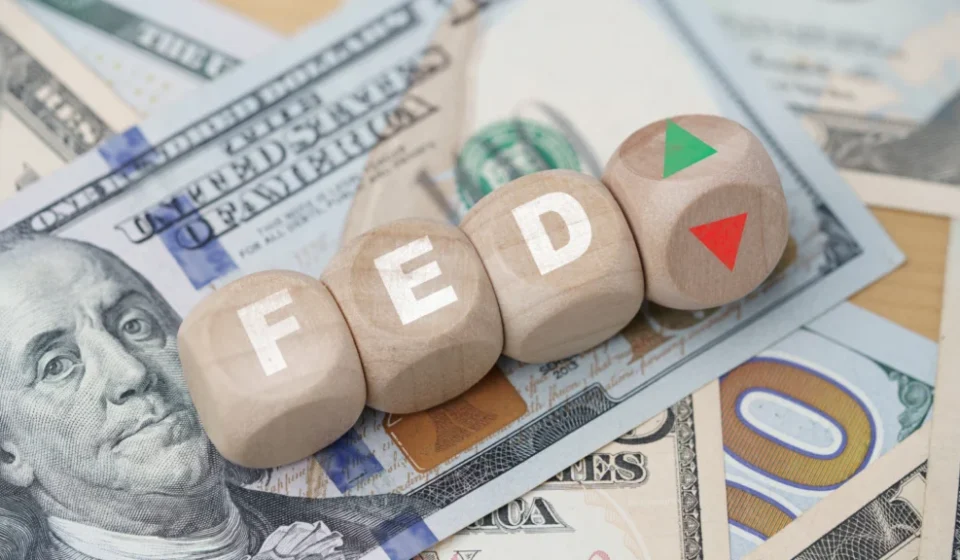

The Federal Open Market Committee (FOMC) concluded its most recent policy meeting by maintaining the federal funds rate at a target range of 3.75% to 4%. While the decision to pause was widely anticipated by market participants—with futures traders pricing in only a 10% probability of an increase—the internal dynamics of the Federal Reserve reveal a growing ideological rift. Unlike the unanimous decision seen in September, the latest vote concluded at 10-2. The dissenters, Federal Reserve Governor Lisa Cook and Cleveland Fed President Beth Hammack, both advocated for an immediate 25-basis-point hike, signaling a shift toward a more hawkish stance among some members of the central bank’s leadership.
The official statement released by the Fed provided sparse forward guidance, noting only that the "accumulation of more information" would dictate future policy adjustments. This lack of specificity leaves the December meeting in a state of uncertainty, as the committee grapples with conflicting economic signals. Most notably, the dissent from Governor Cook highlights a burgeoning concern within the Fed: the inflationary pressures exerted by the rapid expansion of artificial intelligence (AI) infrastructure. Cook recently emphasized at the New York Fed that the massive capital expenditures associated with the AI buildout are already contributing to price stability challenges that may not be easily resolved in the near term.
The AI Inflationary Shock and the "Bill Before the Benefit"
For much of the past year, economists have debated whether artificial intelligence would serve as a deflationary force by increasing productivity or an inflationary force by driving up demand for energy and hardware. Federal Reserve Chair Jerome Powell’s recent rhetoric suggests the central bank is beginning to view the AI boom as a "shock" to the system. The primary issue is one of timing; while the productivity gains from AI are expected to manifest over years or decades, the costs of building the necessary infrastructure are being felt immediately.
Data from the Minneapolis Fed underscores the magnitude of this impact. Prices for memory chips and specialized computer hardware rose by 12.2% in the twelve months ending in July. Analysts estimate that this specific category of spending contributed approximately 0.4 to 0.5 percentage points to the core Personal Consumption Expenditures (PCE) price index. To put this in perspective, core PCE recently tracked at 3.0%, well above the Fed’s 2% mandate. This suggests that AI-related hardware demand is responsible for nearly half of the current inflation overshoot.
The consumer experience reflects these industrial trends. High-performance memory kits for personal computing, which retailed for approximately $150 a year ago, are now frequently priced near $450. Furthermore, the localized demand for data centers is placing unprecedented strain on regional power grids. In states like Pennsylvania and Ohio, where data center clusters are densest, residential electricity rates have surged by 10.4% and 9.7%, respectively—nearly double the national average.
Corporate Resilience to Interest Rate Hikes
A critical takeaway from the recent Fed meeting is the limitation of traditional monetary policy in cooling the AI sector. During the post-meeting press conference, the Fed Chair was asked whether higher interest rates could successfully dampen the current investment surge. While acknowledging that rates "matter" and "get in the cracks" of the economy, the Chair conceded that they do not necessarily "decide" the trajectory of AI spending.
The primary drivers of the AI boom—the "hyperscalers" such as Microsoft, Alphabet, Meta, and Amazon—are uniquely insulated from the effects of a 4% or 5% interest rate. These corporations possess massive cash reserves and have recently utilized new equity issuances to fund their capital expenditures. Because they are not reliant on high-interest debt to fuel their AI development, the Fed’s primary tool for slowing the economy has little impact on their strategic spending.
However, the impact of higher rates is visible at the periphery of the sector. Lower-rated companies and specialized AI cloud providers that rely on debt financing are beginning to show signs of strain. For example, CoreWeave Inc. saw its bond yields touch 15% earlier this month as lenders demanded higher premiums for the risk associated with its debt-heavy expansion. While the Fed’s hawkish stance may "thin the herd" of smaller players, it appears insufficient to deter the industry leaders who are responsible for the bulk of the inflationary pressure.
Structural Changes to Federal Reserve Governance
Beyond the immediate interest rate decision, the Federal Reserve announced a significant structural shift in its operating procedure. Beginning in 2025, the FOMC will reduce the number of meetings at which it votes on interest rates from eight to seven. The vacated meeting slot will be dedicated to "broader strategy discussions" regarding long-term economic trends and the evolving nature of the global financial system.
By 2028, the number of rate-decision meetings is scheduled to drop further to six per year. This transition suggests that the Fed is attempting to move away from a reactive, meeting-by-meeting approach to a more deliberate, long-term policy framework. However, market analysts warn that fewer decision points could lead to increased volatility, as each individual meeting will carry more weight and potentially result in larger, more abrupt market moves.
The Productivity Paradox and Social Backlash
As the Fed struggles with the technical aspects of inflation, a broader socio-political tension is emerging. According to the Bureau of Labor Statistics (BLS), U.S. worker productivity rose by 2.2% over the year through the second quarter. While some economists view this as an early sign of AI-driven efficiency, the benefits of this productivity have not translated into higher wages for the general workforce.
During the same period, real hourly compensation fell by 3.1%. The share of business output paid to workers in the form of wages and benefits has dropped to 52.9%, the lowest level on record. This "productivity paradox"—where companies become more efficient but workers become relatively poorer—is fueling a populist backlash against the technology sector. Recent Gallup polling indicates that 70% of Americans oppose the construction of AI data centers in their local communities. This sentiment is increasingly bipartisan, finding common ground between progressive critics like Senator Bernie Sanders and conservative figures like Senator Josh Hawley.
Financial analyst Luke Lango has warned that this political environment represents the "emergency brake" for the AI boom. Lango suggests that while the current trade is driven by massive corporate spending (the "gas pedal") and influenced by interest rates (the "brake"), the ultimate threat is a populist movement that could lead to restrictive regulations or windfall taxes. He anticipates that this backlash will reach a critical point during the 2028 election cycle, potentially derailing the current investment cycle.
Earnings Outlook: Monitoring the "Gas Pedal"
The market’s immediate focus now shifts from the Federal Reserve to the corporate boardrooms of Silicon Valley. Microsoft and Alphabet are set to release their quarterly results, with Amazon following shortly after. The most scrutinized metric will be capital expenditure (CapEx) guidance.
Alphabet has already signaled an annual CapEx budget approaching $190 billion. Investors are looking for evidence that these massive investments are beginning to generate commensurate revenue growth. Last week, Meta Platforms saw its stock price penalized despite beating earnings expectations, largely because investors were spooked by the company’s plans to further increase AI spending in the coming year.
If the hyperscalers continue to accelerate their spending despite the Fed’s restrictive stance, it will confirm that the AI buildout has become decoupled from the broader interest rate environment. This would leave the Federal Reserve in a difficult position: maintaining high rates to combat AI-driven inflation, even as those same rates disproportionately harm "Main Street" sectors like housing and small business lending.
Conclusion and Market Implications
The Federal Reserve’s decision to hold rates constant, coupled with the dissent from two high-ranking officials, underscores a period of profound transition in the American economy. The central bank is no longer fighting a traditional cycle of overheating; it is attempting to manage a structural technological shock that its primary tools are ill-equipped to address.
For investors, the current environment suggests a narrowing window of opportunity. As the "price problem" outlasts the "inflation problem," the affordability crisis in sectors like housing and energy is likely to persist even if the Fed eventually declares victory over rising prices. The disconnect between corporate profits and worker compensation suggests that the political risks to the AI sector are mounting.
In the near term, the trajectory of the market will be determined by the resilience of Big Tech’s balance sheets and the outcome of the upcoming midterm elections, which will serve as a barometer for the public’s appetite for continued technological disruption. As the Fed prepares to reduce its frequency of policy changes, the era of "easy wins" for the central bank appears to be ending, replaced by a complex landscape where technology, inflation, and politics are inextricably linked.