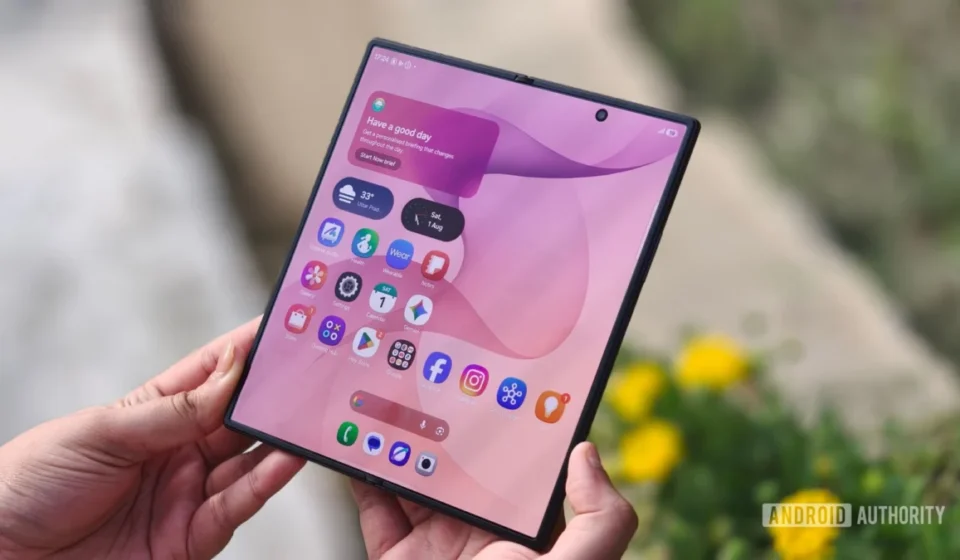
Galaxy Z Fold 8 Ultra owners should sit down before they watch JerryRigEverything’s durability test

The standard procedure for evaluating smartphone durability involves a series of meticulously designed tests aimed at simulating extreme conditions, far beyond typical daily usage. JerryRigEverything’s methodology is widely respected within the tech community for its consistency and directness, providing a comparative benchmark across various devices. Nelson’s evaluation of the Galaxy Z Fold 8 Ultra commenced with the customary Mohs hardness scratch test, a scientific measure of mineral hardness that indicates a material’s resistance to scratching. This test is crucial for understanding how a device’s screens will withstand abrasions from common objects.
Regarding the outer, or cover, display of the Galaxy Z Fold 8 Ultra, the results were largely consistent with those of most contemporary flagship smartphones. Faint scratches began to appear at level 6 on the Mohs scale, with more pronounced and permanent damage becoming evident at level 7. This performance is considered standard for modern smartphone displays, which typically employ hardened glass such as Corning Gorilla Glass Victus or similar proprietary solutions, offering a good balance of scratch and shatter resistance for everyday interactions. Users can generally expect this screen to withstand keys, coins, and other moderate abrasives found in pockets or bags without significant cosmetic damage.
However, the findings for the inner, flexible display presented a stark contrast and echoed a persistent challenge in foldable technology. Scratches on the main folding screen became apparent at a mere level 2 on the Mohs scale. Nelson specifically highlighted that even a fingernail could potentially create visible blemishes on this delicate surface. This vulnerability is not entirely new; it aligns closely with the performance observed in last year’s Galaxy Z Fold 7, as well as earlier iterations of Samsung’s foldable line. The inherent nature of flexible displays, which often rely on a thin layer of ultra-thin glass (UTG) topped with a protective plastic polymer, makes them inherently softer and more susceptible to scratching than their rigid glass counterparts. While Samsung has made significant strides in strengthening its UTG over generations, the fundamental material properties still dictate a lower Mohs rating compared to the external displays. This requires users to exercise greater caution with the inner screen, avoiding sharp objects or excessive pressure.
The most critical and unexpected revelation from JerryRigEverything’s test came during the bend test, a segment designed to ascertain the structural integrity of the device, particularly its ability to withstand forces that might inadvertently bend the phone. In previous generations, particularly the Z Fold 7, Samsung had demonstrated impressive resilience in this specific test, with the device maintaining functionality even when subjected to considerable outward bending pressure. The Z Fold 8 Ultra, however, failed to replicate its predecessor’s robustness in this crucial aspect. Nelson applied force to bend the smartphone a few times in an outward direction, a scenario that mimics accidental stress or pressure on the unfolded device. The result was immediate and catastrophic: the inner display effectively broke. Despite occasional flickering, the screen was rendered unusable, demonstrating a severe structural weakness. Notably, the cover display remained fully functional throughout this ordeal, indicating a localized failure within the folding mechanism or the inner display assembly itself.
The precise cause of this regression in bend test durability remains a subject of speculation, but several factors could be at play. One prominent theory revolves around the reported 0.1mm reduction in the overall thickness of the Z Fold 8 Ultra compared to the Z Fold 7. While seemingly minor, such a reduction in a complex mechanical system like a foldable phone’s hinge and display layers could have significant implications for its structural integrity. A thinner profile might necessitate compromises in material thickness, internal bracing, or hinge design, potentially leading to increased vulnerability under specific stress loads. Alternatively, internal hardware changes, such as a redesigned hinge mechanism, repositioned components, or alterations to the display’s layered structure, could inadvertently have made the inner display more susceptible to breakage during outward bending. The delicate interplay between the hinge, the flexible display panel, and the underlying support layers is critical for a foldable’s resilience, and any alteration in this balance could introduce new failure points.
The financial ramifications of such a durability issue are substantial for consumers. Nelson highlighted that replacing the flexible inner screen of the Galaxy Z Fold 8 Ultra would cost an estimated $639. This figure represents a considerable portion of the device’s overall premium price, making accidental damage a very expensive proposition for owners. In contrast, the replacement cost for the cover display is significantly lower, approximately $149, reinforcing the disparity in cost and complexity between the two display technologies. This high repair cost underscores the importance of robust durability for such an expensive device and raises concerns about long-term ownership costs if the inner display proves to be fragile in real-world scenarios.
Despite the critical failure in the bend test, the Galaxy Z Fold 8 Ultra did exhibit one positive durability attribute: its resistance to dust and dirt ingress. The inner screen successfully survived Nelson’s dust/dirt test, suggesting that Samsung has maintained, and possibly even improved, the enhanced dust resistance features introduced in the Z Fold 7. Earlier generations of foldables faced significant challenges with dust particles entering the hinge mechanism and damaging the display. Samsung’s continuous efforts in hinge design, including the implementation of brush fibers and tighter tolerances, have clearly paid off in this regard, offering a degree of reassurance that everyday environmental contaminants are less likely to pose a threat to the device’s internal workings.
The Evolution of Foldable Durability: A Brief Timeline
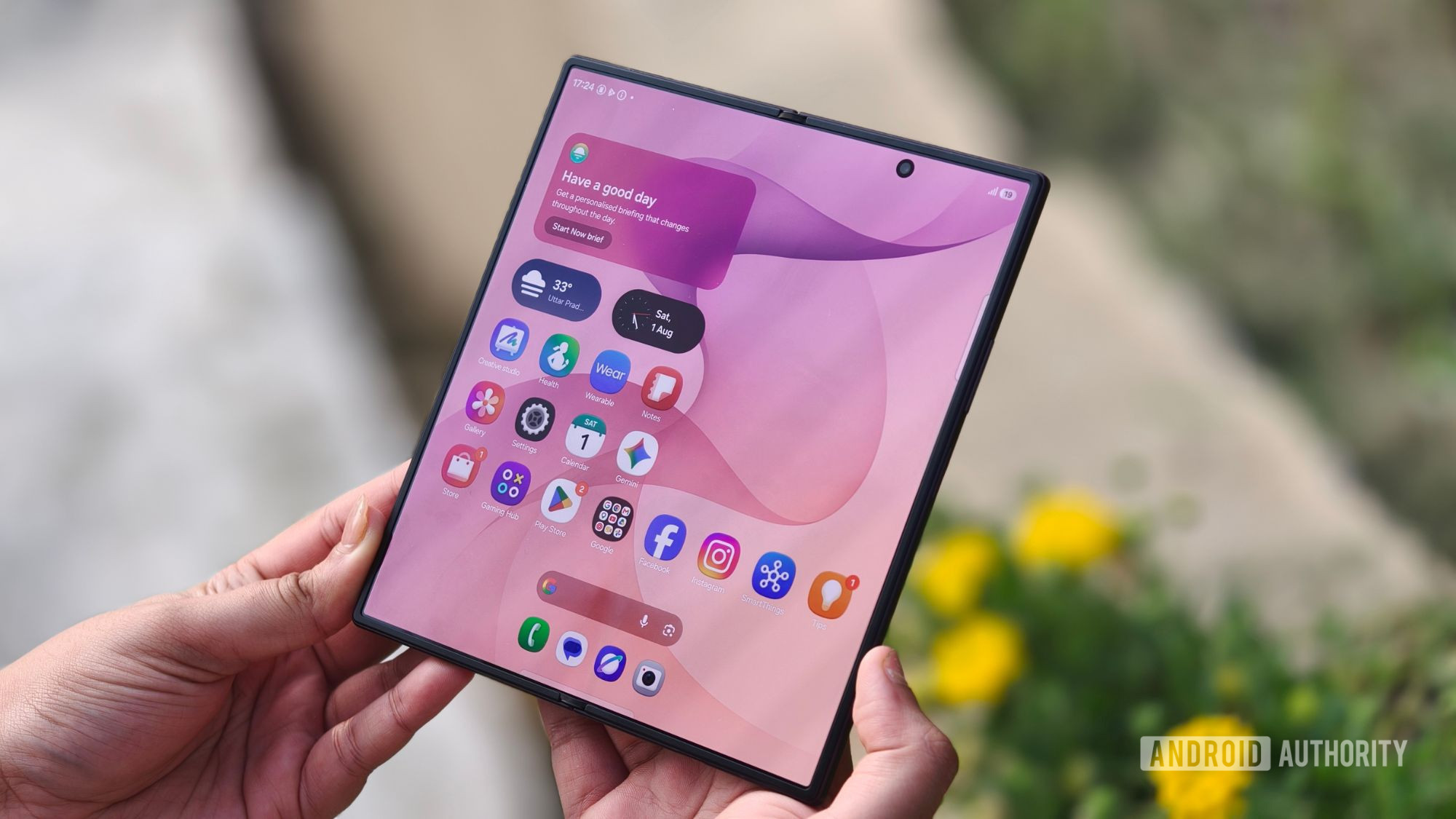
The journey of foldable smartphone durability has been fraught with challenges and significant advancements. When Samsung launched the original Galaxy Fold in 2019, it faced immediate and widespread criticism for critical durability flaws, including screen bubbling, hinge issues, and susceptibility to dust. This initial stumble led to a significant delay in its commercial release as Samsung rushed to implement design improvements. Subsequent generations, like the Galaxy Z Fold 2 and Z Fold 3, saw incremental but crucial enhancements, including the introduction of a redesigned "Sweeper" hinge to repel dust, the adoption of Ultra Thin Glass (UTG) for the main display, and eventually, an IPX8 water resistance rating. The Z Fold 7 was particularly lauded for its improved structural integrity, seemingly passing even extreme bend tests with relative ease. This historical context makes the Z Fold 8 Ultra’s bend test failure a notable regression, especially for a device carrying the "Ultra" moniker, which typically signifies Samsung’s pinnacle of technology, performance, and often, robustness.
The "Ultra" Expectation and Market Implications
The "Ultra" designation in Samsung’s product lineup is synonymous with premium features, cutting-edge technology, and often, enhanced durability. Devices like the Galaxy S26 Ultra are typically built to withstand more rigorous use than their standard counterparts. For the Galaxy Z Fold 8 Ultra to exhibit a significant vulnerability in a key durability test challenges this established expectation. In a rapidly growing foldable market, where Samsung holds a dominant position, consumer confidence is paramount. As more competitors enter the space with increasingly durable and innovative foldable designs, any perceived step backward in a critical area like structural integrity could impact Samsung’s market leadership and influence purchasing decisions. The high demand and shipping delays initially painted a picture of unbridled success, but this durability concern introduces a new layer of scrutiny for prospective buyers.
Analysis of Implications and Samsung’s Anticipated Response
While JerryRigEverything’s durability tests are designed to push devices to their absolute limits and are not necessarily representative of typical user experience, they serve as crucial indicators of a device’s inherent strengths and weaknesses under stress. The specific failure of the Z Fold 8 Ultra’s inner display during an outward bend test is particularly concerning because accidental outward pressure is a plausible real-world scenario, albeit perhaps not with the same force applied by Nelson.
From a manufacturing and engineering perspective, this incident could prompt Samsung to conduct internal investigations into the design and material choices of the Z Fold 8 Ultra. They would likely analyze the impact of the thickness reduction, the specific hinge components, and the display stack on the device’s overall resilience. Given Samsung’s history of addressing durability concerns head-on, an official statement or response is highly anticipated. Typically, a manufacturer might emphasize that their devices undergo rigorous internal testing that simulates typical usage patterns, suggesting that extreme tests like JerryRigEverything’s do not reflect everyday conditions. They might also reiterate their commitment to product quality and customer satisfaction, potentially highlighting warranty options or Samsung Care+ programs designed to cover accidental damage. However, the direct comparison to the Z Fold 7’s superior performance in the same test makes this a more challenging narrative for Samsung.
For consumers, this report serves as a vital piece of information. Prospective buyers of the Galaxy Z Fold 8 Ultra, particularly those who are heavy users or prone to accidental drops and impacts, should carefully weigh this durability finding against the device’s innovative features. While the dust resistance is a positive note, the fragility of the inner screen under bending stress warrants careful consideration. It reinforces the need for protective cases and careful handling, especially for a device with such a significant repair cost.
The broader implications extend to the future trajectory of foldable technology. Manufacturers are constantly striving to make foldables thinner, lighter, and more aesthetically pleasing. This often creates a tension between design innovation and practical durability. The Z Fold 8 Ultra’s situation might compel Samsung and other foldable makers to reassess this balance, potentially prioritizing structural integrity even if it means marginal compromises in thinness or weight. The industry will closely watch how Samsung addresses this issue, as it could set a precedent for future foldable design principles.
In conclusion, the Samsung Galaxy Z Fold 8 Ultra, a device otherwise lauded for its advancements and high demand, has encountered an unexpected hurdle in the form of a significant durability vulnerability revealed by the JerryRigEverything bend test. While its cover display holds up well and its dust resistance is commendable, the fragility of its inner display under outward bending stress marks a concerning departure from its predecessor’s robustness. This finding, alongside the high repair costs associated with the inner screen, underscores the ongoing challenges in perfecting foldable technology and provides crucial information for consumers navigating the premium foldable market. The incident will undoubtedly fuel discussions about the future of foldable design, emphasizing the delicate equilibrium between groundbreaking innovation and unwavering structural resilience.