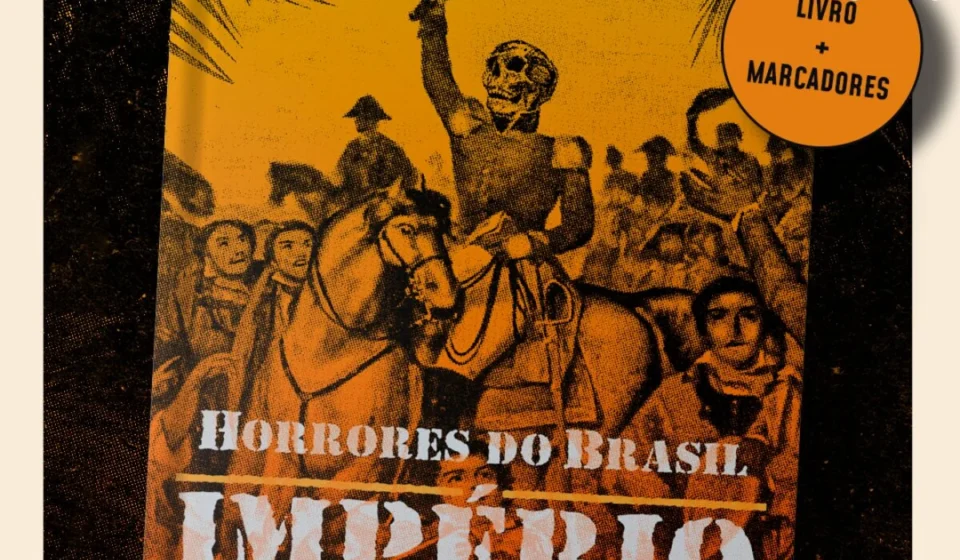
Horrores do Brasil: Império: Brazilian Imperial History Meets Survival Horror in New Literary Anthology

The landscape of Brazilian contemporary literature is witnessing a significant shift toward genre-blending, as evidenced by the upcoming release of Horrores do Brasil: Império. This new anthology, currently in its pre-order phase, seeks to redefine the perception of the 19th-century Brazilian Imperial era by filtering historical reality through the lens of survival horror. Published by Clímax Editorial, the work departs from traditional hagiographic or purely academic accounts of the Empire, instead opting to explore the psychological and supernatural shadows that lurked behind the facade of a developing nation. By integrating elements of folklore, social tension, and atmospheric dread, the anthology positions itself as a literary counterpart to iconic survival horror franchises such as Silent Hill and Bloodborne, offering a visceral exploration of a country in the throes of formation.
The Conceptual Framework of Imperial Horror
The 19th century in Brazil—spanning from the declaration of independence in 1822 to the Proclamation of the Republic in 1889—was a period of profound contradiction. While the official narrative often emphasizes the "stability" of the reigns of Dom Pedro I and Dom Pedro II, the era was characterized by deep-seated social inequalities, the brutal reality of the transatlantic slave trade, and violent regional uprisings. Horrores do Brasil: Império utilizes this historical friction as the primary engine for its narratives.
The anthology does not merely use the past as a decorative backdrop; it treats the Imperial period as a fertile ground for "folk horror" and "social horror." The stories delve into the spiritual and cultural anxieties of a society caught between European aspirations and the raw, often misunderstood realities of the South American wilderness and urban squalor. By focusing on the "shadows" of progress, the authors involved in the project aim to provide a reflection on how the traumas of the past continue to haunt the national psyche.
Narrative Structure and Atmospheric Influences
The collection is organized as a series of disparate yet thematic accounts, each focusing on different geographical and social sectors of the Empire. The settings range from the burgeoning, often claustrophobic urban centers like Rio de Janeiro to the isolated, fog-shrouded plantations and the untamed frontiers of the interior.
The influence of "survival horror" mechanics is a deliberate stylistic choice. In gaming, survival horror is defined by resource scarcity, a sense of vulnerability, and an emphasis on atmosphere over direct combat. The writers of Horrores do Brasil: Império translate these tropes into prose by emphasizing sensory details—the dampness of stone dungeons, the flickering candlelight of a decaying manor, and the oppressive silence of the Atlantic Forest. This approach creates a sense of "historical claustrophobia," where characters are trapped not only by supernatural forces but by the rigid social hierarchies and the harsh physical environments of the 1800s.
Historical Context: The Horrors of the 19th Century
To understand the impact of this anthology, one must look at the data and historical realities that inform its stories. The 19th century was the deadliest period for many populations in Brazil. Between 1800 and 1850 alone, it is estimated that over one million enslaved Africans were forcibly brought to Brazilian shores. The inherent horror of the plantation system (the "Senzala") provides a grim, factual basis for the "social horror" explored in the book.
Furthermore, the period was marked by devastating epidemics. Yellow fever and cholera outbreaks frequently decimated urban populations, leading to a culture of death and mourning that mirrored the Victorian Gothic movements in Europe but with a distinctly Brazilian character. The anthology draws upon these events, transforming the fear of contagion and the mystery of early medical practices into narrative tension.
The political landscape also provides a backdrop for terror. The Regency Period (1831–1841), in particular, was a time of near-anarchy in various provinces, with revolts like the Cabanagem and the Farroupilha War resulting in tens of thousands of deaths. This atmosphere of instability and "man-made" horror serves as the catalyst for several stories in the collection, where the line between political insurgent and vengeful spirit becomes blurred.
Chronology of the Publication and Release
The rollout of Horrores do Brasil: Império follows a strategic timeline designed to build anticipation within the growing community of Brazilian horror enthusiasts.
- Initial Concept and Call for Submissions: The project began as an effort to localize the horror genre, moving away from Anglo-Saxon tropes (such as vampires or werewolves) toward indigenous myths and Luso-Brazilian history.
- Production Phase: Throughout late 2023 and early 2024, the editorial team at Clímax Editorial worked with a curated group of authors to ensure historical accuracy while maintaining the "survival horror" aesthetic.
- Pre-order Launch: The pre-order campaign was officially launched in February 2024, offering early adopters the opportunity to secure the work at a discounted rate.
- Campaign Deadline: The promotional pre-order window is scheduled to close on March 12, 2024. During this period, the publisher has authorized the use of specific promotional codes, such as "AUTOR-AMON," to incentivize community engagement.
- General Release: Following the conclusion of the pre-order phase, the book will transition to general distribution via the Clímax Editorial website and major digital platforms.
Inferred Industry Reactions and Market Analysis
While official reviews are pending the full release, industry analysts suggest that Horrores do Brasil: Império represents a broader trend in the "New Wave" of Brazilian speculative fiction. Historically, the Brazilian literary canon has prioritized realism and regionalism. However, there has been a significant surge in demand for "dark" historical fiction that addresses national identity through metaphorical monsters.
Market data from recent years shows that independent publishers in Brazil are increasingly finding success with niche anthologies that cater to the "geek" and "horror" demographics. The success of previous titles that blended Brazilian folklore with modern suspense indicates a hungry market for content that feels culturally authentic yet stylistically modern.
Literary critics have noted that by using the term "Survival Horror" in its marketing, the anthology bridges the gap between traditional readers and the gaming community. This cross-media appeal is crucial in a market where younger audiences are more likely to engage with historical narratives if they are presented through the high-stakes, atmospheric lenses they recognize from digital entertainment.
Broader Implications: Folklore as a Tool for Reflection
One of the most significant contributions of Horrores do Brasil: Império is its reclamation of Brazilian folklore. Often relegated to children’s stories or pedagogical tools, figures from Brazilian myth are re-imagined here as truly terrifying entities. By placing these legends within the rigid, often cruel structure of the Imperial society, the authors highlight the "otherness" that the Europeanized elite feared.
The anthology also serves as a form of "dark historical revisionism." By highlighting the horrors of inequality and violence in the 19th century, it forces a confrontation with the darker aspects of Brazilian heritage. This is a common theme in modern horror literature—using the supernatural to discuss very real, very human atrocities.
Conclusion and Availability
Horrores do Brasil: Império stands as a testament to the versatility of the horror genre and its ability to dissect complex historical periods. It offers a unique sensory experience, inviting readers to walk the unlit streets of a burgeoning empire where the greatest threats are often the people in power or the secrets buried in the soil.
For those interested in securing a copy before the general release, the pre-order window remains open until March 12. The publisher, Clímax Editorial, has facilitated access through their official online storefront, where the coupon "AUTOR-AMON" can be applied for a specialized discount. As the deadline approaches, the work remains a highly anticipated entry in the 2024 literary calendar, promising to provide a chilling, historically grounded journey into the heart of Brazil’s imperial past.
The publication of this anthology may well signal a new era for Brazilian horror, one that looks backward into the shadows of history to find the monsters that still resonate in the present day. For fans of atmospheric storytelling and historical mystery, Horrores do Brasil: Império is more than just a book; it is an invitation to witness the birth of a nation through the eyes of those who did not survive its darkness.