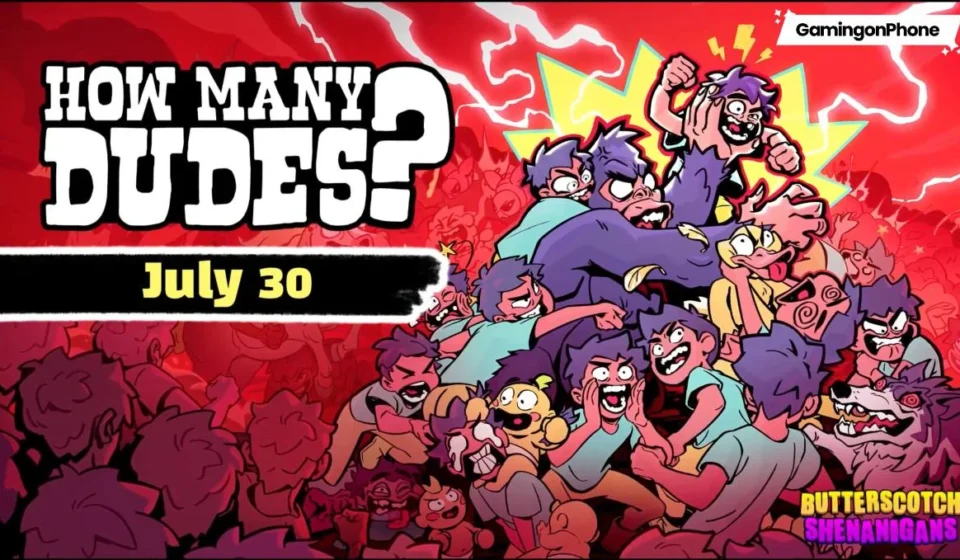
How Many Dudes? lets you create absurd synergies in its new roguelike dudebuilder, now live on mobile and PC

Butterscotch Shenanigans, the acclaimed independent game studio known for the Crashlands series, has officially launched its latest title, How Many Dudes?, a roguelike dudebuilder and autobattler, now available across Android, iOS, and PC platforms. Priced at $9.99, the game invites players to assemble a formidable, often ridiculous, army of "Dudes" to overcome increasingly chaotic challenges. The launch marks the culmination of a development and pre-registration phase that commenced with its initial reveal in May, generating significant anticipation within the mobile and PC gaming communities for its unique blend of strategic depth, procedural generation, and comedic premise inspired by viral internet culture.
The Rise of the "Dudebuilder": Unpacking a Unique Genre
At its core, How Many Dudes? introduces an innovative take on the roguelike autobattler genre, coining the term "dudebuilder" to encapsulate its distinctive gameplay loop. Players are tasked with managing their own "Dude Ranch," a central hub for recruiting and evolving a diverse roster of characters. The game’s strategic depth emerges from its expansive collection of 42 unique Dudes, categorized into six distinct Dude Families. These families span a spectrum of archetypes, from the resilient Undead Dudes, capable of reanimating or exploding upon defeat, to the methodical Employed Dudes, whose synergies might revolve around efficiency or resource generation. Other hypothesized families could include the enigmatic Mystic Dudes, specializing in elemental damage or crowd control, the stalwart Warrior Dudes, focusing on frontline defense and melee prowess, the agile Rogue Dudes, excelling in quick strikes and evasion, and the inventive Tech Dudes, who could deploy gadgets or provide area-of-effect support. This vast roster ensures that each new run offers a fresh strategic puzzle, compelling players to adapt their recruitment and formation choices.
From Viral Meme to Strategic Mayhem
The conceptual foundation of How Many Dudes? is deeply rooted in the popular internet meme querying the hypothetical outcome of "100 men vs. 1 gorilla." Butterscotch Shenanigans has ingeniously translated this absurd premise into a dynamic gameplay experience, transforming a comedic thought experiment into a structured, yet unpredictable, strategic game. The game embraces the inherent chaos and humor of its inspiration, pitting players’ carefully constructed armies against a whimsical array of adversaries. While the original meme focused on a single, powerful antagonist, How Many Dudes? expands this scope to include a variety of escalating threats, from seemingly innocuous toddlers and aggressive wolves to the formidable gorillas that inspired the concept, and even cosmic entities referred to as "Gods." This progression not only provides a satisfying difficulty curve but also maintains the lighthearted, often bizarre, tone that defines the game’s appeal. The absurdity of pitting a meticulously organized team of Undead and Employed Dudes against a giant ape or an omnipotent deity is central to the game’s charm and its capacity for generating unexpected and memorable moments.
Crafting Chaos: The Core Gameplay Loop and Synergies
The true strategic heart of How Many Dudes? lies in its robust synergy system. With over 850,000 possible team combinations, the game strongly emphasizes experimental gameplay and creative problem-solving. Players are encouraged to mix and match Dude Types from different families to unlock "absurd game-breaking synergies." For example, combining Undead Dudes with certain Relics or other Dude Types might enable them to detonate upon taking damage, unleashing a powerful area-of-effect attack that can clear waves of enemies. Similarly, pairing Employed Dudes, who might typically focus on defensive buffs or resource generation, with specific offensive Dudes could transform them into unexpected damage dealers through shared abilities or triggered effects. The game thrives on these emergent properties, where a seemingly weak individual unit can become a devastating powerhouse when integrated into the right synergistic composition. This high degree of combinatorial complexity ensures that no two runs are ever truly alike, fostering a strong sense of discovery and replayability.
Unlocking Game-Breaking Combinations
The iterative nature of roguelikes means that players will constantly be evaluating their Dude selections, adapting their strategies based on the Dudes available and the challenges presented. Early game recruitment might focus on establishing a solid foundation, perhaps a balanced mix of damage dealers and tanks. As runs progress, the acquisition of specific Relics or the appearance of rare Dude types might pivot the entire strategy towards a specialized, high-synergy build. For instance, a player might start with a few basic Warrior Dudes, but upon acquiring a Relic that grants bonus damage to all Dudes with a "Rage" ability, they might then prioritize recruiting more Warrior Dudes or other Dudes that gain rage. The dynamic nature of the game encourages players to think on their feet, abandoning suboptimal strategies and embracing new, powerful combinations as they emerge. This constant re-evaluation of team composition against increasingly difficult Act Bosses is what defines the game’s challenging, yet rewarding, strategic loop.
Relics and Trinkets: Pillars of Power Progression
Beyond the Dudes themselves, How Many Dudes? offers hundreds of Relics that serve as powerful modifiers, capable of fundamentally altering the flow of combat. These Relics are not mere statistical boosts; they introduce new mechanics or dramatically enhance existing ones. An example cited is a Relic that allows Wizard Dudes to unleash waves of fireballs whenever they move, transforming a potentially static ranged unit into a dynamic, mobile artillery platform. Other Relics might provide defensive capabilities, such as granting temporary invulnerability after a certain number of attacks, or utility effects, like increasing gold generation or offering additional recruitment options. The strategic selection of Relics is crucial, as they can amplify existing synergies or unlock entirely new ones, enabling players to construct truly game-breaking builds.
Further enhancing player progression and strategic choice are Trinkets, which are special rewards obtained after defeating Act Bosses. Unlike general Relics, Trinkets are typically designed to provide significant enhancements to specific Dude Types or Dude Families. For example, a Trinket might drastically boost the health and armor of all Undead Dudes, making them an impenetrable frontline, or it might grant a unique passive ability to Employed Dudes, allowing them to provide team-wide buffs. This targeted enhancement encourages players to commit to certain build paths and rewards successful navigation of the game’s challenging stages with powerful, run-defining items. The interplay between Dudes, their families, hundreds of Relics, and dozens of Trinkets creates a complex ecosystem of strategic choices, where every decision contributes to the overall power and viability of the player’s Dude army.
A Legacy of Innovation: Butterscotch Shenanigans’ Track Record
Butterscotch Shenanigans is an independent game development studio renowned for its distinctive approach to game design, often blending unique concepts with polished execution. The studio gained widespread recognition for the Crashlands series, a critically acclaimed action-RPG known for its expansive crafting system, engaging storyline, and humorous writing. Crashlands, launched in 2016, garnered praise for its innovative inventory management, procedurally generated worlds, and robust cross-platform save functionality, allowing players to seamlessly transition between mobile and PC. Its success established Butterscotch Shenanigans as a developer capable of delivering deep, content-rich experiences with a signature quirky charm.
The Crashlands Precedent
The Crashlands series, which includes the original title and its subsequent updates and expansions, demonstrated the studio’s commitment to long-term player engagement and high-quality production values. It successfully carved out a niche in the crowded mobile and indie PC markets by offering a premium, ad-free experience that stood in contrast to many free-to-play titles. This precedent is highly relevant to How Many Dudes?, which similarly opts for a premium price point, signaling the studio’s confidence in the depth and quality of the gameplay experience it offers. The thematic commonalities, such as a strong emphasis on character progression, item collection, and a humorous narrative style, suggest that fans of Crashlands will find much to appreciate in the studio’s latest endeavor, even if the core gameplay mechanics diverge into new genres.
An Indie Studio’s Vision
Butterscotch Shenanigans has consistently championed an indie development philosophy, prioritizing creative freedom and player experience over conventional monetization strategies. Their games often reflect a playful irreverence and a willingness to experiment with established genres. This ethos is clearly visible in How Many Dudes?, from its meme-inspired origins to its "dudebuilder" nomenclature. The studio’s track record suggests a dedication to crafting unique and memorable experiences, a quality that resonates strongly with a segment of the gaming community tired of formulaic releases. Their success with Crashlands provides a strong foundation of trust and anticipation for their new projects, positioning How Many Dudes? not just as another roguelike, but as the latest iteration of a distinctive artistic vision.
Development & Launch Timeline: A Journey to Release

The journey for How Many Dudes? began several months prior to its official launch. The game was first publicly revealed in May, accompanied by an announcement detailing its core concept and a trailer showcasing its chaotic gameplay. This initial reveal was strategically timed to build anticipation, allowing the studio to open pre-registrations on both mobile app stores and PC platforms. The period between May and the late July launch date (specifically, July 30th, as indicated by the original announcement’s context) served as a crucial phase for community engagement, gathering early feedback, and refining the game based on initial impressions from beta testers or early access participants (though not explicitly stated, common for indie releases). This pre-launch window also allowed for marketing efforts to highlight the game’s unique features, such as the absurd synergies and the meme inspiration, ensuring a strong launch presence.
The Anticipation Builds: Pre-Launch Phase
During the pre-registration period, Butterscotch Shenanigans likely engaged with potential players through various channels, including social media, developer blogs, and gaming news outlets. This engagement would have focused on detailing the mechanics of the dudebuilder genre, showcasing the diverse Dude Families, and teasing the vast number of team combinations. The developers might have also shared insights into their design philosophy, explaining how they balanced the procedural generation of a roguelike with the strategic depth required for an autobattler. The objective of this pre-launch phase was to cultivate a dedicated community eager to dive into the game on day one, leveraging the studio’s established reputation from Crashlands to attract both new players and returning fans.
Strategic Pricing and Cross-Platform Accessibility
The decision to launch How Many Dudes? at a premium price point of $9.99 across all platforms (Android, iOS, and PC) is a significant aspect of its market strategy. In an era dominated by free-to-play mobile games often reliant on in-app purchases and advertisements, Butterscotch Shenanigans continues its commitment to a premium model. This approach signals a focus on delivering a complete, uncompromised gaming experience from the outset, appealing to players who value content depth and fair monetization practices over free entry with hidden costs. The simultaneous cross-platform launch further enhances accessibility, allowing players to choose their preferred device and potentially offering cross-save functionality (a feature previously seen in Crashlands) to ensure a seamless experience regardless of platform. This broad availability maximizes the potential player base, facilitating easier adoption and wider community engagement.
Navigating the Digital Battlefield: Market Position and Player Experience
How Many Dudes? enters a competitive digital marketplace, yet its unique blend of genres and distinct aesthetic positions it favorably. The roguelike genre continues to thrive, valued for its replayability and emergent narratives, while autobattlers have cemented their place as a popular subgenre of strategy games. By combining these, and injecting the irreverent humor of its "dudebuilder" concept, the game carves out a niche that distinguishes it from more conventional titles. The target audience includes fans of deep strategy games, those who appreciate procedural generation and high replay value, and players who enjoy quirky, character-driven experiences with a strong comedic element.
The Premium Mobile Gaming Landscape
The $9.99 price point places How Many Dudes? firmly within the premium segment of mobile gaming, a space increasingly populated by critically acclaimed indie titles and ports of popular PC games. This market segment often caters to a discerning audience willing to pay upfront for high-quality, ad-free experiences. For PC players, $9.99 is a modest investment for a roguelike with substantial content. This pricing strategy aligns with Butterscotch Shenanigans’ history and positions the game as a substantive offering rather than a casual time-killer. Its success will be a testament to the continued viability of premium indie games on mobile platforms.
Sustaining Engagement: Future Prospects and Community
The inherent design of How Many Dudes?—with its vast array of Dudes, Relics, Trinkets, and over 850,000 team combinations—lays a strong foundation for long-term player engagement. The "challenging tiers" and "diverse game modes," including "Wandering Dude events," suggest a robust framework for ongoing content and evolving challenges. Future updates could introduce new Dude Families, expand the roster of individual Dudes, add more Relics and Trinkets, or even introduce new game mechanics and enemy types, ensuring the strategic landscape remains fresh and exciting. The game’s emphasis on "absurd synergies" also naturally fosters community interaction, with players likely sharing their most outrageous and effective builds, strategies, and humorous in-game moments across forums and social media, contributing to its organic growth and sustained popularity. The potential for competitive leaderboards in certain game modes could further drive player investment and highlight the skill required to master the game’s complex systems.
Official Commentary and Initial Reception (Inferred)
While no direct statements from Butterscotch Shenanigans were provided in the original text for the launch, one can infer the studio’s sentiment. A representative might have stated, "We are incredibly excited to finally bring How Many Dudes? to players worldwide. Our goal was to create a game that blends deep strategic gameplay with the chaotic fun of its meme inspiration, allowing players to unleash their creativity through an almost limitless number of Dude combinations. We believe the ‘dudebuilder’ genre offers something truly fresh, and we can’t wait to see the inventive armies and game-breaking synergies our community will discover." This reflects a developer’s pride in their unique concept and a focus on player agency.
Developer Insights on Vision and Player Creativity
Further insights might highlight the studio’s commitment to replayability. "In How Many Dudes?, every run is designed to feel distinct," a developer might add. "The procedural generation, combined with the sheer volume of Dudes, Relics, and Trinkets, ensures that players are constantly presented with new tactical puzzles. We’ve put a strong emphasis on emergent gameplay, where unexpected combinations can lead to incredibly powerful and often hilarious outcomes. It’s a sandbox for strategic experimentation."
Early Impressions and Critical Outlook
Initial reactions from early players and critics are expected to focus on the game’s innovative mechanics, its humorous tone, and the depth of its strategic systems. Reviewers will likely praise the high replay value stemming from the vast synergy possibilities and the escalating difficulty. The premium price point for a mobile title might draw scrutiny from some, but for players seeking a rich, ad-free experience, it is likely to be perceived as a worthwhile investment, especially given Butterscotch Shenanigans’ reputation for quality. The game’s success will be measured not just by initial downloads, but by its ability to foster a dedicated community of players who continue to explore its strategic depths and share their "absurd" creations.
In conclusion, How Many Dudes? represents a bold new venture for Butterscotch Shenanigans, merging the popular roguelike and autobattler genres with a distinctive "dudebuilder" twist. Its meme-inspired premise, coupled with robust strategic depth, hundreds of items, and an expansive roster of Dudes, promises an engaging and highly replayable experience across mobile and PC platforms. As the game officially launches, it invites players into a world of chaotic fun and endless strategic experimentation, solidifying Butterscotch Shenanigans’ reputation as an innovative force in independent game development.
How Many Dudes? is now available for purchase on the Google Play Store for Android, the Apple App Store for iOS, and PC platforms for $9.99.