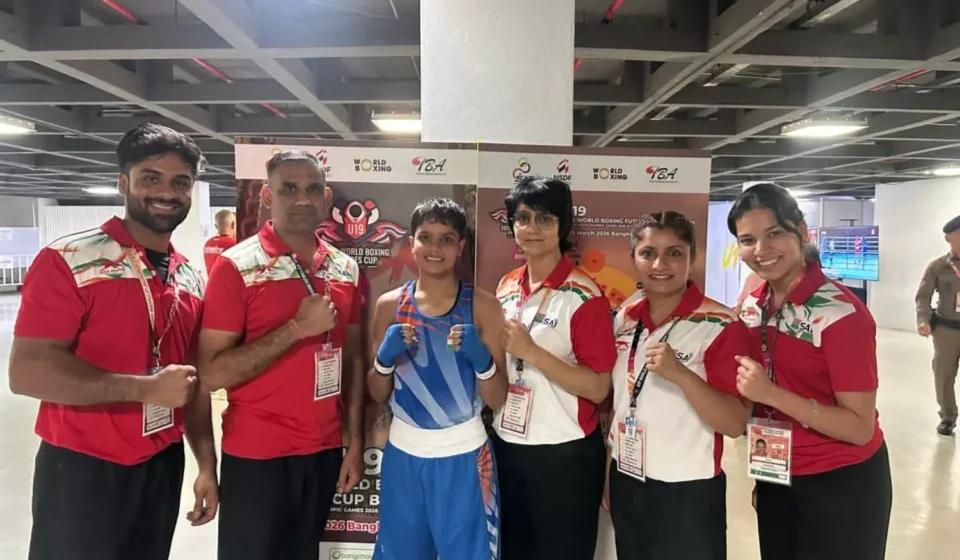
Indian Youth Boxers Dominate Day Three of World Boxing Futures Cup 2026 in Bangkok with Five Comprehensive Victories

The Indian youth boxing contingent continued its remarkable ascent on the international stage, delivering a series of masterclass performances on the third day of the World Boxing Futures Cup 2026 in Bangkok. Competing against a diverse array of global opponents, the Indian athletes secured five pivotal victories across both the morning and evening sessions, reinforcing India’s growing reputation as a powerhouse in the youth divisions. The tournament, which serves as a critical litmus test for the next generation of pugilists, saw Indian boxers display a sophisticated blend of tactical discipline, raw power, and technical finesse.
Morning Session: A Triple Triumph of Tactical Precision
The opening session of the third day set a high bar for the Indian squad, as three athletes took to the ring and emerged victorious, showcasing the depth of talent within the national program. The session was characterized by dominant displays that left little room for doubt in the judges’ minds.
Chandrika Pujari, competing in the 50kg category, provided a blueprint for technical boxing in her bout against her Venezuelan opponent. From the opening bell, Pujari utilized her reach and superior footwork to control the distance, neutralizing the aggressive advances of the South American boxer. Her ability to counter-punch with precision allowed her to rack up points across all three rounds. The judges were unanimous in their assessment, awarding Pujari a 5-0 victory. This win was particularly significant as it demonstrated India’s ability to handle the unorthodox, high-energy styles often associated with Caribbean and South American boxing schools.
Following Pujari’s success, Joyshree Devi (54kg) delivered one of the most emphatic performances of the morning. Facing a formidable opponent from Kazakhstan—a nation synonymous with boxing excellence—Devi exhibited an aggressive yet controlled style. By the second round, Devi’s relentless pressure and heavy combinations began to wear down the Kazakh fighter. In the third round, after a series of unanswered blows that showcased Devi’s superior conditioning and power, the referee intervened to stop the contest (RSC). Winning by RSC against a traditional boxing powerhouse like Kazakhstan sends a strong message to the rest of the field regarding the physical readiness of the Indian contingent.
The men’s division also saw success in the morning session through L. Ambekar in the 50kg weight class. Ambekar faced an agile opponent from Ecuador, but the Indian boxer’s ring generalship proved to be the deciding factor. Ambekar’s defensive slips and rapid-fire combinations allowed him to dictate the tempo of the fight. Like Pujari, Ambekar earned a convincing 5-0 unanimous decision, ensuring that the Indian team maintained a perfect record heading into the mid-day break.
Evening Session: Resilience and Explosive Power
The momentum generated in the morning carried over into the evening session, where two more Indian boxers secured their advancement in the tournament. However, the nature of these victories highlighted a different set of skills: grit and explosive finishing ability.
Gunjan, competing in the 48kg category, was involved in one of the most closely contested bouts of the day. Facing an elite technical boxer from Italy, Gunjan had to dig deep into her reserves. The match was a tactical chess game, with both boxers trading narrow leads throughout the three rounds. While the Italian boxer found success with long-range jabs, Gunjan’s ability to close the distance and score with hooks to the body tipped the scales. In a 3-2 split decision, Gunjan edged past her opponent, a testament to her mental fortitude and ability to perform under high-pressure, "clutch" situations.
The final victory of the day for India came through Prachi in the 60kg division. Prachi provided the shortest bout of the day for the Indian camp, needing only the first round to dispatch her Ecuadorian adversary. From the outset, Prachi’s punching power was evident, forcing her opponent into a defensive shell. After two standing eight-counts in quick succession, the referee deemed the Ecuadorian boxer unable to continue, awarding Prachi an RSC victory in the first round. This clinical finish highlighted the "one-punch" knockout potential that has become increasingly prevalent in the Indian youth setup.
The World Boxing Futures Cup: A Strategic Pathway
The World Boxing Futures Cup, held in the heart of Thailand from March 8 to 15, is more than just a standalone tournament. It represents a strategic pillar in the international boxing calendar, specifically designed to prepare athletes for the rigors of the Youth Olympic Games. By utilizing the Youth Olympic weight categories, the event allows national federations to assess their athletes against the exact parameters they will face on the road to the 2026 Youth Olympics in Dakar.
For the Indian contingent, the Bangkok event provides crucial international exposure. Youth boxing often suffers from a lack of "ring time" against varied international styles. By facing opponents from Venezuela, Kazakhstan, Ecuador, and Italy in a single day, the Indian boxers are gaining years’ worth of experience in a matter of hours. This exposure is vital for developing the "ring IQ" necessary to succeed at the highest levels of the sport, such as the World Championships and the Olympic Games.
Historical Context: Building on the Bahrain Success
The current success in Bangkok does not exist in a vacuum. It is a continuation of a trajectory that saw a historic breakthrough last year. At the 3rd Asian Youth Games held in Bahrain, the Indian youth boxing team delivered what analysts described as the country’s best-ever performance at the continental youth level.
In Bahrain, India clinched a total of seven medals, including four gold, two silver, and one bronze. That performance signaled a shift in the balance of power in Asian youth boxing, where India began to consistently challenge and defeat traditional leaders like Uzbekistan and Kazakhstan. The coaching staff and the Boxing Federation of India (BFI) have clearly looked to build on that foundation, focusing on high-performance training camps and sports science integration to ensure that the current crop of boxers in Bangkok can replicate and exceed those previous heights.
Technical Analysis of the Indian Performance
Data from the third day suggests a specific tactical evolution in Indian youth boxing. Historically, Indian boxers were known for their stamina and volume-punching but often struggled with power and defensive transparency. The results in Bangkok indicate a shift:
- Efficiency in Scoring: The two 5-0 unanimous decisions suggest that Indian boxers are now more adept at "cleaning up" their technique to ensure every punch is visible and scoring-worthy for the judges.
- Stoppage Power: Two RSC victories in a single day—especially one in the first round—indicate a heightened focus on strength and conditioning. The ability to stop a fight early reduces the risk of injury and fatigue as the tournament progresses.
- Versatility: Winning a 3-2 split decision against a European school of boxing (Italy) and an RSC against a Central Asian school (Kazakhstan) shows that the Indian training regimen is now versatile enough to counter diverse boxing philosophies.
Broader Impact and Future Implications
The implications of these victories extend beyond the immediate medal tallies. The Boxing Federation of India, supported by the Ministry of Youth Affairs and Sports and the Sports Authority of India (SAI), has invested heavily in grassroots development through initiatives like the Khelo India Youth Games. The success of athletes like Gunjan, Prachi, and Ambekar is a direct validation of these domestic structures.
Furthermore, as the global boxing landscape undergoes administrative changes, consistent performances in "Futures" events ensure that India remains a primary stakeholder in the sport’s international future. Success at the youth level is a reliable predictor of success at the senior level. The boxers competing in Bangkok this week are the same individuals expected to lead India’s charge at the Los Angeles 2028 and Brisbane 2032 Olympic Games.
As the tournament moves into its final stages, the Indian camp will look to maintain this momentum. The coaching staff will likely focus on recovery and video analysis of upcoming opponents to ensure that the tactical discipline shown on Day Three remains consistent. With five wins in a single day, the Indian team has not only improved its standing in the tournament but has also reinforced its status as the team to beat in the Asian region.
The World Boxing Futures Cup continues through March 15, with several more Indian boxers scheduled to compete in the quarter-final and semi-final rounds. If the current form is any indication, the Indian national anthem is likely to be a frequent feature during the medal ceremonies in Bangkok.