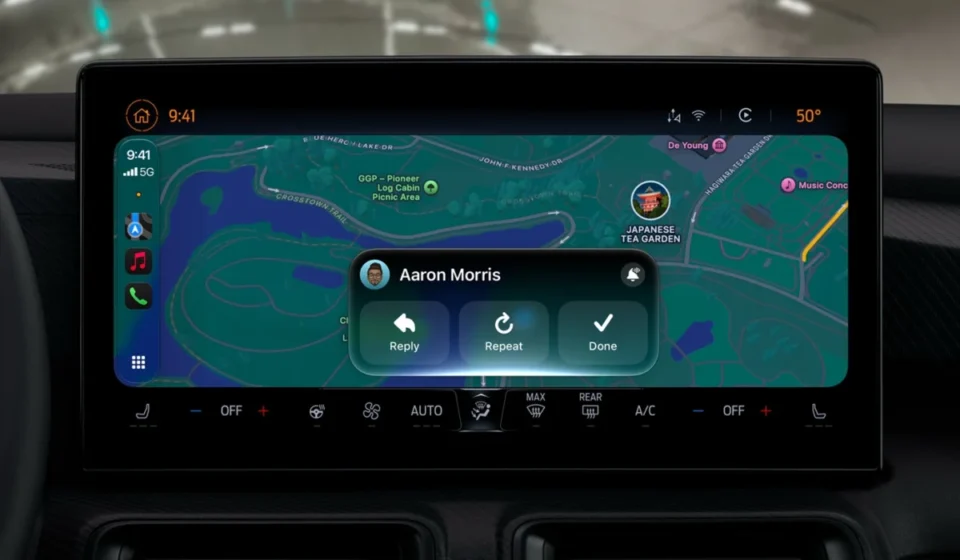

In a significant overhaul for in-car infotainment, Apple has rolled out iOS 27, bringing its most substantial CarPlay update in years. Available to iPhone users as of September 14, 2026, the new version promises a more integrated and feature-rich experience. However, a critical caveat emerges: the full extent of these advancements is heavily dependent on the vehicle’s manufacturer, leaving a considerable portion of existing CarPlay-equipped cars unable to leverage some of the most anticipated new functionalities. This fragmentation underscores a persistent challenge in the evolution of automotive software integration.
The release of iOS 27 marks a pivotal moment for CarPlay, a system designed to bring iPhone functionality to a car’s dashboard. While Apple has consistently aimed to streamline the user experience, the latest iteration introduces features that require deeper integration with a vehicle’s hardware and software infrastructure. This means that while an iPhone running iOS 27 is the gateway, the car itself acts as the gatekeeper for many of these advanced capabilities.
A Phased Rollout of Features: What Works Now, What Needs a Car Upgrade
The impact of iOS 27 on CarPlay can be broadly categorized into features that function across virtually all compatible vehicles and those that necessitate specific manufacturer support. This distinction is crucial for consumers to understand as they explore the new update.
Features Universally Available in Any CarPlay Vehicle:
Several core enhancements within iOS 27 are designed to be backward-compatible, meaning they should function seamlessly in any car that currently supports CarPlay, regardless of its age or model year. These improvements focus on refining the existing user interface and enhancing core functionalities:
- Third-Party Widgets: A significant addition is the introduction of third-party widgets for the CarPlay dashboard. This allows users to customize their CarPlay experience with glanceable information from their favorite apps, such as weather updates, calendar appointments, or music playback controls, directly on the main screen. This empowers users to tailor their interface to their immediate needs, reducing the need to navigate through multiple app screens.
- Audio Scrubbing: For users consuming podcasts, audiobooks, or music, the ability to precisely scrub through audio content has been enhanced. This offers finer control over playback, allowing users to easily jump to specific points within a track or recording, a feature particularly useful for lengthy content.
- New Wallpapers and Customization Options: iOS 27 introduces a refreshed selection of wallpapers and expanded customization options for the CarPlay interface. This provides users with greater personalization, allowing them to align the look and feel of their car’s display with their personal preferences.
- Enhanced Maps Functionality: Apple Maps within CarPlay has received notable improvements. This includes more detailed route information, improved traffic predictions, and potentially new visual aids for navigation. These enhancements aim to make the navigation experience more intuitive and informative, contributing to safer driving.
These universally available features represent a solid upgrade for the majority of CarPlay users, offering immediate benefits and a more polished experience.
Features Requiring Specific Vehicle Manufacturer Support:
The more transformative aspects of the iOS 27 CarPlay update are contingent on a car manufacturer’s commitment to integrating these new technologies. This involves more complex engineering and software development on the part of automakers, often requiring updates to their in-car systems.
- Video App Integration: Perhaps the most visually striking new capability is the ability to run video applications within CarPlay. This could allow passengers to enjoy streaming services or other video content on the car’s display when the vehicle is in park. However, this functionality is strictly tied to vehicle support, as manufacturers must explicitly enable and secure this feature, likely with safety protocols to prevent driver distraction. The implications for in-car entertainment during long journeys or charging stops are considerable, but widespread adoption will depend on the willingness of automakers to implement it.
- Advanced Route Sharing: iOS 27 introduces more sophisticated route sharing capabilities. This could enable users to share detailed route information with contacts directly from CarPlay, potentially including real-time updates on arrival times or progress. Again, the implementation of this feature requires automakers to integrate the necessary communication protocols within their vehicle’s systems.
The requirement for manufacturer support highlights a key challenge: the pace of technological adoption in the automotive industry can be significantly slower than in the consumer electronics sector. Automakers often operate on longer product development cycles, and integrating new software features can involve extensive testing and certification processes.
Features Dependent on iPhone Capabilities:
While the primary focus of this update is on CarPlay itself, it’s worth noting that some underlying functionalities are also dependent on the capabilities of the iPhone running iOS 27. However, the article specifically states that the CarPlay features themselves do not require a specific iPhone model, implying that any iPhone capable of running iOS 27 will enable the CarPlay features, provided the car supports them. This is a crucial distinction from previous years where certain advanced features might have been limited to newer iPhone models.
A Gradual Evolution: The "One to Watch" Feature
Beyond the immediate tangible features, Apple is also providing developers with new tools that could shape the future of CarPlay interactions.
- Voice Control Template for App Conversations: Apple has introduced a standardized voice control template for developers. This aims to facilitate more natural and intuitive voice conversations within CarPlay applications. For instance, users could engage in more complex voice commands or receive richer voice-based feedback from apps. However, the impact of this feature is entirely dependent on individual app developers adopting this template. This means that while the capability is now available, its widespread realization will be a gradual process, unfolding as app makers update their CarPlay integrations. This approach allows for flexibility and developer innovation, but it also means users will see these improvements roll out incrementally rather than all at once.
Analysis of Implications and the Road Ahead
The iOS 27 CarPlay update arrives at a time when the integration of smartphones into vehicles is more critical than ever. Consumers increasingly expect their digital lives to seamlessly transition into their driving experience. Apple’s strategy with this update appears to be one of incremental yet significant advancement, pushing the boundaries of what CarPlay can do while acknowledging the infrastructural realities of the automotive industry.
The bifurcated nature of the feature rollout – some universal, some manufacturer-dependent – is a clear indicator of the complex ecosystem involved. While Apple provides the software framework, the ultimate user experience is a collaborative effort between Apple and the car manufacturer. This necessitates a stronger partnership and clearer communication channels between the tech giant and the automotive industry.
From a consumer perspective, this means that upgrading to iOS 27 is a necessary first step, but it is not a guarantee of accessing all new features. Prospective car buyers and current owners will need to be aware of their vehicle’s specific CarPlay capabilities when considering future purchases or evaluating software updates from their car manufacturer. The demand for these advanced features from consumers could also pressure automakers to prioritize and expedite their integration efforts.
The timeline for these manufacturer-dependent features to become widely available is uncertain. Typically, new software features for vehicles are rolled out alongside new model years or through over-the-air (OTA) updates. Given the complexity of automotive software, it could take months, or even years, for a significant portion of the existing vehicle fleet to gain support for features like video apps and advanced route sharing.
Background Context: The Evolution of CarPlay
CarPlay was first introduced in 2014, aiming to provide a safer and more intuitive way for drivers to use their iPhones while on the road. Since then, it has undergone several iterations, each adding new capabilities and refining the user experience. However, the fundamental architecture has remained largely consistent until now, with iOS 27 representing a more ambitious leap forward.
The automotive industry’s increasing reliance on software has been a defining trend in recent years. Vehicles are becoming increasingly connected, with functionalities ranging from advanced driver-assistance systems to in-car entertainment and remote diagnostics. CarPlay, as a primary interface for many users, plays a crucial role in this evolving landscape.
Apple’s approach to CarPlay has generally been to offer a controlled and secure environment, prioritizing safety and user experience. This contrasts with more open-ended Android Automotive OS, which allows deeper integration and customization by automakers. The iOS 27 update, with its emphasis on manufacturer-dependent features, suggests a continued effort by Apple to balance its own ecosystem control with the need for deeper integration into the automotive hardware.
Broader Impact and Future Outlook
The success of iOS 27’s CarPlay enhancements will ultimately be measured by user adoption and satisfaction. If consumers embrace the new features and automakers respond with timely support, it could further solidify CarPlay’s position as the dominant in-car smartphone integration platform. Conversely, if the fragmentation remains a significant barrier, it could lead to consumer frustration and potentially boost interest in alternative in-car operating systems.
The introduction of video app support, even with restrictions, signals a potential shift in how in-car entertainment is perceived. As autonomous driving technology progresses and vehicles spend more time stationary or in self-driving modes, the demand for in-car entertainment will likely grow. Apple’s foresight in preparing for this future through iOS 27 is noteworthy.
In conclusion, iOS 27 represents a significant step forward for CarPlay, offering a richer and more customizable experience. While many core improvements are immediately accessible to all users, the most exciting advancements, such as video apps and advanced route sharing, are dependent on vehicle manufacturer support. This underscores the ongoing collaborative effort required to bring cutting-edge technology to the automotive sector, a process that, while promising, will unfold over time. The rollout of iOS 27 began on September 14, 2026, and users are encouraged to update their iPhones to experience the available enhancements.