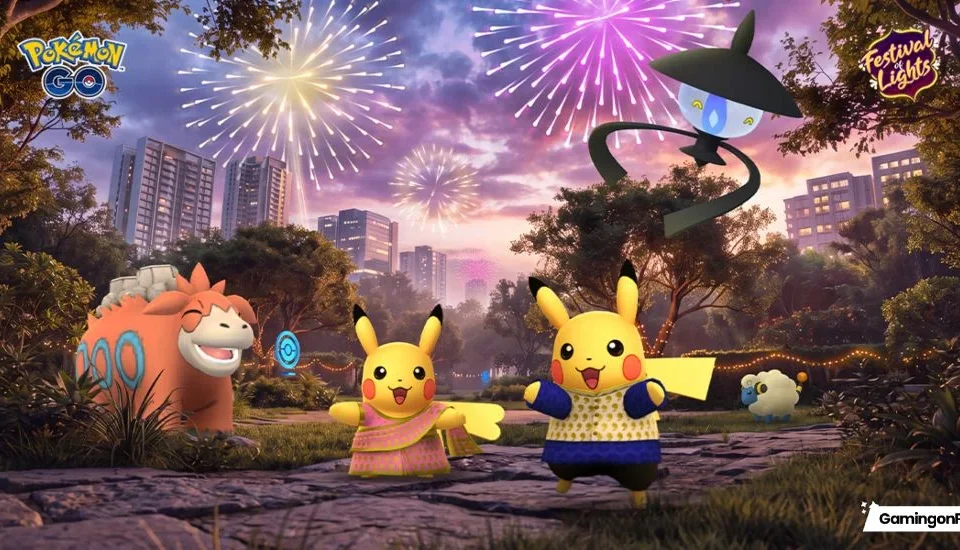
Pokémon GO Festival of Lights is returning this November with Saree and Kurta Pikachu

Scopely Explore, Inc., a prominent entity in the mobile gaming landscape, has officially announced the highly anticipated return of the Festival of Lights event to Pokémon GO, setting the stage for a vibrant celebration that will once again illuminate the screens and streets of trainers across India. This year’s iteration, scheduled for November 2026, promises the re-emergence of two immensely popular costumed Pokémon: Pikachu adorned in a traditional saree and Pikachu sporting a stylish kurta. Beyond these fan-favorite sartorial additions, the event is set to deliver a rich tapestry of special encounters, enticing event bonuses, and engaging limited-time research activities, designed to immerse players in the festive spirit.
The Festival of Lights 2026 is slated to commence on Friday, November 6, at 10:00 a.m. local time, and will conclude on Sunday, November 8, at 8:00 p.m. local time. This compact yet action-packed three-day window provides trainers with ample opportunity to partake in the festivities, capture event-themed Pokémon, and accumulate exclusive rewards. The strategic timing of the event, coinciding with the broader cultural celebrations of Diwali across India, underscores Niantic’s (the game’s developer) ongoing commitment to localized content that resonates deeply with regional player bases.
A Legacy of Light: The Festival of Lights in Pokémon GO
The Festival of Lights event in Pokémon GO is not merely a seasonal occurrence; it is a testament to the game’s global reach and its innovative approach to cultural integration. First introduced in previous years, this event was specifically designed to honor and celebrate Diwali, one of India’s most significant and widely observed festivals. Diwali, known as the "Festival of Lights," symbolizes the triumph of light over darkness, good over evil, and knowledge over ignorance. It is celebrated with great fervor through lighting lamps, fireworks, festive meals, and family gatherings.
Niantic, through its operational partners like Scopely Explore, Inc. in certain territories, has consistently aimed to create in-game experiences that mirror real-world cultural moments. The Festival of Lights event exemplifies this philosophy, bringing the joyous and luminous essence of Diwali into the digital realm of Pokémon GO. Over its previous iterations, the event has evolved, introducing new features and Pokémon each year, but the core theme of light and celebration has remained constant. The introduction of the Saree and Kurta Pikachu marked a significant milestone, representing a bespoke cultural acknowledgment that resonated powerfully with the Indian player community and garnered international admiration for its thoughtful design. This localized approach has been a cornerstone of Pokémon GO’s sustained success, fostering a sense of belonging and representation among its diverse global player base.
Cultural Garments and Global Appeal: The Saree and Kurta Pikachu
The return of Pikachu in a saree and a kurta is undoubtedly the centerpiece of the 2026 Festival of Lights. For those unfamiliar with Indian attire, a saree is a traditional garment for women, consisting of a long piece of unstitched cloth draped around the body in various styles, often accompanied by a blouse and petticoat. It is a symbol of grace and elegance, worn on special occasions and daily by many. A kurta, on the other hand, is a loose-fitting shirt worn by men (and increasingly women) in India and other South Asian countries, typically paired with trousers or pajamas. Both garments are integral to Indian cultural identity, and seeing Pikachu, a global icon, adorned in them creates a unique bridge between popular culture and traditional heritage.
During the event, trainers in India will have the exclusive opportunity to encounter these special costumed Pikachus in raids. The excitement is further amplified by the chance to discover their Shiny versions, which are exceptionally rare and highly coveted by collectors. Moreover, fortunate trainers might even find these Shiny costumed Pikachus appearing with a "Special Background," adding another layer of exclusivity and visual appeal to these already unique captures. This meticulous attention to detail, from the choice of attire to the added visual flair, demonstrates the developers’ understanding of what makes a collectible truly special for the dedicated Pokémon GO community. The inclusion of culturally specific costumes not only celebrates local traditions but also serves as a powerful engagement tool, driving interest and participation, particularly within the target region.
Event Mechanics: Maximizing Your Festive Catch
The Festival of Lights 2026 introduces several key gameplay mechanics designed to enhance the player experience and provide diverse avenues for participation.
Sparkle O’Clock: Timed Wild Encounters
A returning fan-favorite feature, "Sparkle O’Clock," will punctuate the evenings of the event. During this special period, wild encounters for specific Pokémon will be significantly increased for five minutes at designated times each evening: 6:00 p.m., 6:30 p.m., 7:00 p.m., and 7:30 p.m. local time. This mechanic encourages players to actively engage with the game during these short, intense bursts, creating a communal experience as trainers worldwide prepare for these concentrated catching windows. The strategic planning required to maximize catches during Sparkle O’Clock adds an exciting layer to the gameplay, prompting players to manage their Poké Balls and item inventories effectively.
The featured Pokémon appearing more frequently during Sparkle O’Clock and around Lure Modules are carefully selected to align with the event’s theme and offer a mix of common and rarer species. These include:
- Charmander: A classic Fire-type starter, potentially offering its Shiny form.
- Pikachu wearing a saree: With a chance of a Special Background.
- Pikachu wearing a kurta: With a chance of a Special Background.
- Chinchou: A Water/Electric-type Pokémon, known for its bioluminescence.
- Mareep: An Electric-type Pokémon, evolving into the powerful Ampharos.
- Camerupt: A Fire/Ground-type Pokémon, offering a strong presence.
- Litwick: A Ghost/Fire-type Pokémon, evolving into the popular Chandelure, known for its lamp-like appearance.
- Lampent: The evolution of Litwick, continuing the light theme.
- Morelull: A Grass/Fairy-type Pokémon, emitting a gentle glow.
- Tadbulb: An Electric-type Pokémon, resembling a light bulb.
This selection includes several Pokémon that naturally tie into the "light" theme (Chinchou, Litwick, Lampent, Morelull, Tadbulb), alongside popular choices like Charmander and the exclusive Pikachus. The opportunity to catch a diverse range of Pokémon, some with potential meta-relevance and others primarily for collection, ensures broad appeal.
Lure Modules: Enhanced Attraction
In addition to Sparkle O’Clock, Lure Modules will receive an event-themed boost, making them more effective at attracting the aforementioned featured Pokémon during the Festival of Lights. Lure Modules are items that can be attached to PokéStops to attract Pokémon to that location for a limited time. During this event, activating a Lure Module at a PokéStop will significantly increase the chances of encountering Charmander, Chinchou, Mareep, Camerupt, Litwick, Lampent, Morelull, and Tadbulb. This mechanic encourages social play, as multiple trainers can benefit from a single Lure Module, fostering gatherings at popular PokéStop locations and enhancing the community aspect of Pokémon GO. Players often coordinate to drop Lures, creating "Lure Parties" that become hubs of activity during such events.

Structured Engagement: Timed Research and Collection Challenges
To provide further objectives and rewards, the Festival of Lights 2026 incorporates both Timed Research and Collection Challenges.
Branched Timed Research: This research will become available starting November 1, local time, giving players a head start on completing tasks. Branched Timed Research typically offers players choices at certain points, leading to different task sets and rewards based on their decisions. Completing these tasks will yield valuable rewards such as XP (Experience Points), Stardust (a crucial resource for powering up Pokémon), and exclusive stickers featuring the Saree or Kurta Pikachu. The branched nature adds replayability and allows players to tailor their research experience, catering to different playstyles and preferences. The stickers, being cosmetic and exclusive, are often highly sought after by collectors, adding to the event’s allure.
Collection Challenges: These challenges encourage trainers to catch a specific set of event-themed Pokémon within the event’s duration. By successfully completing these challenges, players will earn additional XP and Stardust, simultaneously expanding their Pokémon collection. Collection Challenges are an excellent way to guide players through the event’s featured Pokémon, ensuring they engage with the various encounter methods (wild, raids, Lures) to complete their sets. They offer a clear goal and satisfying rewards, making the overall event experience more structured and rewarding.
Anticipated Event Bonuses and Their Impact
While the original announcement left the "Event Bonuses" section intentionally blank, based on previous Pokémon GO events and the nature of the Festival of Lights, several plausible bonuses can be inferred, significantly enhancing the player experience:
- Increased XP for Catching/Evolving Pokémon: A common bonus during events, encouraging active play and helping trainers level up faster. For a festival celebrating light, increased XP can symbolize enlightenment.
- Increased Stardust for Catching/Hatching Pokémon: Stardust is a universal currency in Pokémon GO, vital for powering up Pokémon for battles. Increased Stardust would be highly welcomed by all players, allowing them to strengthen their teams.
- Increased Candy for Catching/Transferring Pokémon: More Candy means faster evolution and power-ups for featured Pokémon, making it easier to obtain their stronger forms.
- Reduced Hatch Distance for Eggs: Encouraging exploration and offering faster access to Pokémon from eggs, potentially including new or rare species. This aligns with the idea of new beginnings and discoveries.
- Increased Effectiveness of Incense and Lure Modules: Beyond the specific Lure Module boost for featured Pokémon, a general increase in the duration or effectiveness of these items would benefit solo players and community play alike.
- Special Field Research Tasks: PokéStops would offer unique Field Research tasks related to the Festival of Lights, providing encounters with event-themed Pokémon or valuable items as rewards.
- Exclusive Avatar Items in the Style Shop: Niantic frequently releases themed avatar items (clothing, accessories) that players can purchase or earn to customize their in-game avatars. Saree and Kurta outfits for avatars would be a fitting addition.
- Event-Exclusive Box Bundles in the In-Game Shop: These typically offer discounted bundles of items like Raid Passes, Incubators, and Poké Balls, encouraging in-app purchases and providing value to players.
These bonuses, if implemented, would collectively amplify the celebratory atmosphere, reward active participation, and offer tangible benefits that resonate with players’ progression goals in Pokémon GO.
Industry Insights and Community Reaction
The consistent return and evolution of culturally specific events like the Festival of Lights highlight Niantic’s sophisticated understanding of its global audience. Industry analysts suggest that such localized content is crucial for fostering deep engagement and loyalty, especially in burgeoning markets like India. A spokesperson for Scopely Explore, Inc. or Niantic would likely emphasize the company’s dedication to creating inclusive experiences that celebrate global diversity, stating something to the effect of: "The Festival of Lights in Pokémon GO is a testament to our commitment to intertwining the magic of Pokémon with the rich tapestry of global cultures. We are thrilled to bring back the beloved Saree and Kurta Pikachu, offering our Indian trainers a uniquely personal way to celebrate this joyous festival within the Pokémon universe. Our aim is to foster community, encourage exploration, and create memorable experiences that resonate deeply with players worldwide."
The player community, particularly in India, consistently reacts with overwhelming positivity to these culturally tailored events. Social media platforms typically light up with trainers sharing their captures of the costumed Pikachus, coordinating raid groups, and expressing their appreciation for the cultural representation. This engagement is invaluable for Niantic and Scopely, not only driving immediate participation but also reinforcing a positive brand image that values its diverse player base. The economic implications are also significant; these events often lead to spikes in in-app purchases, particularly for items like Raid Passes and Incubators, as players strive to collect all event-exclusive Pokémon and leverage bonuses. The Festival of Lights, therefore, serves as both a cultural celebration and a strategic business driver.
Broader Implications and Future Outlook
The success of the Festival of Lights in Pokémon GO sets a precedent for how augmented reality (AR) games can effectively integrate cultural themes to enhance player experience and foster a global community. It demonstrates that meaningful localization extends beyond language translation to encompass cultural traditions, attire, and symbols. This approach strengthens Pokémon GO’s appeal by making the game feel more personal and relevant to players in different regions, thereby contributing to sustained player retention and growth.
Looking ahead, this consistent success could inspire Niantic and other AR developers to explore more culturally rich events tailored to various regions. Imagine Pokémon celebrating Carnival in Brazil, Lunar New Year across East Asia, or cherry blossom festivals in Japan with unique costumed Pokémon and themed activities. Such initiatives not only enrich the gameplay but also serve as a subtle educational tool, introducing players to different global cultures through the universally loved medium of Pokémon. The Festival of Lights 2026, with its returning fan-favorite Pikachus and array of engaging features, stands as a shining example of this innovative and inclusive strategy.
As November 2026 approaches, the Pokémon GO community in India and beyond eagerly anticipates the return of the Festival of Lights. It promises to be a period of vibrant celebration, strategic gameplay, and heartwarming cultural acknowledgment, further cementing Pokémon GO’s status as a leader in mobile AR gaming and a pioneer in global cultural integration. Trainers are encouraged to prepare their Poké Balls, strategize their raid groups, and get ready to celebrate the triumph of light with Saree and Kurta Pikachu once more.