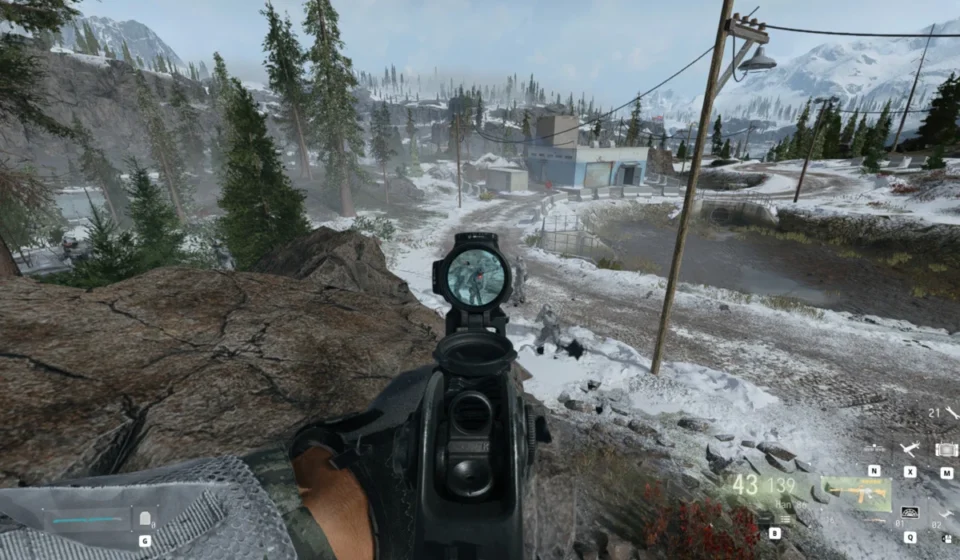

The gaming world has long grappled with the ebb and flow of franchises, and few embody this cycle as prominently as Call of Duty. For years, players have navigated a landscape of anticipation, occasional disappointment, and the persistent hope for a return to form. Activision’s latest offering, Call of Duty: Modern Warfare 4, released in October 2026 with a Manufacturer’s Suggested Retail Price (MSRP) of $70.00, appears to be a significant step in recapturing that lost magic, particularly for those who felt the franchise had strayed from its roots. This installment aims to reignite the passion of long-time fans by blending a compelling narrative with refined multiplayer and an expansive DMZ experience.

The journey to Modern Warfare 4 has been a protracted one, marked by a period where many felt the series was prioritizing novelty over substance. The pivot to futuristic settings, while an attempt to innovate, alienated a segment of the player base that cherished the grounded, contemporary warfare of the original Modern Warfare trilogy. The successful reboot in 2019 with Call of Duty: Modern Warfare offered a glimmer of hope, followed by a strong sequel. However, subsequent entries, including the critically divisive Black Ops 7, led to a resurgence of player skepticism. This backdrop of fluctuating quality made the announcement of a direct continuation of the Modern Warfare saga, specifically Modern Warfare 4, a moment of cautious optimism for many. The question on everyone’s mind was whether Infinity Ward could recapture the formula that defined a generation of first-person shooters.
Campaign: A Tale of Two Fronts and a Fractured Hero
The campaign of Modern Warfare 4 presents a narrative tapestry woven from two distinct yet interconnected threads. On one hand, players follow Captain John Price, a character deeply scarred by past events, particularly the death of Soap. This personal tragedy has clearly altered his approach to warfare, pushing him into morally ambiguous alliances and a relentless pursuit of his targets. His story arc begins with a visceral, uncharacteristic act of vengeance against Makarov, setting a grim tone for his subsequent actions. He aligns himself with Valeria Garza and her cartel, a partnership fraught with tension due to their differing moral compasses regarding civilian casualties. These missions take players through the gritty streets of Paris and the chaotic urban sprawl of Mumbai, highlighting Price’s internal struggle as he grapples with the "ends justify the means" philosophy, a stark contrast to his earlier adherence to stricter operational boundaries.

The second narrative strand plunges players into the escalating geopolitical crisis on the Korean peninsula. The campaign depicts a full-scale invasion of South Korea by the North, driven by the ultranationalist ambitions of Ri Ju-Young. Ambitious and ruthless, she sees herself as the true successor to her family’s authoritarian legacy, positioning herself as a stronger leader than her brother. Her meticulously planned invasion is facilitated by the covert backing of Archer, a shadowy figure orchestrating events to expand Russian influence and destabilize Western dominance. The invasion is portrayed as a demonstration of a new, experimental EMP weapon designed to cripple South Korean infrastructure, a prelude to Archer’s broader agenda targeting American influence in East Asia.
While the studio’s decision to employ a dual-timeline narrative, with Price’s missions often preceding the unfolding invasion, could have been disorienting, the execution is surprisingly coherent. This structure allows players to piece together the descent into conflict, understanding the "how" while the "what" rages around them. The contrasting gameplay experiences between these two storylines are a notable strength. Price’s missions are characterized by intimate, often brutal close-quarters combat and personal stakes, while the Korean conflict immerses players in large-scale warfare, complete with armored vehicles and urban assaults. The convergence of these narratives near the campaign’s conclusion provides a sense of closure to the Modern Warfare saga, fulfilling a long-held expectation for fans.

The game introduces compelling new characters within the Korean conflict. Park Hyun Jun, a conscript caught in the maelstrom of war, serves as an anchor for players, his primary motivation being the survival of his squad. Ko Jin-Hyuk, a North Korean officer disillusioned by Ri Ju-Young’s brutality, undergoes a significant character transformation as he begins to make independent choices, fostering a deeper player investment. Ri Ju-Young herself is crafted as a formidable and detestable antagonist, effectively embodying the ruthlessness of her regime.
However, the antagonist Archer, despite being portrayed by the esteemed Mads Mikkelsen, suffers from underutilization. While Mikkelsen delivers a chilling performance, the character’s limited screen time and delayed revelation of his motivations prevent him from achieving the same level of impact as other villains in the series. This feels like a missed opportunity to fully leverage the actor’s talent.

The campaign’s approximately eight-hour runtime is packed with engaging action and visually impressive environments that closely mirror their real-world inspirations. The gunplay is a standout feature, boasting a satisfying weight and impactful feedback, enhanced by subtle aim punch and screen shake that amplify the intensity of firefights. A particularly innovative addition is the "Stranded" mission, an open-world experience set behind enemy lines in North Korea, where players must scavenge, craft, and complete objectives in any order they choose. This mission offers a unique departure from the linear structure, providing a taste of survival-based gameplay. Another memorable sequence involves a desperate defense against overwhelming odds as players strategically switch between squad members to repel enemy advances.
Despite these strengths, the campaign is not without its flaws. Price’s character arc, while impactful early on, experiences a dilution of focus as the Korean conflict takes center stage. The final confrontation, particularly with Archer, feels abrupt and lacks the cathartic resonance of previous climactic encounters in the franchise. Furthermore, the melee combat, relying on a simple block-and-attack loop, feels underdeveloped. On the PC version, performance issues were noted, with the game requiring the activation of DLSS and frame generation for optimal smoothness even on high-end hardware.

Multiplayer: Refined Mechanics and Strategic Depth
The multiplayer component is often the lifeblood of any Call of Duty title, and Modern Warfare 4 makes significant strides in refining the core experience. A notable departure is the implementation of a more realistic movement system, shedding the "omnimovement" mechanics of previous installments for a grounded approach. While players are not as agile as in some recent iterations, the ability to chain slides and slide cancels still allows for fast-paced, responsive gameplay. This emphasis on deliberate movement makes positioning and tactical awareness more crucial than ever.
The gunplay mechanics have been expertly tuned, with recoil animations accurately reflecting weapon behavior. The time-to-kill (TTK) strikes a commendable balance, offering a faster pace than the Black Ops series but slower than previous Modern Warfare titles, ensuring players feel they have a fighting chance while still rewarding precise shooting. Matchmaking, a frequent point of contention in online communities, is reported to be highly reliable in Modern Warfare 4, leading to closely contested matches where the outcome is often decided by a few critical plays. The game intelligently adjusts to player skill levels, ensuring a consistently competitive experience.

Modern Warfare 4 launches with 13 6v6 maps, including the addition of the fan-favorite Shipment. While most maps are well-designed, a few exceptions exist. "Transit" is criticized for being excessively small, and "Nautical" is considered a less viable iteration of "Hijacked," potentially benefiting from additional flanking routes.
Infinity Ward has introduced several new multiplayer modes, injecting fresh tactical layers into the gameplay. "Collateral" is a 5v5 Search and Destroy variant that eschews respawns and custom loadouts, opting for a buy-system for weapons and gear, reminiscent of titles like Counter-Strike and Valorant. "Hijack" centers around controlling a single Data Spike for planting at the enemy’s communication station. "Inflation" is a high-octane mode where accumulating cash through kills increases your score and makes you a visible target on the radar.

The standout new mode is "Kill Block," a modular, three-section arena that draws its outer sections from a diverse pool of custom-built environments and its central section from iconic locations of classic Call of Duty maps. With over 500 potential combinations, this design ensures remarkable replayability and keeps matches feeling fresh. Environmental factors like snow or rain can further impact gameplay by reducing visibility.
Weapon progression has also seen a significant overhaul with the introduction of cross-weapon attachment progression. This system allows players to level up weapons they don’t actively use if they share attachments with a weapon they do, streamlining the grind and encouraging experimentation. Maxing out a weapon unlocks its "Apex attachment," which can fundamentally alter its functionality without consuming an attachment slot. Custom loadouts remain robust, featuring three built-in perks and a wide array of killstreaks, including new additions like a railgun sentry and a gunship.

Despite these improvements, the multiplayer experience, after extensive playtime, can begin to feel somewhat repetitive. While new modes like Kill Block offer welcome variety, the core loop may not sustain the same level of long-term engagement as some of the franchise’s most beloved entries. For Infinity Ward to retain player interest over the long haul, continuous introduction of new content and ideas through seasonal updates will be crucial.
DMZ: The Evolving Extraction Experience
The DMZ mode stands out as a significant draw for Modern Warfare 4, offering an expansive and deeply engaging extraction-based gameplay loop. Set after the campaign, the mode drops up to 60 players into squads of three within the Hajin map, a vast demilitarized zone between North and South Korea. This is the largest DMZ map to date, featuring 13 major points of interest and numerous smaller locations, each with varying threat levels. Dynamic weather systems play a crucial role, impacting visibility and strategic sightlines. The addition of vehicle maintenance, requiring refueling and repairs, transforms gas stations into critical strategic points and potential ambush locations.

While the initial launch offers six story missions, their variety is commendable. Missions like "Operation Silent Ledger," a casino heist for master printing plates, and "Operation Fallen Ember," involving the retrieval of a nuclear warhead from a reactor, provide engaging objectives. Each mission rewards players with cash, keys, gear, and vehicles. Dynamic Ops, multi-stage missions that can be initiated mid-match or pre-selected, offer escalating rewards upon completion.
A compelling risk-reward mechanic is integrated through the "heat level" system. Engaging in combat with other players increases your heat level, placing a bounty on your head that can be tracked via bounty boards scattered across the map. Players can also use these boards to pay off their own bounties or gather intel on other targets, adding a layer of strategic depth to player-versus-player encounters.

The Forward Operating Base (FOB) serves as a crucial hub between deployments, offering vendors, a 3D printer for crafting, and a dog tag case for tracking progress. As players level up, new stations become available. Crafting gear requires scavenging in-game, placing greater emphasis on looting and exploration. DMZ progression is entirely separate from the multiplayer experience, fostering a distinct sense of achievement.
The Gunsmith station, unlocked at level 10, allows for extensive weapon customization using blueprints gathered during operations. The tiered system for purchasing additional attachment slots significantly raises the stakes, as a fully kitted weapon offers a substantial advantage but also represents a greater loss if the operator is eliminated. Operators themselves have three trait trees—Warfighter, Scout, and Survivalist—which develop with sustained survival. Losing an operator can be mitigated by paying for a rescue team, with the cost increasing based on the operator’s level, further reinforcing the weight of every decision.

The high-stakes nature of DMZ, where hours of progression can be undone by a single misstep, makes successful extractions incredibly satisfying. However, a significant drawback is the mode’s limited catering to solo players. While squad fill can be disabled, the prevalence of coordinated teams and the lack of a dedicated solo queue can create an unbalanced and potentially frustrating experience for those venturing alone.
The transition of DMZ from a free-to-play component to part of the $70 premium game is a point of contention for some. While the extensive work invested justifies its inclusion, the inclusion of single-use DMZ upgrades in the $100 Vault Edition raises concerns about a potential slippery slope towards pay-to-win mechanics, especially for players who have already invested in the full game.

Despite these concerns, DMZ offers immense value. Its rewarding progression system and the constant thrill of potential loss create an immersive experience that rivals RPGs. It is likely to be a primary motivator for many players purchasing Modern Warfare 4, and it certainly serves as a powerful incentive for the reviewer to repeatedly return to the game.
Conclusion: A Resurgence Worthy of Investment
Call of Duty: Modern Warfare 4 represents a significant achievement for Infinity Ward, potentially serving as a fitting conclusion to the rebooted Modern Warfare saga. The campaign, a marked improvement over its predecessor, recaptures the enthralling action and narrative depth that defined the franchise. While the campaign stumbles slightly with an underdeveloped antagonist and a less impactful final encounter, the compelling dual narratives and the game’s overall immersive quality make it a highly enjoyable experience.

The multiplayer component successfully refines core mechanics, offering grounded movement, responsive gunplay, and a variety of engaging new modes. The foundation is robust, but sustained player investment will depend on Infinity Ward’s commitment to delivering fresh content through ongoing seasonal updates.
However, the undeniable star of Modern Warfare 4 is its DMZ mode. The extensive progression systems, the high-stakes gameplay, and the immersive world of Hajin provide an unparalleled extraction experience within the Call of Duty ecosystem. The potential for loss amplifies the satisfaction of success, making every deployment a tense and rewarding endeavor. Addressing the challenges faced by solo players and the concerns surrounding premium edition advantages would further solidify DMZ’s position as a genre-defining mode.

After a series of years marked by waning player enthusiasm, Call of Duty: Modern Warfare 4 has genuinely exceeded expectations. While minor criticisms remain regarding multiplayer longevity and certain campaign elements, the overall package feels like a worthwhile investment. For the first time in years, the annual expenditure on a Call of Duty title feels fully justified, delivering a comprehensive and engaging experience across its multiple modes.
Digital Trends reviewed Call of Duty: Modern Warfare 4 on PC using a copy purchased independently on Steam. Testing was conducted on a system with a ZOTAC GeForce RTX 5070 Ti 16GB, AMD Ryzen 7 9800X3D, and 32GB of DDR5-6000 RAM.

Call of Duty: Modern Warfare 4 is available on PlayStation 5, Xbox Series X/S, Nintendo Switch 2, and PC via Steam, Battle.net, and Xbox on PC.
The following are the PC requirements for the game, as per Steam:
| Minimum | Recommended | |
|---|---|---|
| OS | Windows® 10 64 Bit (latest update)* | Windows® 11 64 Bit (latest update)* |
| Processor | AMD Ryzen™ 5 1400 or Intel® Core™ i5-6600 | AMD Ryzen™ 5 3600 or Intel® Core™ i7-8700K |
| Memory | 8 GB RAM | 16 GB RAM |
| Graphics | AMD Radeon™ RX 470, NVIDIA® GeForce® GTX 970 / 1060 or Intel® Arc™ A580 | AMD Radeon™ RX 6600XT, NVIDIA® GeForce® RTX 3060 or Intel® Arc™ B580 |
| Network | Broadband Internet connection | Broadband Internet connection |
| Storage | 115 GB available space | 115 GB available space |
| Sound Card | DirectX compatible | DirectX compatible |