Apple Unveils Touchscreen MacBook Pro, Marking a Paradigm Shift After Years of Resisting Direct Input

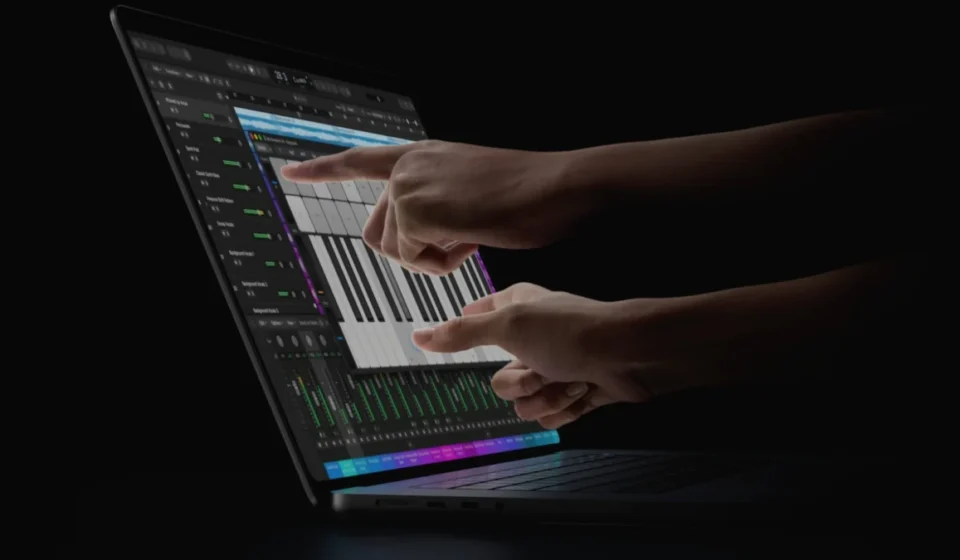
Apple has officially introduced its highly anticipated MacBook Pro models featuring integrated touchscreen displays, a move that signifies a significant departure from the company’s long-held stance against direct interaction on its Mac line. This groundbreaking announcement, made on October 28, 2026, ushers in a new era for macOS, potentially reshaping user interaction and developer strategies. The new devices, branded as MacBook Pro with PROLED XDR, now incorporate touch capabilities, a feature that was once considered antithetical to the Mac’s design philosophy.
The journey to a touchscreen Mac has been a protracted one, marked by decades of deliberate design choices and vocal opposition from key Apple figures. As far back as 2010, the late Steve Jobs articulated a clear rationale against touchscreens on vertical displays. He famously argued that "touch surfaces don’t want to be vertical," citing the significant arm fatigue that users would experience from the repetitive motion of reaching up to interact with a screen. This ergonomic concern was a foundational principle that guided Apple’s product development for years, positioning the iPad as the dedicated platform for touch-based computing.
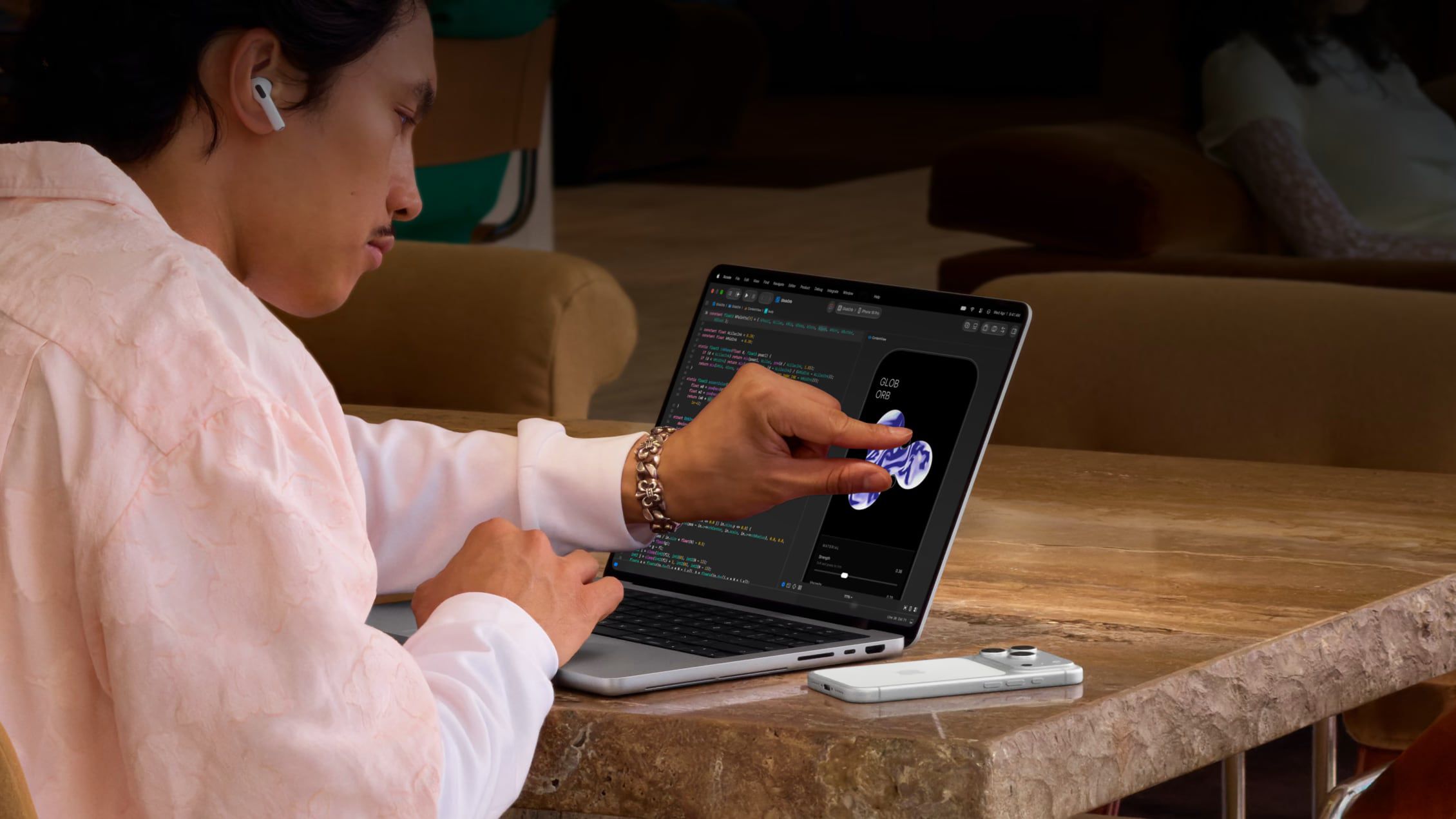
More recently, in an October 2021 interview with Joanna Stern, John Ternus, Apple’s then-Senior Vice President of Hardware Engineering, reiterated this philosophy. He stated that the Mac was "made exclusively for indirect input" and that Apple "hadn’t really felt a reason to change that." Ternus emphasized that Apple already offered "the world’s best touch computer on an iPad," which was "totally optimized for that," while the Mac remained "totally optimized for indirect input." This perspective underscored Apple’s commitment to distinct user experiences across its product families.
A Decade of Deliberation Culminates in Touch Integration
The shift in Apple’s strategy, evident in the 2026 MacBook Pro release, is widely interpreted as a response to evolving user expectations and market trends. A generation of users has grown up with smartphones and tablets, where touch interaction is the primary mode of engagement. This ingrained familiarity with direct manipulation on mobile devices appears to have exerted a significant influence on consumer demand for a more intuitive and unified computing experience across all Apple devices. Industry analysts suggest that Apple’s decision to integrate touch, while seemingly a reversal, is a pragmatic adaptation to maintain its competitive edge in a rapidly changing technological landscape.
The introduction of the PROLED XDR display with touch functionality on the latest MacBook Pro models, available in 14-inch and 16-inch configurations, marks the first time a Mac has embraced this technology. This decision comes alongside the announcement of the new 14-inch MacBook Pro featuring the M6 chip, highlighting Apple’s continued commitment to performance innovation within its pro laptop line. The M6 chip boasts a 12-core CPU, comprising 2 super cores, 4 performance cores, and 6 efficiency cores, paired with a 12-core GPU. This represents an upgrade from the M5 chip, which featured a 10-core CPU with 4 super cores and 6 efficiency cores, and a 10-core GPU.
Navigating the Touchscreen: Disabling and Customizing Input
Despite the integration of touch, Apple has ensured that users retain control over their interaction preferences. The company has implemented straightforward methods to disable touch input, allowing users to opt out of this new functionality if they prefer the traditional indirect input methods. This feature is particularly relevant for users who may find touch interaction on a laptop screen distracting or unnecessary for their workflow.
The process to disable touch input on the new MacBook Pro models is consistent and accessible through macOS System Settings. This capability extends to Sidecar, Apple’s feature that allows an iPad to be used as a secondary display for a Mac. Users can now disable touch input on both the MacBook Pro’s integrated screen and on an iPad used in conjunction with it via Sidecar.
To disable touch functionality on the MacBook Pro or within Sidecar, users can follow these steps:
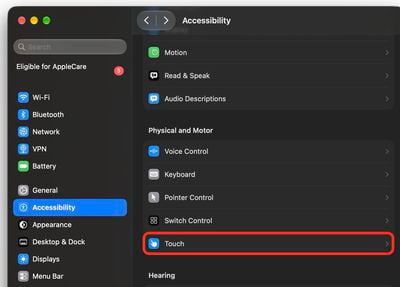
- Navigate to System Settings on your MacBook Pro.
- Select Accessibility from the sidebar.
- Under the "Motor" section, choose Touch Display.
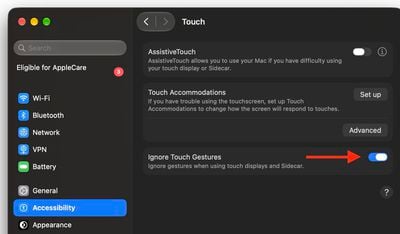
- Toggle the Ignore Touch Gestures option to the ON position.
Once this setting is activated, the Mac will cease to recognize touch input on its screen. Crucially, this setting also applies to any iPad being used as a second display via Sidecar, ensuring a consistent input experience across the user’s setup. For users who wish to re-enable touch functionality, the process is reversed: simply return to the same Accessibility > Touch Display menu and toggle Ignore Touch Gestures to the OFF position.
Beyond Disabling: Granular Control Over Touch Gestures
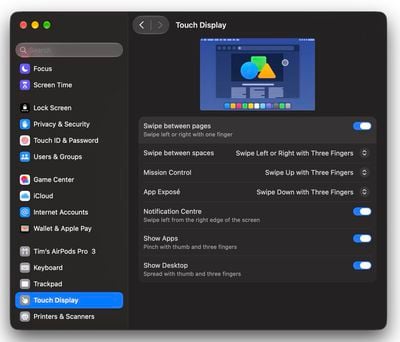
Recognizing that some users might find certain touch gestures beneficial while others prove problematic, Apple has provided granular control over individual gestures. This approach allows for a more nuanced integration of touch, catering to diverse user needs and workflows. Instead of a binary disable/enable option, users can selectively turn off specific gestures that may be triggered inadvertently or that they do not wish to use.
Within System Settings, users can access the Touch Display section. Here, each individual gesture can be independently switched off. Furthermore, common macOS gestures such as "Swipe between spaces," "Mission Control," and "App Exposé" offer pop-up menus for customization, allowing users to redefine how these gestures are performed or disable them entirely. This level of control ensures that the touchscreen enhances, rather than hinders, user productivity.
Accessibility and Developer Implications
Beyond the core user settings, Apple has also integrated touch functionality and its management within its comprehensive Accessibility features. The Accessibility > Touch Display menu offers further customization options, including "Touch Accommodations." This feature allows users to modify how the screen responds to taps, swipes, and touch-and-hold inputs, providing a tailored experience for individuals with specific accessibility requirements.
For users who benefit from alternative input methods, AssistiveTouch is also available within this settings menu, offering new ways to interact with the touch screen. Additionally, the Accessibility > Zoom menu includes an option to utilize the touch display or Sidecar for zooming, further expanding the accessibility toolkit.
The introduction of touch on the Mac also presents significant opportunities and considerations for app developers. Xcode’s iOS Simulator now directly responds to touch input on the Mac’s screen. This allows developers to test their applications’ touch-based interactions, such as taps, swipes, and pinches, directly on the device’s display, rather than relying on trackpad and keyboard approximations. This direct feedback loop is expected to streamline the development process and lead to more refined touch-optimized applications.
A New Chapter for the Mac Ecosystem
The integration of touchscreens into the MacBook Pro line represents a pivotal moment in Apple’s product evolution. While the company has historically championed the distinct strengths of its Mac and iPad lines, this move suggests a strategic convergence of user experiences. The "PROLED XDR" branding itself hints at the advanced display technology, likely contributing to the visual fidelity and responsiveness required for an optimal touch experience.
Pricing for the new MacBook Pro models starts at $2,899 for the 14-inch model and $3,399 for the 16-inch model. Apple has positioned these new devices as offering "the world’s best display in a pro laptop," emphasizing not only the touch capabilities but also the overall visual quality of the PROLED XDR screen.
This strategic pivot, while a departure from past pronouncements, aligns with broader industry trends towards multi-modal computing. The implications for the future of macOS are significant, potentially influencing interface design, software development, and user interaction paradigms for years to come. The ability to disable touch ensures that traditionalists are not alienated, while the customization options cater to a spectrum of user preferences, solidifying Apple’s commitment to providing choice within its evolving ecosystem.