Tesla Opens Cybercab Orders to Select US Customers Amidst Strict Limitations and Shifting Strategies

Tesla has commenced accepting orders for its highly anticipated Cybercab, a two-seater autonomous vehicle, from a restricted group of customers within the United States. The revolutionary vehicle, notably devoid of a traditional steering wheel or pedals, is priced at $29,990. However, ownership is contingent upon a mandatory $299 monthly Autonomy Subscription, escalating the annual cost to $3,588. Prospective buyers are also required to place a non-refundable deposit of $1,000 to secure a reservation, with initial deliveries projected for December 2026.
This development arrives shortly after Tesla CEO Elon Musk indicated to investors that the majority of Cybercabs would be integrated into Tesla’s proprietary robotaxi service, rather than being individually owned. The company had previously hinted at delivering a limited number of vehicles to consumers before the close of the current year, a timeline that now appears to be shifting.

Geographic and Usage Restrictions Define Initial Rollout
The current rollout of the Cybercab is notably constrained, with Tesla limiting initial deliveries to five specific cities in Texas: Austin, Dallas, Houston, San Antonio, and Fort Worth. Each customer is further restricted to purchasing a single Cybercab. Operationally, the autonomous vehicle is confined to designated geofenced zones within Tesla’s existing robotaxi service areas. This implies that owners will not have the freedom to operate their Cybercabs independently in any location they choose.
A significant point of contention and a clear indicator of Tesla’s intended operational model is the mandatory $299 monthly subscription. This recurring fee is indispensable for the vehicle’s operation, meaning the initial purchase price does not represent the total cost of ownership or usage. This structure strongly suggests that Tesla envisions the Cybercab primarily as a component of its mobility-as-a-service offering, rather than a personal vehicle for widespread private ownership.
Elon Musk Acknowledges Subscription Fee Concerns and Future Expansion Plans
Elon Musk himself has publicly acknowledged that the $299 monthly subscription fee might be perceived as excessive. In a response on the social media platform X (formerly Twitter), Musk suggested that the fee should be more aligned with the combined cost of Tesla’s Full Self-Driving (FSD) capability and connectivity services for its other models, which currently hovers around $115 per month. This statement suggests a potential recalibration of the subscription model in the future, although no concrete timeline has been provided.

Musk also confirmed that the Cybercab is intended for nationwide availability. This expansion, however, is contingent upon securing the necessary regulatory approvals across different jurisdictions. The process of obtaining such approvals for fully autonomous vehicles is complex and often protracted, explaining the phased approach to market entry.
Strategic Shift: Prioritizing Robotaxi Production Over Personal Vehicle Manufacturing
The decision to prioritize Cybercab production for a robotaxi fleet has significant implications for Tesla’s broader manufacturing strategy. The company initiated Cybercab production earlier this year, signaling a clear commitment to this new venture. In a move that underscores this strategic pivot, Tesla has announced plans to significantly wind down production of its Cybertruck around mid-2027. This reallocation of manufacturing resources is intended to bolster the output of Cybercabs, further emphasizing Tesla’s ambition to dominate the autonomous ride-hailing market.
The timing of these decisions raises questions about the long-term availability of other Tesla models. The scaling back of Cybertruck production, a vehicle that garnered considerable attention and pre-orders, suggests a definitive shift in Tesla’s product development focus. It remains unclear when Tesla might open general orders for the Cybercab to the wider public, or if the $299 monthly subscription fee will be adjusted to a more palatable level for potential individual buyers.

Contextualizing the Cybercab’s Market Entry: A New Era of Autonomous Mobility?
The launch of the Cybercab represents a pivotal moment in the evolution of autonomous vehicles and the ride-sharing industry. For years, companies have been developing and testing self-driving technology, with the ultimate goal of deploying fleets of autonomous taxis. Tesla’s approach, characterized by its integrated hardware and software ecosystem, positions it as a significant contender in this emerging market.
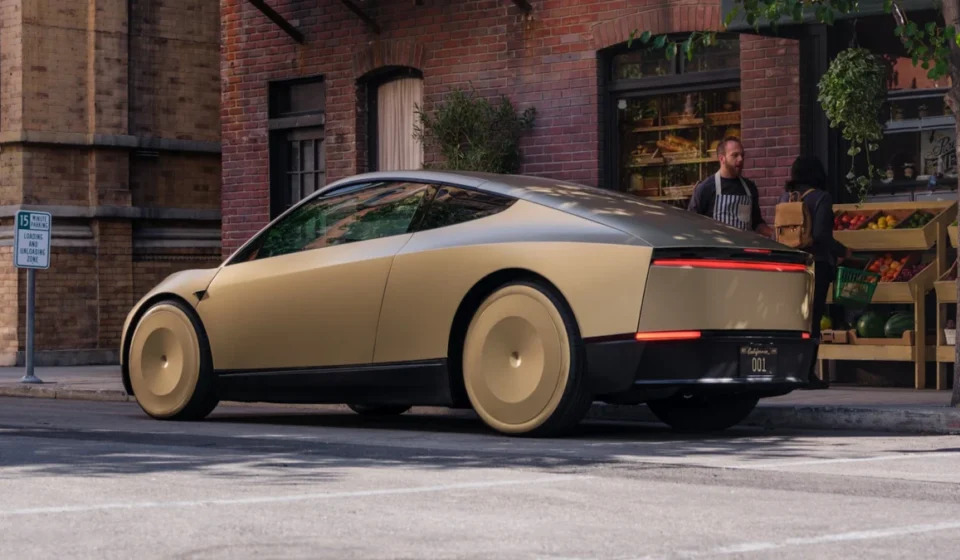
The Cybercab’s unique design, featuring a futuristic aesthetic and the absence of traditional driving controls, highlights its intended purpose as a purely autonomous passenger vehicle. This design philosophy, while radical, aligns with the vision of a future where personal car ownership is supplemented or even replaced by on-demand autonomous transportation.
The initial limitations—geographic restrictions, a single-vehicle purchase limit, and the mandatory subscription—serve multiple purposes. They allow Tesla to manage the complexity of a new product launch, gather crucial data in controlled environments, and refine its operational logistics. Furthermore, the subscription model is a clear indicator of Tesla’s desire to build a recurring revenue stream from its mobility services, moving beyond the traditional model of vehicle sales.

Broader Industry Implications and Future Outlook
The success or failure of Tesla’s Cybercab initiative will undoubtedly have far-reaching implications for the automotive and technology sectors. If Tesla can successfully deploy and scale its robotaxi service, it could accelerate the adoption of autonomous vehicles and disrupt the traditional taxi and ride-sharing industries. Competitors will be closely watching Tesla’s progress, potentially spurring increased investment and innovation in autonomous driving technology across the board.
However, significant challenges remain. Regulatory hurdles, public perception of autonomous vehicle safety, and the economic viability of large-scale robotaxi operations are all critical factors that will influence the long-term trajectory of this technology. The current pricing strategy, particularly the high monthly subscription, could also be a barrier to widespread adoption by individual consumers, even if it proves to be a sustainable model for fleet operators.
The decision to reallocate manufacturing resources from the Cybertruck to the Cybercab suggests a bold bet by Tesla on the future of autonomous mobility. While the exact timeline for widespread availability and potential pricing adjustments remains uncertain, the initial offering of the Cybercab marks a significant step towards realizing that future. The coming years will be crucial in determining whether Tesla’s ambitious vision for the Cybercab and its robotaxi service will materialize into a transformative force in transportation. The company’s ability to navigate regulatory landscapes, build consumer trust, and achieve operational efficiency will be key determinants of its success in this new frontier.