Google Messages Prepares Personalized Smart Replies, Signaling Deeper AI Integration for Enhanced Conversational Nuance.

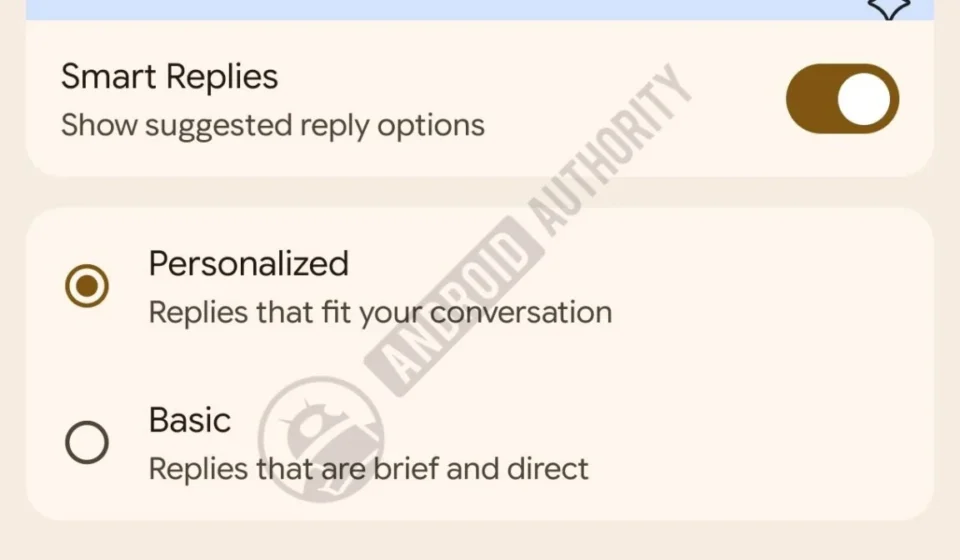
Google Messages, the default messaging application for Android devices, appears poised to introduce a significant enhancement to its long-standing Smart Replies feature, moving beyond generic suggestions to offer personalized responses tailored to the specific tone and context of individual conversations. This development, uncovered through an APK teardown of version messages.android_20261113_00_RC00.phone.openbeta_dynamic, suggests a more sophisticated integration of artificial intelligence aimed at making automated communication feel more natural and intuitive. While still in its work-in-progress phase and not guaranteed for public release, the discovered code points to an upcoming option that allows users to choose between standard Smart Replies and a new, personalized variant designed to align with the unique dynamics of their chats.
The potential for personalized Smart Replies marks a pivotal evolution in Google’s strategy to leverage advanced AI in its core communication products. For years, Smart Replies have offered users convenient, one-tap responses to incoming messages, streamlining quick interactions. These initial iterations, while effective for basic affirmations or common queries, often lacked the nuanced understanding required for more complex or emotionally charged exchanges. The proposed upgrade, as indicated by the internal code, seeks to bridge this gap, promising responses that better reflect the established rapport and conversational style between users.
The Evolution of Smart Replies: From Generic to Nuanced
Smart Replies first emerged within Google’s ecosystem as a feature in Google Allo, a messaging app launched in 2016, which eventually gave way to the company’s consolidated focus on Google Messages. The initial premise was straightforward: to save users time by providing three contextually relevant, short response options based on the incoming message. For instance, if a friend texted "Are you free for dinner tonight?", Smart Replies might offer "Yes," "No," or "What time?" These basic suggestions proved useful for simple queries, reducing the need for full manual typing, especially on the go.
Over time, Google integrated Smart Replies into Google Messages, recognizing its utility for the vast Android user base. The feature evolved incrementally, with minor improvements in contextual accuracy and the range of suggested responses. A more substantial enhancement arrived a few months prior to this new discovery, allowing users to "tap to draft" a Smart Reply, which would then appear in the message input field, ready for editing before sending. This addition addressed a key user complaint: the inability to fine-tune an AI-generated response to better fit personal expression. However, even with this editing capability, the underlying Smart Reply generation remained largely universal, applying the same general logic regardless of whether the user was texting a close friend, a family member, or a professional colleague.
The newly discovered "personalized" option aims to transcend these limitations. The internal descriptions hint at an AI capable of adapting its suggestions to match the "tone of the conversation." This implies a deeper analytical layer, where the AI not only understands the immediate content of a message but also the historical context, the relationship dynamic, and the prevailing sentiment within a chat thread. This move aligns with a broader industry trend towards more intelligent and adaptive AI assistants, capable of learning and evolving based on user interactions.
Technical Underpinnings: How Personalization Might Work
Achieving truly personalized Smart Replies requires sophisticated artificial intelligence, likely leveraging advanced Large Language Models (LLMs) similar to those powering Google’s Gemini, LaMDA, or PaLM families. These models excel at understanding and generating human-like text, making them ideal candidates for generating contextually relevant and tonally appropriate responses.
The process for generating personalized Smart Replies could involve several complex steps:
- Contextual Analysis: The AI would first analyze the immediate incoming message, identifying keywords, entities, and the overall intent.
- Conversational History Review: Crucially, for personalization, the AI would then likely process the preceding messages in the thread, perhaps even historical conversations with that specific contact. This would allow it to grasp the ongoing topic, the emotional tenor (e.g., informal, formal, humorous, serious), and the established communication patterns between the two individuals.
- User’s Communication Style Learning: The system might also learn from the user’s own past responses and preferred language when interacting with that specific contact. Does the user frequently use emojis with their friends but maintain a formal tone with their boss? Does a particular inside joke often surface? This granular understanding would be key to generating truly "personalized" suggestions.
- Tone Matching: Based on the above analysis, the AI would generate response options that not only answer the query but also mimic the identified tone and style. For instance, a casual chat with a friend might yield responses incorporating slang or informal phrasing, while a professional exchange would receive more formal and direct suggestions.
- Privacy-Preserving AI: A critical aspect of such deep personalization would be Google’s approach to data privacy. To address concerns about sensitive personal data being processed, Google has increasingly invested in privacy-preserving machine learning techniques. This could involve:
- On-device processing: Where the bulk of the personalization algorithm runs directly on the user’s smartphone, minimizing the need to send sensitive conversational data to Google’s servers. This is a common approach for privacy-centric features.
- Federated Learning: A technique where AI models are trained on decentralized datasets located on local devices, without exchanging the data itself. Only the model updates (insights from the data) are aggregated.
- Anonymization and Differential Privacy: Methods to obscure individual data points while still allowing the AI to learn general patterns.
- User Opt-in/Opt-out: The presence of a toggle to choose between "basic" and "personalized" Smart Replies strongly suggests user control, allowing individuals to decide their comfort level with AI-driven personalization. This explicit choice would be a crucial element in maintaining user trust.
Distinction from Magic Compose
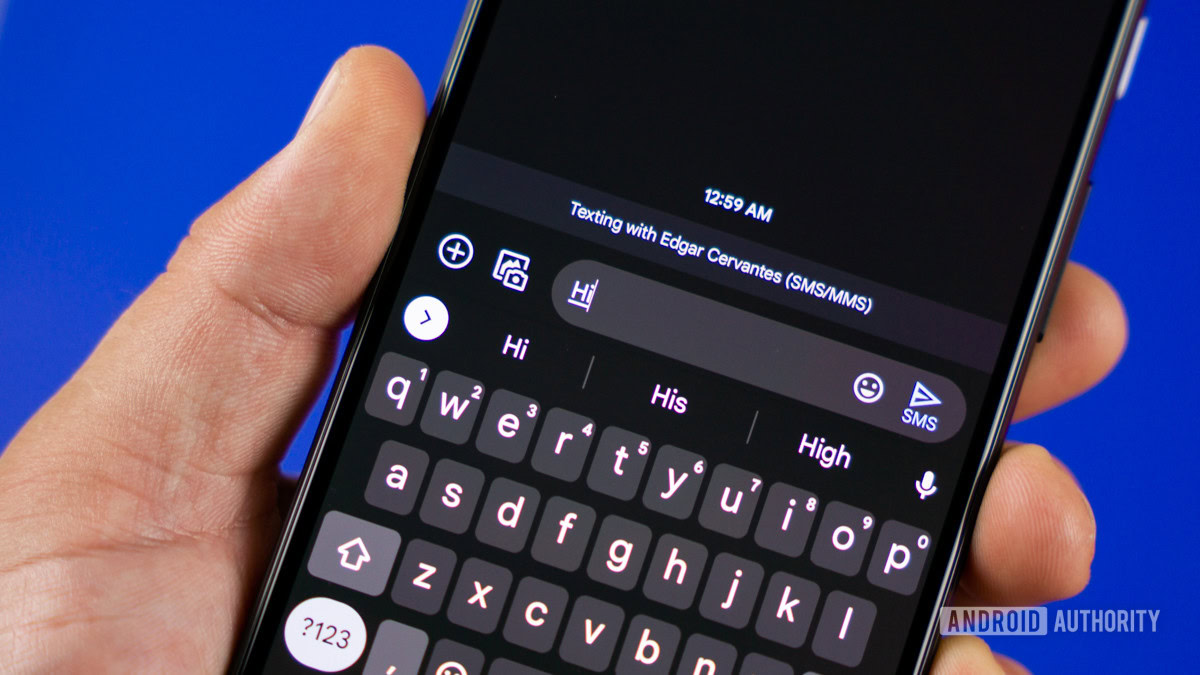
It is important to differentiate these personalized Smart Replies from Google’s existing "Magic Compose" feature, which was introduced to Google Messages earlier. Magic Compose is a more hands-on generative AI tool that allows users to rewrite entire drafts of messages in various styles (e.g., formal, casual, lyrical, enthusiastic) or even summarize long conversations. While both leverage advanced AI for text generation, Magic Compose requires active user input to generate a full message or rewrite, whereas personalized Smart Replies are designed to be quick, low-effort suggestions that appear automatically. The goal of personalized Smart Replies is to reduce friction and cognitive load, making quick responses feel more authentic without requiring the user to actively "compose" with AI.
A Chronology of Google’s Messaging and AI Journey
Google’s path in messaging has been complex, often characterized by a proliferation of apps before a concerted effort to unify its strategy around Google Messages and RCS (Rich Communication Services).
- Early 2010s: Google offered various messaging solutions, including Google Talk, Hangouts, and later Duo and Allo, creating a fragmented user experience.
- Mid-2010s (2016-2017): Google began to consolidate its messaging efforts, focusing on Android Messages (later rebranded as Google Messages) as the primary SMS/MMS client and initiating the push for RCS adoption as a modern replacement for SMS. Smart Replies made their debut in Google Allo.
- Late 2010s (2018-2019): Smart Replies were integrated into Google Messages, becoming a staple feature for quick responses. Google also started actively promoting RCS adoption with carriers and device manufacturers.
- Early 2020s (2020-2021): Significant advancements in Google Messages included end-to-end encryption for RCS chats, further solidifying its security features. Google’s broader AI research intensified, leading to breakthroughs in LLMs.
- Mid-2020s (2022-2023): Google unveiled its next-generation AI models (LaMDA, PaLM, Gemini) and began integrating generative AI into various products. Features like "Tap-to-Draft" for Smart Replies and Magic Compose were rolled out to Google Messages, showcasing the increasing sophistication of AI in communication.
- Present (Late 2023 / Early 2024 – based on teardown date): The discovery of personalized Smart Replies indicates a continued push towards deeply integrated, context-aware AI in everyday communication, moving beyond generic functionality to truly adaptive user experiences.
Broader Implications and Market Impact
The introduction of personalized Smart Replies, if fully implemented, carries significant implications for user experience, data privacy, and the competitive landscape of mobile messaging.
- Enhanced User Experience: For the average user, this feature promises a more seamless and less robotic communication experience. Automated replies will no longer feel like stock phrases but rather an extension of their own communication style, reducing the mental effort required for quick exchanges. This could lead to increased engagement with Google Messages and a more natural flow in digital conversations. It addresses the common frustration of generic Smart Replies not quite fitting the moment.
- Privacy and Trust: The success of such a deeply personalized feature hinges critically on Google’s ability to communicate its privacy safeguards effectively. As AI delves deeper into personal communication patterns, user apprehension about data collection and processing inevitably rises. Clear explanations of how data is used (e.g., on-device processing, opt-in mechanisms, data anonymization) will be paramount to building and maintaining user trust. Any misstep in this area could undermine the feature’s adoption.
- Competitive Edge: In the fiercely competitive messaging market, where platforms like Apple’s iMessage, WhatsApp, Signal, and Telegram vie for user attention, innovation in AI-powered features can be a significant differentiator. Apple’s iMessage, while offering strong integration within the Apple ecosystem, has not yet publicly introduced a comparable level of personalized AI-driven response suggestions. This move could position Google Messages as a leader in smart, AI-enhanced communication on Android, further solidifying its position as the preferred messaging app for a vast global user base. It could also put pressure on competitors to develop similar capabilities, fostering an environment of innovation in conversational AI.
- Future of Conversational AI: Personalized Smart Replies represent another step towards a future where AI acts as a sophisticated co-pilot in our digital lives. As LLMs become more capable and efficient, their integration into everyday tools like messaging apps will become more pervasive. This feature hints at a future where AI not only understands our words but also our relationships, our moods, and our unique ways of expressing ourselves, making digital interactions richer and more authentic. It also opens avenues for AI to assist with language translation in real-time while maintaining personal tone, or even offering culturally appropriate responses.
- Ethical Considerations: As with all powerful AI, ethical considerations are vital. The potential for AI to learn and mimic personal communication styles raises questions about authenticity and the boundaries between human and machine interaction. Ensuring that the AI remains a helpful tool rather than an intrusive or manipulative presence will be an ongoing challenge for developers. Bias in AI models, if not carefully addressed during training, could also manifest in generated responses, necessitating robust ethical guidelines and continuous monitoring.
Inferred Industry Reactions
While Google has not officially commented on this unreleased feature, industry analysts would likely view personalized Smart Replies as a strategic move aligning with Google’s "AI-first" philosophy. Tech commentators might suggest that this feature could significantly enhance Google Messages’ appeal, particularly among users who value efficiency without sacrificing personal touch. They might also highlight the careful balance Google must strike between delivering advanced AI capabilities and safeguarding user privacy, noting that transparency will be key.
Privacy advocates, on the other hand, might reiterate calls for robust data governance and user control. They would likely emphasize the need for clear consent mechanisms and auditable processes to ensure that personal conversational data, used to train or inform these personalized AI models, is handled with the utmost care and respect for individual privacy. Questions regarding the extent of data collection, storage, and processing, even if performed on-device, would remain central to their discourse.
Conclusion
The discovery of personalized Smart Replies in Google Messages’ beta code signals an exciting frontier for conversational AI in everyday communication. By moving beyond generic, one-size-fits-all responses, Google is demonstrating a commitment to making its messaging platform more intelligent, intuitive, and genuinely helpful. This evolution aligns with the broader trend of integrating powerful generative AI models into consumer applications, aiming to reduce friction and enhance user experience.
However, as with any advanced AI feature that delves into personal data and communication styles, the eventual rollout and success of personalized Smart Replies will depend heavily on Google’s ability to deliver on its promises of seamless integration, contextual accuracy, and, crucially, robust privacy safeguards. The tech community and users alike will be keenly watching for official announcements and practical demonstrations of this promising new capability, eager to see how it reshapes the future of digital conversations. The feature stands as a testament to the ongoing race to make AI an indispensable, yet unobtrusive, assistant in our daily lives.