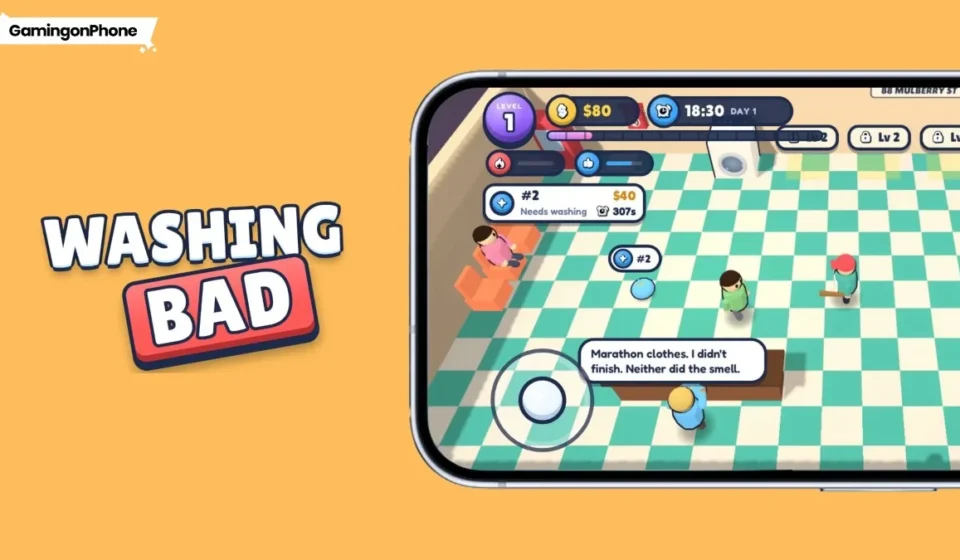
Washing Bad is a quirky laundromat simulator with a criminal twist, now live on mobile

The core premise of "Washing Bad" challenges players to master the delicate balance between legitimate commerce and criminal subterfuge. Beginning with a modest, unassuming laundromat, players are tasked with the familiar responsibilities of a small business owner: processing laundry orders, operating various washing and drying machines, and ensuring customer satisfaction through timely and effective service. This initial layer of gameplay focuses on efficiency, resource management, and strategic decision-making regarding detergent choices and chemical treatments to tackle different fabric types and stains. However, the game’s true depth emerges as players are drawn into the shadowy world of organized crime, where the "dirty work" takes on an entirely new meaning. The local mafia soon becomes a primary client, bringing in bundles of stained cash, counterfeit bills, and other suspicious items that require specialized, discreet handling, transforming the seemingly innocent laundromat into a critical node in their illicit network.
The Dual Imperatives: Balancing Suds and Subterfuge
The gameplay mechanics of "Washing Bad" are ingeniously designed to reflect this duality. By day, players must maintain the facade of a legitimate business. This involves interacting with a diverse cast of neighborhood customers, each with their own specific laundry needs and deadlines. Success in this aspect hinges on precise execution: selecting the correct wash cycles, applying appropriate cleaning agents, and ensuring that garments are returned pristine and on time. Efficient management of the laundromat’s resources—from water and electricity consumption to the stock of detergents and stain removers—is crucial for profitability and reputation. A well-run front ensures a steady stream of income and prevents unwanted attention from local authorities or curious neighbors.
Yet, beneath this veneer of normalcy, a far more perilous operation unfolds. The mafia’s demands introduce a layer of high-stakes risk and moral ambiguity. Players must learn to identify and process illicit items, which often require unique methods and chemical solutions not found in standard laundry protocols. Cleaning "stained cash" or "counterfeit bills" is not merely about removing dirt; it’s about meticulously altering their appearance to pass scrutiny, a process that demands careful attention and often specialized, illicit chemicals. This secret aspect of the business requires players to develop a clandestine workflow, often under the cover of night or during periods of low customer traffic, to avoid raising suspicions. The game effectively simulates the tension of this double life, where a simple mistake in either realm can have significant, often dire, consequences.
Escalating Risks: Heat Levels, Police, and Mafia Enforcers
As players delve deeper into the criminal underworld, the stakes continuously escalate. "Washing Bad" introduces a dynamic "Heat level" system, a direct consequence of engaging in illegal activities. Each illicit job completed contributes to this Heat level, metaphorically drawing the attention of law enforcement. A rising Heat level increases the likelihood of police inspections, which can jeopardize the entire operation. These inspections are not merely passive events; players may be required to bribe officers to keep their illicit activities under wraps, adding another layer of financial management and risk assessment. The cost of bribes can be substantial, forcing players to weigh the immediate financial outlay against the potential loss of their entire enterprise.
Failure to appease the mafia, however, carries its own distinct and often more immediate dangers. The game realistically portrays the ruthless nature of organized crime; dissatisfaction from the mob can lead to violent repercussions. An "angry enforcer" might appear at the laundromat’s doorstep, demanding explanations or retribution. In such scenarios, players might find themselves in unexpected confrontations, forced to defend their business and even their lives with improvised weapons like a baseball bat. This introduces an element of unexpected combat or quick-time events, breaking the typical simulation loop and injecting moments of high-octane tension. The constant threat from both sides—law enforcement and the criminal syndicate—ensures that players remain on edge, constantly adapting their strategies to survive and thrive.
Building a Criminal Empire: Expansion and Strategic Upgrades
Survival in "Washing Bad" is intrinsically linked to strategic growth and expansion. As players successfully manage both their legitimate and illicit operations, they accumulate funds that can be reinvested into the business. The game offers a clear progression path, allowing players to upgrade and expand their laundromat. This includes purchasing additional washing machines, which enhances efficiency and capacity, enabling players to take on more laundry orders, both legitimate and criminal. Unlocking "stronger chemicals" is another critical aspect of progression, allowing players to handle more challenging and profitable illicit cleaning jobs. These specialized chemicals are essential for dealing with particularly stubborn stains on cash or for processing more complex counterfeit items, directly impacting the profitability and scale of the money-laundering operation.
Beyond physical upgrades, players can also expand their business by taking on "more profitable jobs," which often come with higher risks but yield greater rewards. This cyclical progression—earn, invest, expand, take on more risk, earn more—forms the addictive core of the tycoon element within "Washing Bad." The game is structured across 15 distinct levels, each packed with specific objectives that guide players through the narrative and operational challenges. These objectives serve as milestones, pushing players to continuously refine their management skills and strategic thinking.
A Quirky Atmosphere: Immersion and Thematic Depth

Despite the inherent tension of its criminal undertones, "Washing Bad" also incorporates elements designed to provide a rich and immersive atmosphere. The game balances its high-stakes gameplay with "relaxing touches," such as dynamic weather systems that include rainy days, adding to the visual and auditory ambiance. "Neighborhood gossip" offers a subtle layer of narrative and character interaction, reminding players of the community they are operating within and the watchful eyes that might be observing their activities. A functional "jukebox filled with music" allows players to curate their laundromat’s soundtrack, further personalizing the experience and providing a respite from the stresses of managing a dual business. These atmospheric details contribute to the game’s overall "quirky" charm, creating a unique juxtaposition between the mundane and the illicit.
Thematically, "Washing Bad" delves into the concept of moral ambiguity and the grey areas of entrepreneurship. It explores the idea of a protagonist caught between two worlds, forced to make difficult choices to survive and prosper. The game’s title itself is a clear homage to the critically acclaimed television series "Breaking Bad," which similarly explored the transformation of an ordinary individual into a criminal mastermind. While "Washing Bad" adopts a lighter, more satirical tone, it still touches upon the pressures, temptations, and consequences of engaging in illegal activities, albeit within a simulated, humorous context.
Premium Model in a Free-to-Play Landscape: A Strategic Move
WGEN Games’ decision to launch "Washing Bad" as a premium title, available offline and without in-app purchases, is a noteworthy strategic move in the contemporary mobile gaming landscape. The mobile market is overwhelmingly dominated by free-to-play (F2P) games that rely on advertising and microtransactions for revenue. While this model has proven immensely profitable for many developers, it often comes at the cost of player experience, with constant interruptions, paywalls, and aggressive monetization tactics.
By opting for a premium model, WGEN Games positions "Washing Bad" to appeal to a growing segment of mobile gamers who prioritize a complete, uninterrupted, and high-quality gaming experience. Data from industry analysts, such as Sensor Tower or App Annie, consistently indicates a steady, albeit smaller, demand for premium mobile titles, particularly those that offer innovative gameplay, deep mechanics, and a strong narrative without the pressures of ongoing monetization. Games like "Stardew Valley Mobile" or "Minecraft" have demonstrated the viability of this model, proving that players are willing to pay upfront for content that respects their time and offers substantial value. The offline playability further enhances its appeal, making it an ideal choice for commuters or those with unreliable internet access. This approach suggests a confidence in the game’s inherent quality and a desire to cultivate a loyal player base that values a pure gameplay experience over a free but fragmented one.
Market Context and Genre Blending
"Washing Bad" operates within the burgeoning niche of simulation and tycoon games on mobile, a genre that has seen considerable growth in recent years. Players are increasingly drawn to games that offer detailed management mechanics, strategic decision-making, and the satisfaction of building something from the ground up. However, what sets "Washing Bad" apart is its successful blending of these established genres with a unique, crime-centric narrative twist. Traditional laundromat simulators might focus purely on efficiency and customer service, while mafia tycoon games might emphasize territorial control and resource exploitation. "Washing Bad" masterfully combines the meticulousness of the former with the moral ambiguity and high stakes of the latter.
This hybrid approach taps into a broader trend in game development where developers are experimenting with genre mash-ups to create fresh and engaging experiences. The "quirky" aspect is not just a stylistic choice but an integral part of its market appeal, attracting players looking for something beyond the conventional. It caters to audiences who enjoy the strategic depth of simulation games but also appreciate a dose of dark humor and an unconventional storyline that challenges typical gameplay tropes.
Developer Vision and Future Prospects
While specific details about WGEN Games’ long-term vision for "Washing Bad" are not extensively publicized, the launch strategy provides insights into their approach. As an independent developer (inferred from the article’s tone and game type), WGEN Games likely aims to carve out a distinct identity in the crowded mobile market by focusing on innovative gameplay and player-centric design choices, such as the premium, offline model. This strategy often fosters a dedicated community that appreciates the developer’s commitment to quality over aggressive monetization.
Looking ahead, the game’s structured 15 levels and objective-based progression suggest potential for future content updates, such as additional levels, new types of illicit jobs, expanded laundromat upgrades, or even narrative extensions. The dynamic nature of the Heat level and the interactions with police and mafia enforcers also open doors for seasonal events or community challenges. The initial reception and player feedback will undoubtedly play a crucial role in shaping any future development paths, but "Washing Bad" has laid a strong foundation for a unique and engaging mobile gaming experience.
In conclusion, "Washing Bad" represents a refreshing entry into the mobile gaming market, daring to combine the mundane with the illicit in a compelling and often humorous package. Its premium, offline model is a testament to WGEN Games’ commitment to quality and player experience, positioning it as a standout title for those seeking depth, strategy, and a truly unique narrative in their mobile gaming adventures. Available now on both Android and iOS, it offers players the chance to delve into the captivating, high-stakes world where clean laundry and dirty money coexist, redefining what it means to run a successful business.