
Hoy Integrates Airdrop, Loom, and Voice Messaging into the Mac Menu Bar for Seamless File Sharing and Communication

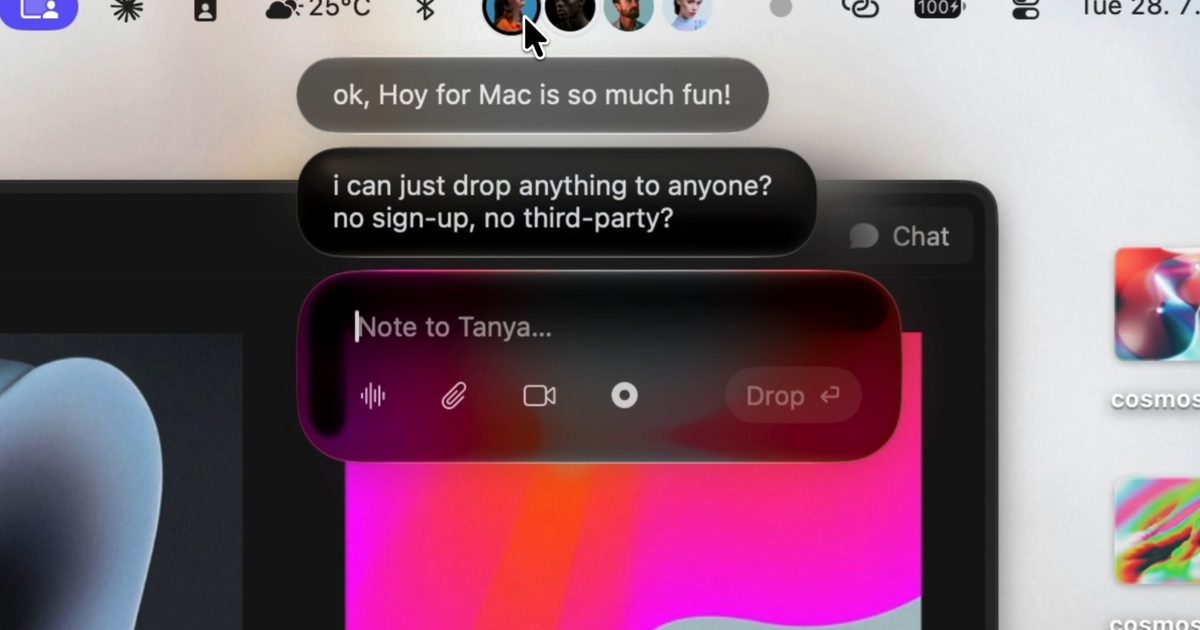
A new pre-release application for macOS, named Hoy, is poised to revolutionize how Mac users share files, send voice notes, and capture screen recordings. By consolidating these functionalities into a single, intuitive interface accessible directly from the menu bar, Hoy aims to streamline workflows and reduce the need to switch between multiple applications. The app’s innovative approach places recipient avatars in the menu bar, transforming them into direct conduits for sending various forms of content, from large files to quick video feedback.
The Genesis of Hoy: Addressing Workflow Friction
The core philosophy behind Hoy, as articulated by its developers, is to make digital sharing as effortless as handing a document across a desk. This ambition stems from a recognition of the persistent friction points in typical digital communication workflows. Users often find themselves navigating through separate applications for file transfers (like Airdrop or cloud storage), asynchronous video messages (like Loom), and quick audio snippets. This fragmentation can lead to lost productivity and a less fluid user experience. Hoy seeks to bridge this gap by offering a unified solution that integrates seamlessly into the macOS environment, specifically within the often-underutilized menu bar real estate.
The development of Hoy can be understood as a response to the evolving landscape of remote work and digital collaboration. As teams become increasingly distributed, the demand for efficient and intuitive communication tools that facilitate quick feedback loops and easy content sharing has surged. While existing tools like Slack, Microsoft Teams, and even email serve as primary communication hubs, they can sometimes be cumbersome for sending discrete pieces of information like a large file or a brief screen recording. Hoy aims to occupy a niche between these comprehensive platforms and dedicated, single-purpose tools, offering a lightweight and contextually relevant solution.
Functionality: A Unified Communication Layer
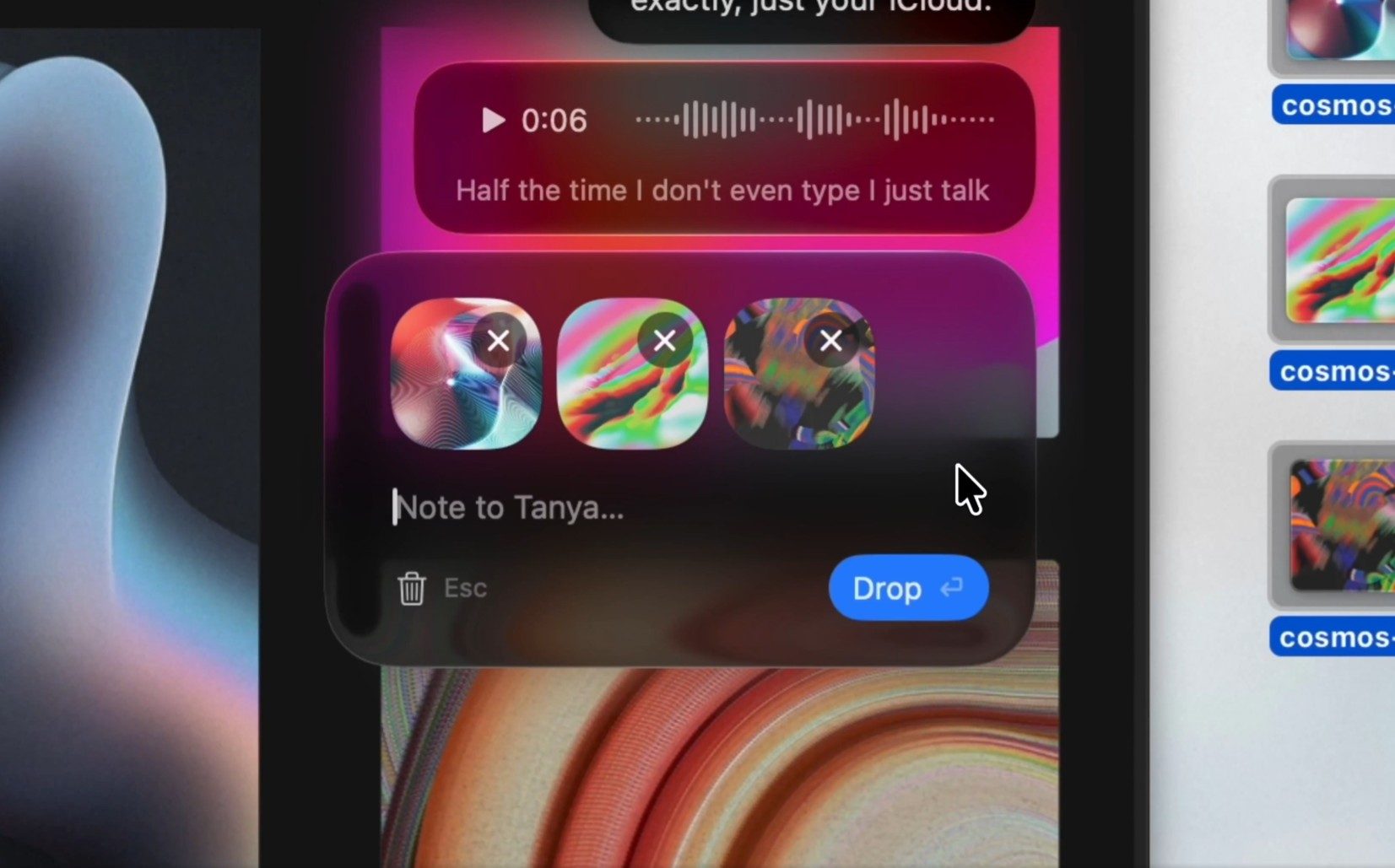
Hoy’s primary innovation lies in its menu bar integration. Once users establish channels with contacts, their avatars appear as clickable icons in the Mac’s menu bar. This visual representation transforms the interaction model: instead of initiating a chat or opening a dedicated app, users can directly drag files onto a contact’s avatar. This action immediately triggers the transfer process, bypassing the need to open a separate file browser or messenger window.
Beyond file sharing, Hoy incorporates voice messaging capabilities. A simple click on a recipient’s avatar allows users to record and send a voice note. This feature is designed for scenarios where typing is inefficient or when a more personal touch is desired, akin to sending a quick audio message via a mobile app. The app’s interface is intentionally minimalist, designed to present these options without overwhelming the user.
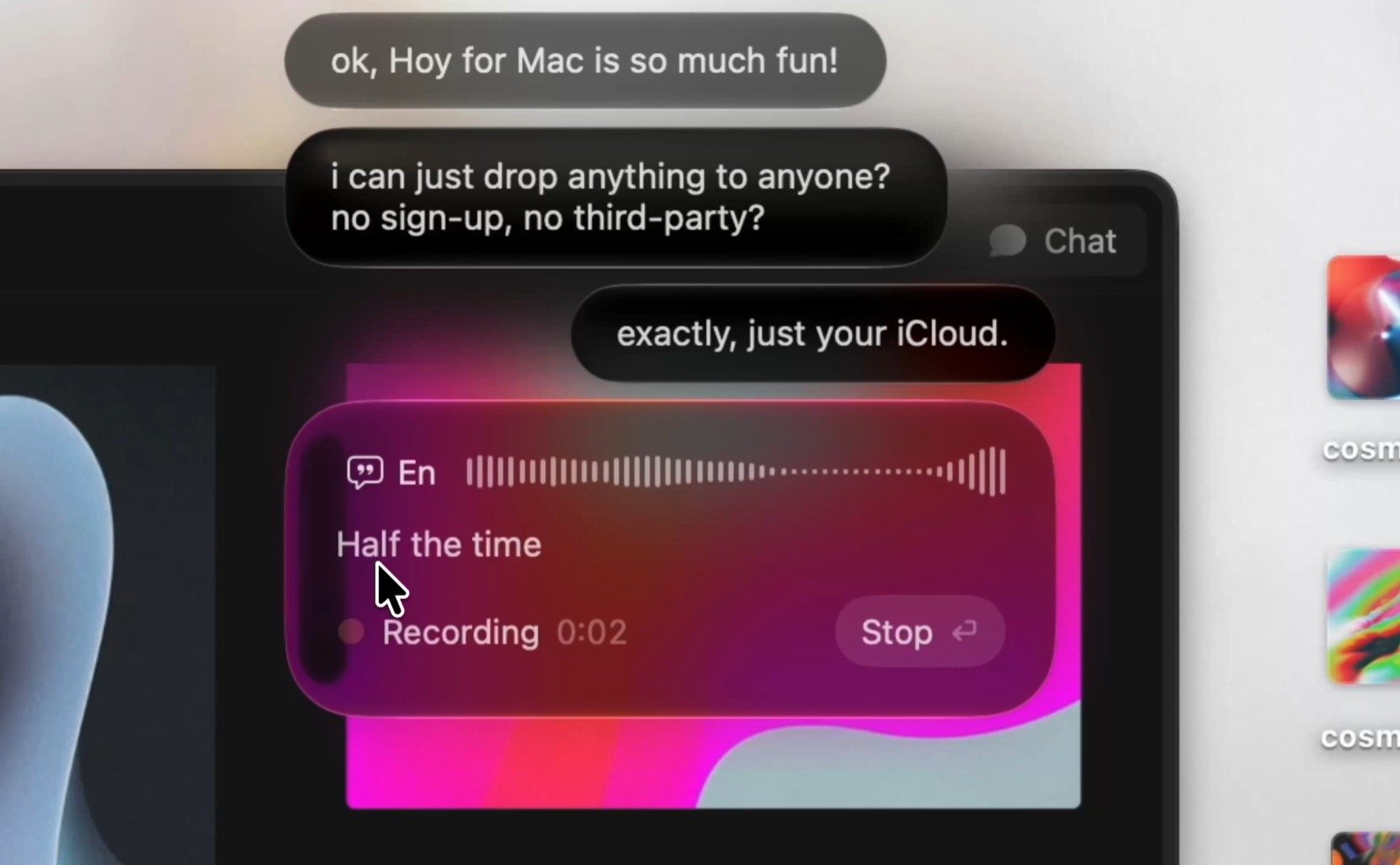
Screen recording is another core component of Hoy’s offering. Users can initiate a screen capture directly from the menu bar interface. The app supports capturing the entire display or specific regions, with an optional picture-in-picture feature that includes the user’s webcam feed. This is particularly valuable for providing visual feedback, demonstrating software issues, or creating quick tutorials. Once the recording is complete, it can be sent directly to the designated recipient without requiring additional editing or upload steps.
The Underlying Technology: Leveraging Apple’s Ecosystem
Hoy’s architecture is built upon Apple’s CloudKit framework, a service that allows developers to build applications that seamlessly sync data across Apple devices without the need for their own server infrastructure. This "serverless" approach, as Hoy describes it, means that all content—messages, files, and recordings—is stored within the sender’s iCloud account and shared via Apple’s robust cloud infrastructure.
This reliance on iCloud has several practical implications. Firstly, it ensures a degree of privacy and security, as data is managed within Apple’s ecosystem, which is generally well-regarded for its security protocols. Secondly, it simplifies the operational overhead for Hoy, as they do not need to maintain their own costly server farms for data storage and transmission. However, it also means that the size of files and recordings sent through Hoy will be constrained by the user’s available iCloud storage. For users with limited iCloud storage, this could become a limiting factor. Hoy developers have stated they cannot access the content within these channels, and voice transcriptions, when enabled, are processed locally on the Mac for privacy.
A Timeline of Development and Future Prospects
While the article mentions Hoy as a "pre-release app," specific details about its development timeline, such as its initial conception or beta testing phases, are not provided. However, the mention of an upcoming iPhone companion app suggests a phased rollout strategy, aiming to expand Hoy’s utility beyond the desktop. This planned expansion indicates a long-term vision to create a cross-platform communication tool that leverages the strengths of each operating system.
The release of the iPhone companion app, anticipated later this year, will be a crucial step in validating Hoy’s broader appeal. Mobile integration would allow users to send and receive content from their iPhones, potentially mirroring the menu bar experience with an iOS-centric interface. This could further solidify Hoy’s position as a convenient tool for quick, on-the-go sharing and feedback.
Target Audience and Market Positioning
Hoy’s primary target audience appears to be small, remote teams that frequently exchange quick feedback, screen recordings, and smaller files. For these groups, the ability to send information rapidly without the overhead of a full-fledged messaging platform or a complex cloud storage solution could offer significant time savings. The free tier, which includes three hosted channels, makes it accessible for small teams to trial the service without financial commitment.

The app’s success will ultimately depend on its ability to demonstrate tangible benefits in terms of workflow efficiency. In a crowded digital communication landscape, Hoy must clearly articulate its unique value proposition. While Airdrop excels at local, direct file transfers, and dedicated messengers handle ongoing conversations, Hoy aims to fill the gap for asynchronous, quick-turnaround content sharing between individuals or small groups who may not be in the same physical location.
Analysis of Implications and Challenges
The "serverless" architecture, while efficient for the developer, places a direct burden on the user’s iCloud storage. This could be a significant deterrent for users who already push the limits of their free or paid iCloud tiers. The practicality of this model hinges on the typical size of the content being shared. For short voice notes and small documents, it poses little issue. However, for frequent sharing of larger screen recordings or design files, it could quickly consume available storage.
Furthermore, the adoption of any new communication tool faces the inherent challenge of network effects. Hoy’s utility increases exponentially with the number of contacts using it. Convincing individuals and teams to adopt a new platform when established alternatives are already in place requires a compelling demonstration of superior efficiency. The "convincing people to install it" aspect, as noted in the original article, remains a significant hurdle.

The success of Hoy will likely hinge on its ability to integrate so smoothly into daily routines that it becomes a subconscious habit, much like checking email or Slack. The visual simplicity of placing contacts in the menu bar is a promising start, but the real test will be in how effectively it reduces friction in everyday digital interactions. If Hoy can consistently save users time and effort in sharing common types of content, it may carve out a valuable niche for itself in the productivity app market.
The planned iPhone integration is a strategic move that could broaden its appeal. By offering a consistent experience across desktop and mobile, Hoy could become a go-to tool for quick collaborations, bridging the gap between work and personal devices. The ultimate impact of Hoy will be measured by its ability to simplify complex digital sharing into an almost invisible, background process, allowing users to focus more on their work and less on the tools they use to communicate.