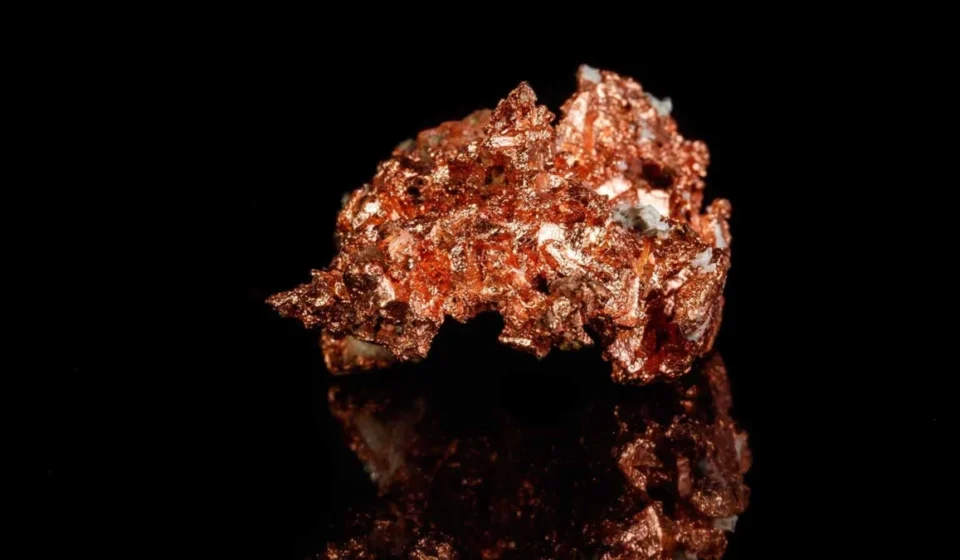
Copper Prices Surge as AI Infrastructure Demand Exposes Critical Supply Deficits in Global Smelting Capacity

The global commodities market has entered a transformative period as copper prices recently achieved unprecedented milestones, driven by a confluence of structural supply deficits and an accelerating demand cycle linked to artificial intelligence (AI) infrastructure. This week, three-month copper on the London Metal Exchange (LME) reached a record high, tagging approximately $14,700 per ton. This price action represents the culmination of the longest weekly winning streak for the metal since 1994, signaling a fundamental shift in how investors view industrial metals in the digital age. While the market has historically focused on copper as a bellwether for general economic health, the current rally is increasingly tied to the physical requirements of high-performance computing and the domestic capacity to process raw ore into refined cathode.
The AI Multiplier: A New Paradigm for Industrial Demand
The primary driver behind the current copper thesis is the physical build-out of AI data centers. Market analysts and industrial engineers have observed that an AI-specific data center requires roughly ten times the amount of copper used in a traditional data center. This intensity is due to the massive power delivery requirements of advanced GPU clusters, extensive cabling for high-speed data transmission, and complex cooling systems that rely on copper’s superior thermal conductivity.
As tech giants such as Microsoft, Alphabet, and Meta aggressively expand their compute capacity, the demand for copper is decoupling from traditional construction cycles. This "AI supercycle" for commodities is occurring at a time when the global supply chain is ill-equipped to respond. Historically, bringing a new copper mine from discovery to production takes between seven and ten years. Consequently, the demand surge generated by the AI revolution is hitting a wall of stagnant supply that cannot be easily expanded on a relevant timeline.
A Chronology of Domestic Smelting Decline and the 2026 Catalyst
To understand the current market tension, one must look at the historical erosion of the United States’ industrial backbone. In 1976, the U.S. operated 16 primary copper smelters, providing a robust domestic capability to turn raw concentrate into finished metal. Today, that number has dwindled to only two operational smelters. A third facility, the Asarco Hayden smelter in Arizona owned by Grupo México, remains mothballed.
This decline has created a strategic vulnerability: the United States currently exports approximately one-third of its mined copper concentrate to overseas smelters for processing, only to buy it back as refined metal. This circular trade flow is now facing a significant regulatory hurdle. In 2025, Washington implemented a 50% tariff on semi-finished copper products, including pipes, wires, and rods. However, the market is now bracing for a more significant policy shift.
Current legislative and trade discussions point toward a January 2026 deadline, at which point the U.S. government is expected to decide on whether to extend these tariffs to raw input materials and refined copper cathodes. If implemented, a tax on imported refined copper would effectively hand immense pricing power to the two companies that maintain domestic smelting operations: Freeport-McMoRan (FCX) and Rio Tinto (RIO).
Supporting Data: The Widening Supply-Demand Gap
The physical market for copper is showing signs of extreme tightening. Warehouse inventories across the LME and COMEX have seen persistent drawdowns, while ore grades at major global mines continue to decline. Several key events over the last 12 months have exacerbated this crunch:
- Cobre Panama Closure: The sudden shutdown of First Quantum’s Cobre Panama mine, which accounted for roughly 1% of global copper supply, removed hundreds of thousands of tons from the market.
- Anglo American Production Cuts: Major miner Anglo American significantly revised its production guidance downward, citing operational challenges at its South American assets.
- Aging Assets: Global investment firms, including BlackRock, have characterized existing copper operations as "tired, very old assets." Many of the world’s largest mines, such as Escondida in Chile, are facing declining ore grades, meaning more earth must be moved to produce the same amount of finished metal.
This backdrop explains why Freeport-McMoRan, a leader in domestic production and refining, has seen its stock price rise by more than 44% year-to-date. The company’s ability to provide a "closed-loop" domestic supply chain makes it a primary beneficiary of the looming tariff catalysts.
Strategic Analysis of the Copper Equities Landscape
The investment landscape for copper is currently divided into two distinct categories: integrated domestic producers and international miners. For investors seeking to capitalize on the specific catalyst of U.S. trade policy, the distinction is critical.
The Domestic Leaders: Freeport-McMoRan and Rio Tinto
Freeport-McMoRan (FCX) and Rio Tinto (RIO) are the only entities currently operating primary smelters on U.S. soil. This infrastructure allows them to bypass the costs associated with shipping concentrate overseas and avoids the potential impact of future import tariffs. Their vertical integration provides a protective moat that pure-play miners lack.
The International Mining Group
A secondary tier of companies includes Ero Copper, Hudbay Minerals, First Quantum, and Ivanhoe Mines. While these companies benefit from rising spot prices for copper, they are primarily miners of raw material. They remain dependent on third-party smelters, many of which are located in China or Europe. If the U.S. imposes tariffs on refined copper imports, these companies could find themselves on the wrong side of the trade, as their finished products would become more expensive to sell into the American market.
Diversified Majors
Large-scale diversified miners like Vale and BHP also maintain significant copper portfolios. However, their massive exposure to iron ore and other commodities can sometimes dilute the "pure" copper play, making them less sensitive to the specific AI-driven supply squeeze in the copper market.
Market Instruments: ETFs and Risk-Defined Strategies
For participants looking to gain exposure without selecting individual stocks, several Exchange-Traded Funds (ETFs) offer varying levels of sensitivity to the metal:
- United States Copper Index Fund (CPER): This fund tracks copper futures, providing the most direct correlation to the spot price of the metal itself.
- Global X Copper Miners ETF (COPX): This vehicle holds a basket of global mining stocks. While it offers broad exposure, it is subject to the operational risks of the individual mining companies and does not distinguish between domestic and foreign refiners.
Institutional traders have also begun utilizing more sophisticated, risk-defined structures to position themselves for the 2026 catalyst. One such strategy involves vertical call spreads in long-dated options. For example, a January 2027 vertical spread on Freeport-McMoRan allows an investor to define their maximum loss at the outset while positioning for a significant upside move. By purchasing a lower-strike call and selling a higher-strike call, the trader reduces the cost of the position and mitigates the impact of time decay, providing a "leveraged" bet on the metal’s multi-year bull thesis.
Broader Economic and Geopolitical Implications
The copper crisis is more than a simple supply-and-demand imbalance; it is a matter of national industrial policy. As the world shifts toward a "green economy," copper is essential not only for AI but also for electric vehicle (EV) batteries, wind turbines, and solar arrays. An EV requires three to four times more copper than an internal combustion engine vehicle.
The concentration of smelting capacity in Asia—specifically China—has become a point of concern for Western policymakers. The push to re-shore smelting capacity and protect existing domestic assets through tariffs is part of a broader trend toward "de-risking" essential supply chains. Copper is increasingly viewed as a "geopolitical metal," similar to how oil was viewed in the 20th century.
As the January 2026 tariff deadline approaches, market volatility in the copper sector is expected to increase. Investors and industrial consumers alike are monitoring the situation closely, as the cost of this "Bronze Age metal" will likely dictate the pace and profitability of the 21st-century AI revolution. The current price action suggests that the market is finally beginning to price in the reality that while software may be infinitely scalable, the physical hardware it runs on is bound by the constraints of the earth’s crust and the capacity of a handful of aging smelters.