Indian Women Wrestling Team Navigates Geopolitical Travel Disruptions in Albania While Preparing for Critical Asian Championship Selection Trials

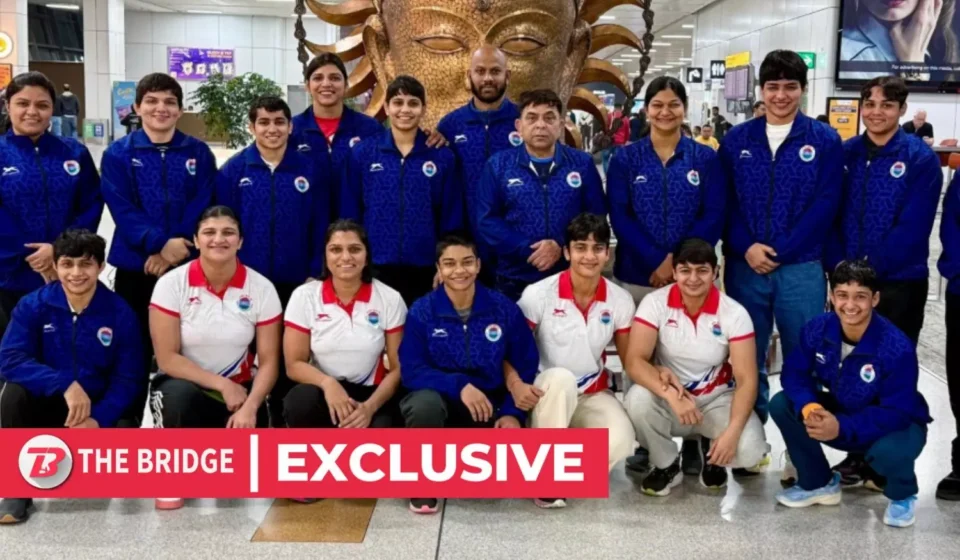
The Indian women’s wrestling contingent, currently stationed in Tirana, Albania, has found itself at the center of a logistical challenge following the abrupt closure of Gulf airspace, a direct consequence of the escalating conflict between Israel and Iran. Despite being stranded thousands of miles from home, the athletes and coaching staff have demonstrated remarkable resilience, transforming a potentially demoralizing ordeal into an extended training camp. As the team waits for a clear flight path back to India, the Wrestling Federation of India (WFI) is facing the complex task of rescheduling national selection trials for the upcoming Asian Championships, ensuring that the athletes’ physical conditioning and weight management remain uncompromised by the delay.
The situation began to unfold late last week as the team prepared to depart from Albania following their participation in the Muhamet Malo Wrestling Tournament. The tournament, which served as a crucial platform for India’s "B" team to gain international exposure, concluded with a successful haul of six medals. However, the journey home was interrupted when major airlines, particularly those operating through hubs like Dubai, were forced to cancel or reroute flights due to the volatile security situation in the Middle East. The closure of airspace over parts of the Levant and the Persian Gulf has created a bottleneck for international travel, affecting hundreds of flights connecting Europe and South Asia.
Resilience in Tirana: Training Amidst Uncertainty
For elite athletes, a sudden change in travel plans is more than just an inconvenience; it is a disruption to a finely tuned biological clock. Wrestlers, in particular, operate on a strict regimen of diet and exercise to maintain their weight categories. Recognizing the risks of a sedentary wait, Chief Coach Vijender Singh and the coaching staff moved quickly to secure facilities.
"The competition for women concluded the day before yesterday. Our flight was via Dubai. We were already on our way when we were told that our flight was cancelled," Chief Coach Vijender Singh reported from Tirana. The team was initially in transit to the airport when the news broke. Rather than remaining in the airport terminal, the WFI coordinated with local organizers to arrange accommodation nearby.
The team’s Greco-Roman counterparts had their stay extended at their original hotel, but the women’s freestyle team, having already reached the vicinity of the airport, was relocated to a hotel with access to an open ground. This logistical pivot allowed the athletes to continue their physical preparation. "We found a ground near our hotel and the girls are training there," Singh noted, emphasizing that the focus is on maintaining fitness and weight stability ahead of the domestic trials.
The Performance Breakdown: Medals and Milestones
The Indian squad’s performance in Albania was a testament to the depth of the country’s wrestling talent. India opted to field its "B" team for this ranking series, a strategic move intended to strengthen the bench and provide younger wrestlers with the experience of competing against high-caliber international opponents.
The team secured a total of six medals: one gold, three silvers, and two bronze. This performance is particularly significant given the recent administrative transitions within the Wrestling Federation of India. The gold medal performance served as a highlight, but it was the return of Neha Sangwan that garnered significant attention from scouts and fans alike.
Neha Sangwan, a former U17 World Champion, made her return to the international stage in the 57kg freestyle category. This was her first major tournament since the WFI lifted an overweight-related ban that had previously sidelined her. Sangwan’s performance suggested she had lost little of her competitive edge. She advanced through the bracket to reach the final, where she faced Ukraine’s Solomiia Vynnyk. Vynnyk, a formidable opponent and two-time U23 World Champion, provided a world-class litmus test for Sangwan.
The final was a tightly contested affair, with Sangwan narrowly losing 7-8. "Neha played very well; she lost by only one point to a two-time U23 world champion," Coach Singh observed. The narrow margin of defeat against an athlete of Vynnyk’s pedigree signals that Sangwan is once again a top contender for India’s primary 57kg slot, a category that has historically been very competitive in Indian wrestling.
Chronology of the Stranding and Return Plans
To understand the scope of the disruption, a timeline of the team’s journey and the subsequent geopolitical impact is essential:
- Tournament Duration: The Indian contingent participated in the Muhamet Malo Tournament in Tirana, Albania, which concluded its women’s events early in the week.
- Sunday: The team checked out of their accommodation and headed for the airport. During transit or shortly after arrival, they were informed that their flight via Dubai was cancelled due to the closure of Gulf airspace following Iranian missile strikes and the subsequent Israeli response.
- Sunday Evening: The WFI and coaching staff coordinated with local Albanian authorities and travel agents to secure a hotel near the airport.
- Monday – Tuesday: The team utilized local grounds for training sessions to prevent "weight creep" and maintain cardiovascular fitness.
- Wednesday (Projected): Return tickets have been tentatively booked for Wednesday, pending the stability of the flight corridors through the Middle East.
- March 9 (Original Date): The Asian Championship selection trials were scheduled to take place in India.
The Logistical Ripple Effect: Postponing the Selection Trials
The delay in Albania has created a significant hurdle for the WFI’s domestic calendar. The Asian Championship selection trials, originally set for March 9, are now under review for postponement. Coach Vijender Singh has formally requested that the federation push the dates back to allow the returning athletes time to recover from travel fatigue and re-adjust to Indian conditions.
The primary concern for the coaches is the "weight cut." Wrestlers often lose several kilograms in the days leading up to a weigh-in through a combination of intense exercise and caloric restriction. If the athletes are forced to compete in trials immediately after a long, disrupted journey from Europe, the physical toll could lead to injuries or subpar performances.
"We have trials for the Asian Championship on March 9. We are preparing so that we don’t have to lose weight again and again," Singh explained. By maintaining a training rhythm in Albania, the wrestlers are attempting to stay within a manageable range of their competition weight. However, the lack of proper mats and sauna facilities—often used for the final stages of a weight cut—makes the situation in Tirana less than ideal.
Geopolitical Context: Why Gulf Airspace Matters
The stranding of the Indian team is a microcosm of the broader impact of Middle Eastern instability on global sports and commerce. The airspace over Iran, Iraq, and Israel is a critical corridor for flights connecting Europe to Asia. When this airspace is closed or declared a conflict zone, airlines must reroute around the Arabian Peninsula or through Central Asian corridors.
For flights involving Dubai (DXB), a primary hub for Indian travelers, any regional tension leads to immediate cancellations. The Israel-Iran conflict has seen a surge in such disruptions, forcing teams like the Indian wrestlers to wait for "air bridges" to reopen. This incident highlights the vulnerability of international sporting schedules to external political shocks.
Strategic Implications for the WFI
The decision to send a "B" team to Albania was a calculated move by the WFI to assess the "bench strength" of the national program. With the 2024 Paris Olympics on the horizon, identifying backups and future prospects is essential. The success in Tirana, despite the travel woes, suggests that the pipeline of talent remains robust.
However, the administrative challenge of rescheduling trials cannot be understated. The WFI has recently emerged from a period of suspension and internal turmoil. Organizing fair, transparent, and well-timed trials is paramount to rebuilding the federation’s reputation and ensuring that India’s best athletes are sent to the Asian Championships, which serve as a vital precursor to Olympic qualifying events.
Expert Analysis: The Physical and Psychological Toll
Sports psychologists and high-performance coaches note that "travel stress" can significantly impact an athlete’s reaction time and explosive power. For the women in Tirana, the psychological burden of being "stranded" in a foreign country, combined with the uncertainty of when they will compete next, requires strong leadership.
"The coaching staff is doing the right thing by keeping them active," says a former national wrestling coach. "The moment an athlete feels like a ‘victim’ of circumstances, their performance drops. By framing this as an extended camp, they are keeping the competitive mindset alive."
Furthermore, the "weight management" aspect is a scientific challenge. If the trials are held too soon after they return, the athletes will face "double weight-cutting"—once for the tournament in Albania and once for the trials. This can lead to metabolic exhaustion. A postponement of three to five days would likely be the most equitable solution for all parties involved.
Conclusion and Outlook
As of Tuesday, the Indian women’s wrestling team remains in high spirits in Tirana, focusing on the task at hand rather than the variables they cannot control. The WFI is expected to make an official announcement regarding the March 9 trials within the next 24 hours.
The situation serves as a reminder of the complexities of modern international sport, where the path to a podium is often obstructed by factors far removed from the wrestling mat. For Neha Sangwan and her teammates, the ordeal in Albania is yet another test of the grit that defines the sport of wrestling. Their ability to adapt, train on improvised grounds, and maintain focus amidst a geopolitical crisis may well be the preparation they need for the high-pressure environment of the Asian Championships and beyond.
The global wrestling community will be watching closely as the team attempts to return to New Delhi. The success of the "B" team in Albania has already proven that India’s wrestling future is bright; now, the focus shifts to ensuring that these athletes are given the fair opportunity to compete for a spot on the continental stage once they are back on home soil.