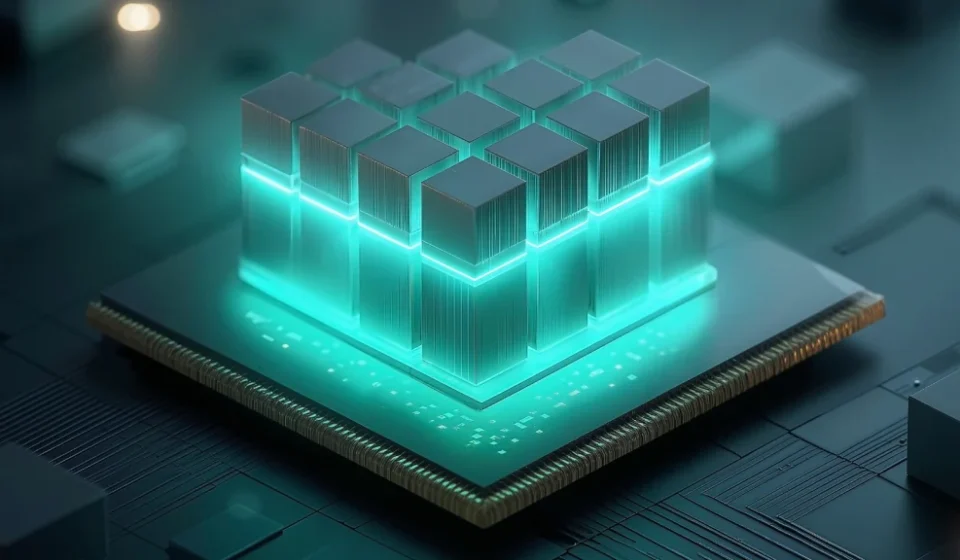
SpaceX Earnings Report Highlights Accelerating Global Space Economy and Critical Artificial Intelligence Memory Infrastructure Bottleneck

The intersection of aerospace engineering and advanced computing has reached a critical inflection point, as evidenced by the latest financial disclosures and strategic pivots from Space Exploration Technologies Corp. (SpaceX). While the broader market has focused on the staggering capital expenditures associated with artificial intelligence (AI), a more nuanced challenge has emerged from within the private space sector. During the company’s recent earnings review, leadership identified a primary physical constraint that threatens to throttle the next phase of technological expansion: a global shortage of specialized memory components. This bottleneck arrives at a time when the global space economy is projected to undergo a period of unprecedented growth, transitioning from a niche scientific endeavor into a multi-trillion-dollar pillar of global infrastructure.
The Accelerating Expansion of the Space Economy
To understand the current trajectory of the space industry, one must look back to the fundamental shifts in astrophysics that mirror today’s economic trends. In 1929, astronomer Edwin Hubble discovered that the universe was expanding. For decades, the scientific consensus suggested that gravity would eventually slow this expansion. However, in 1998, observations of distant supernovae revealed that the expansion was actually accelerating—a discovery that earned a Nobel Prize in Physics. Today, economists see a similar phenomenon occurring within the commercial space sector.
The global space economy recently reached a record valuation of $613 billion. According to researchers at Johns Hopkins University, this figure is expected to approach $1.8 trillion within the next decade. This growth is not merely a continuation of historical trends but an acceleration fueled by four distinct catalysts: the maturation of reusable rocket technology, a surge in private capital investment, a dramatic reduction in launch costs per kilogram, and the emergence of orbital business models that were considered science fiction less than a decade ago.
Artificial intelligence is now acting as a secondary propellant for this expansion. AI integration is currently streamlining spacecraft design, automating complex orbital maneuvers, and processing the petabytes of data generated by satellite constellations. More significantly, the industry is exploring the feasibility of orbital data centers. By moving high-intensity computing into space, companies hope to leverage the vacuum for cooling and solar energy for power, effectively turning low Earth orbit (LEO) into a vital component of global AI infrastructure.
SpaceX Financial Performance and Strategic AI Investment
SpaceX’s second-quarter earnings report provided the first comprehensive look at a company evolving from a launch provider into a diversified technology powerhouse. The financial data reflects a business in the midst of a massive capital intensive pivot. SpaceX reported second-quarter revenue of $7.8 billion, representing a 92% increase compared to the same period in the previous year. This growth was largely driven by the continued expansion of the Starlink satellite internet constellation and a steady cadence of Falcon 9 launches.
However, the revenue gains were offset by aggressive spending. The company disclosed that it directed nearly $16 billion toward expanding its AI infrastructure during the quarter. This massive investment contributed to a quarterly net loss of $541 million. Despite the loss, the focus of the earnings call was not on capital preservation but on the physical limitations of the supply chain.
Elon Musk, CEO of SpaceX, informed investors that the company’s primary hurdle is no longer access to capital or the availability of high-end graphics processing units (GPUs). Instead, Musk identified memory as the "limiting factor" for SpaceX’s AI ambitions. This admission signals a shift in the AI hardware narrative, moving from a focus on "compute" (processing power) to "capacity" (data storage and retrieval speed).
The Mechanics of the AI Memory Bottleneck
The shortage identified by SpaceX is a reflection of a broader systemic issue within the semiconductor industry. Modern AI systems, particularly large language models (LLMs) and autonomous navigation systems, rely on three fundamental pillars: compute, data, and memory. While Nvidia Corp. has dominated the "compute" phase of the AI boom, the industry has now hit a wall regarding how quickly data can be fed into these powerful processors.
AI models do not simply calculate; they must store and manipulate vast quantities of information in real-time. Training a model the size of ChatGPT requires tens to hundreds of terabytes of Dynamic Random Access Memory (DRAM) distributed across thousands of GPUs. When memory supply falls short, even the most advanced processors sit idle, waiting for data. This "memory wall" has become the primary concern for engineers designing next-generation autonomous spacecraft and global satellite networks.
The severity of this bottleneck is reflected in the behavior of major technology firms. Reports indicate that representatives from leading tech companies have established semi-permanent presences in South Korea to secure allocations of High Bandwidth Memory (HBM) and DRAM from manufacturers like Samsung and SK Hynix. This environment has led to the industry term "DRAM beggars," describing companies forced to lobby aggressively for limited hardware supplies.
Supporting Data and Market Projections
The supply-demand imbalance in the memory sector is supported by current industrial data. Over the next four years, approximately 100 gigawatts of new AI-dedicated data centers are expected to come online globally. However, current industry estimates suggest that the existing and planned DRAM supply can only support approximately 15 gigawatts of new capacity over the next 24 months.
This scarcity is already influencing market pricing. Market research firm TrendForce projects that conventional DRAM contract prices could surge by as much as 90% to 95% by early 2026. During the SpaceX earnings call, Musk provided an even more aggressive outlook, stating that he expects AI-related memory demand to grow at a rate of nearly 200% annually for the foreseeable future.
For the space industry, these figures are particularly impactful. Orbital data centers and autonomous satellites require specialized, radiation-hardened memory that is even more difficult to manufacture than standard consumer-grade DRAM. As SpaceX and its competitors race to build out orbital networks, the competition for these components is expected to intensify.
Industry Responses and Peripheral Market Impact
The response from the broader technology sector aligns with SpaceX’s findings. Jensen Huang, CEO of Nvidia, has echoed these concerns, recently warning that the "memory bottleneck is severe" and could impact the rollout of new AI architectures. This consensus has shifted investor attention toward "picks-and-shovels" companies—firms that do not necessarily manufacture the final product but provide the essential tools or services required to produce them.
One such entity is PDF Solutions Inc., a company that provides software and hardware tools designed to improve semiconductor manufacturing yields. In an era of extreme shortage, the ability to ensure that more usable chips are produced from every silicon wafer becomes a high-value capability. As DRAM and HBM manufacturers like Samsung and Micron Technology race to increase production, the role of yield-improvement software becomes critical in maximizing the available supply.
Other sectors likely to feel the impact of this bottleneck include energy and networking. The "Golden Rivets" of AI—the irreplaceable materials and infrastructure—are becoming the new focus for institutional investors. This includes high-capacity networking equipment and the specialized power systems required to run memory-intensive data centers, whether on Earth or in orbit.
Broader Implications for the Future of Technology
The revelations from SpaceX’s earnings suggest that the AI revolution is entering a new, more constrained phase. The initial "gold rush" focused on the acquisition of processing power; the next phase will be defined by the management of data flow and the physical infrastructure of storage.
For the space economy, the implications are profound. If SpaceX succeeds in overcoming these hardware constraints, it will solidify its position not just as a transportation company, but as a primary provider of the infrastructure that powers global intelligence. The transition of SpaceX into an AI-centric company suggests that the boundary between "space technology" and "information technology" is effectively disappearing.
Furthermore, the memory shortage may dictate the geopolitical landscape of the next decade. With the majority of advanced memory production concentrated in East Asia, the stability of these supply chains is now a matter of national security for any country aiming to lead in AI or space exploration. The acceleration of the space economy, much like the acceleration of the physical universe, appears to be an unstoppable force, yet its ultimate velocity will be determined by the smallest of components: the memory chip.
As the industry moves toward a $1.8 trillion valuation, the focus will remain on how companies like SpaceX navigate these material shortages. The ability to innovate around physical constraints—or to secure the necessary supply chains to bypass them—will likely be the deciding factor in which firms dominate the next chapter of the digital and celestial age. For now, the "memory wall" stands as the most significant hurdle in the path of a technological expansion that shows no signs of slowing down.