SpaceX’s First Earnings Report Was Better News for Rocket Lab Than SpaceX

The global financial markets are currently witnessing a historic era of capital deployment as Elon Musk’s primary industrial engines, Tesla Inc. and the recently public SpaceX, execute a synchronized strategy of aggressive reinvestment. Recent financial disclosures from both entities reveal a striking parallel: record-breaking top-line revenue growth contrasted against compressed short-term margins and multi-billion-dollar capital expenditure programs. This "Musk Blueprint," characterized by the sacrifice of immediate GAAP profitability in favor of long-term infrastructure dominance, is reshaping expectations across the automotive, aerospace, and artificial intelligence sectors. While Tesla’s second-quarter results highlight a pivot toward autonomous "Physical AI," the performance of SpaceX serves as a catalyst for a broader revaluation of the commercial space economy, impacting a specialized cohort of satellite and launch providers.
Historical Context: The 2019 Tesla Precedent
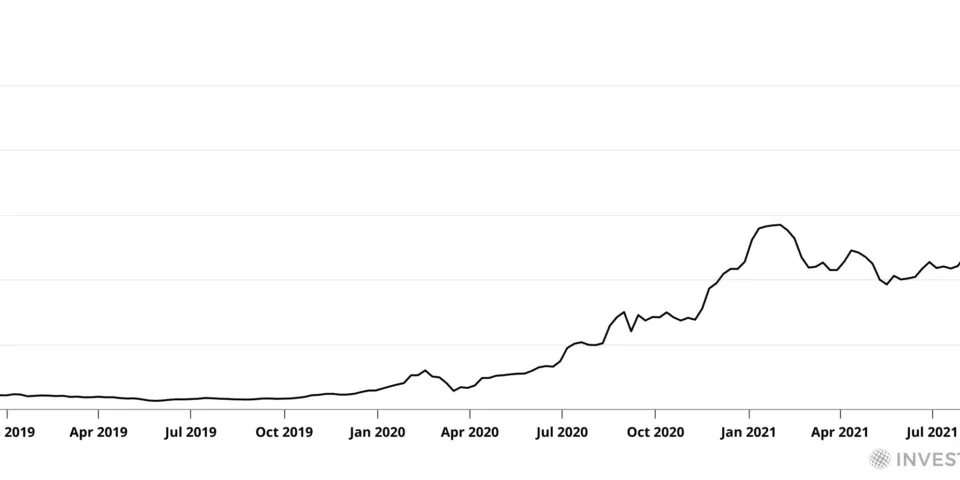
To understand the current trajectory of Musk’s enterprises, analysts point to the pivotal period of May 2019. At that time, Tesla (TSLA) was trading at a split-adjusted $12 per share, burdened by significant financial skepticism. The company had reported a quarterly cash burn of approximately $1 billion, contributing to a cumulative free-cash-flow deficit that had reached $24 billion since 2011. Following the intensive production ramp of the Model 3 in late 2018, a subsequent slump in early 2019 deliveries led many Wall Street observers to forecast a terminal decline for the electric vehicle pioneer.
However, the internal operational metrics told a different story. Despite the stock’s decline, Tesla was successfully scaling its global delivery network and had broken ground on Gigafactory Shanghai, which achieved vehicle production in less than twelve months. This period of "noisy" financial data masked a widening technological lead. Within two years of this low point, Tesla’s stock price appreciated more than 20-fold, rewarding investors who prioritized decade-long growth narratives over quarterly earnings fluctuations. This historical cycle appears to be repeating in 2024, albeit on a much larger scale and across multiple industries.
Tesla’s Second Quarter Performance: Record Revenue Meets Margin Compression
Tesla’s second-quarter earnings report, released on July 22, presented a complex picture of a company in transition. The headline figures demonstrated robust demand, with revenue reaching a record $28.2 billion, representing a 26% increase year-over-year. This marked the company’s first significant growth inflection in over four quarters. Vehicle deliveries for the period reached 480,126 units, a Q2 record that surpassed consensus estimates. Furthermore, Tesla’s energy storage segment saw a dramatic 40% increase in deployments, totaling 13.5 gigawatt-hours, while services revenue grew by 50% to achieve record profitability. For the first time in its history, Tesla’s trailing-twelve-month revenue surpassed the $100 billion threshold.
Despite these milestones, the company’s bottom line faced significant headwinds. Operating income plummeted by 57% to $398 million, resulting in operating margins of just 1.4%. Adjusted earnings per share (EPS) of $0.33 fell short of the $0.51 consensus estimate. This profitability crunch was exacerbated by a decline in regulatory credits, which dropped to $146 million from $439 million in the prior year.
The primary driver of this margin compression, however, was a 142% surge in capital expenditures (capex), which reached $5.8 billion for the quarter. This spending resulted in a negative free cash flow of approximately $1.1 billion. Financial analysts note that this capital is being funneled directly into "Physical AI" infrastructure. Key investments include the production of the "Cybercab" at Gigafactory Texas, the expansion of Robotaxi operations across seven metropolitan areas, and the installation of production lines for the first-generation Optimus humanoid robot. Tesla is essentially liquidating its current profitability to finance the next generation of autonomous and robotic technologies.
SpaceX Financial Disclosures: Scaling the Space-Connectivity-AI Flywheel
Mirroring the Tesla strategy, SpaceX (SPCX) recently reported a 92% year-over-year revenue surge to $7.8 billion. The company’s adjusted EBITDA nearly tripled to $3.5 billion, driven largely by the continued expansion of the Starlink satellite constellation. Starlink subscribers have doubled to 12 million, while enterprise and government connectivity revenue jumped by 108%. The company’s Starshield division, which caters to national security interests, has reportedly secured over $6 billion in new contracts.
A significant revelation in the SpaceX report was the performance of its AI segment. Revenue in this division soared 247% to $2.6 billion, yielding $1.1 billion in positive adjusted EBITDA. Management indicated that new compute investments are seeing rapid returns, with some paying back in less than one year. SpaceX anticipates its compute capacity will exceed 2 gigawatts by the end of 2024, with plans to approach 10 gigawatts by 2027.

However, like Tesla, SpaceX is maintaining a high-intensity spending regime. The company deployed $18.4 billion in the recent quarter, with $15.8 billion dedicated specifically to AI and compute infrastructure. While the company remains GAAP-loss-making and faces potential volatility from insider-share unlocks, the integrated "space-connectivity-AI" flywheel is now demonstrating tangible economic scale.
Broader Implications for the Commercial Space Sector
The financial health and strategic direction of SpaceX are serving as a "rising tide" for the broader space industry. As SpaceX validates the vertically integrated launch-and-space-systems model, several smaller publicly traded firms are seeing a shift in market sentiment.
Launch and Infrastructure: Rocket Lab and Redwire
Rocket Lab (RKLB) is increasingly viewed as a strategically vital alternative to SpaceX. As demand for satellite constellations accelerates, Rocket Lab’s development of the Neutron rocket positions it to capture significant national security and commercial contracts. Similarly, Redwire (RDW) is benefiting as a "picks-and-shovels" provider. The proliferation of orbital data centers and lunar infrastructure increases demand for Redwire’s specialized power systems and in-space manufacturing components. Both firms have recently seen their stock prices stabilize after significant volatility, suggesting a return to a bullish regime for space infrastructure.
Geospatial Intelligence: Planet Labs and BlackSky
The success of SpaceX’s Starshield has confirmed that government agencies are moving toward commercial space architectures for sensing and intelligence. This environment supports the business models of Planet Labs (PL), which provides daily Earth-data, and BlackSky (BKSY), which focuses on high-frequency imagery and AI-powered analytics. While SpaceX’s own sensing ambitions pose a competitive risk, the rapid growth of the addressable market for real-time space intelligence suggests there is room for multiple specialized players.
Direct-to-Device Connectivity: AST SpaceMobile
The outlook for AST SpaceMobile (ASTS) remains a subject of intense debate. While SpaceX has validated the massive market potential for direct-to-device satellite connectivity, its aggressive Starlink Mobile roadmap presents a formidable competitive challenge. AST SpaceMobile retains differentiation through its unique broadband-first architecture and extensive partnerships with global telecom carriers, but the company faces a more complex competitive landscape following SpaceX’s latest disclosures.
Analysis of the "XPANSE" Convergence
The strategic alignment of Tesla and SpaceX points toward what industry insiders call "convergence." Executives at both companies, including SpaceX President Gwynne Shotwell, have alluded to a future where the technologies developed by both firms—robotics, autonomous navigation, satellite connectivity, and massive AI compute—merge into a single cohesive ecosystem.
This convergence is aimed at addressing critical global challenges, including the need for decentralized energy, autonomous logistics, and high-speed global data parity. For institutional investors, the "Musk Blueprint" represents a high-risk, high-reward bet on the foundational infrastructure of the 21st century. While short-term volatility is expected as these companies navigate "ugly" bottom-line optics, the scale of their capital investment suggests a move toward market positions that could be nearly impossible for competitors to replicate once fully established.
Conclusion: The Long-Term Investor Outlook
The current financial reports from Tesla and SpaceX confirm a commitment to empire-building that transcends traditional quarterly reporting cycles. By pouring every available dollar into the convergence of AI, energy, and orbital infrastructure, these entities are attempting to secure a dominant role in the emerging "Physical AI" economy.
For the broader market, the "SpaceX readthrough" suggests that commercial space has graduated from a speculative venture to a scaled, economically viable infrastructure market. While individual stocks within the sector may face choppy waters due to execution risks and competitive pressures, the overall trajectory of the industry is being pulled upward by the massive capital deployment of its leaders. Investors are left to decide whether they are viewing a "money pit" of excessive spending or the ground floor of a multi-trillion-dollar technological empire. If historical precedents like Tesla’s 2019 performance are any indication, the rewards for patience in this sector have historically been significant.