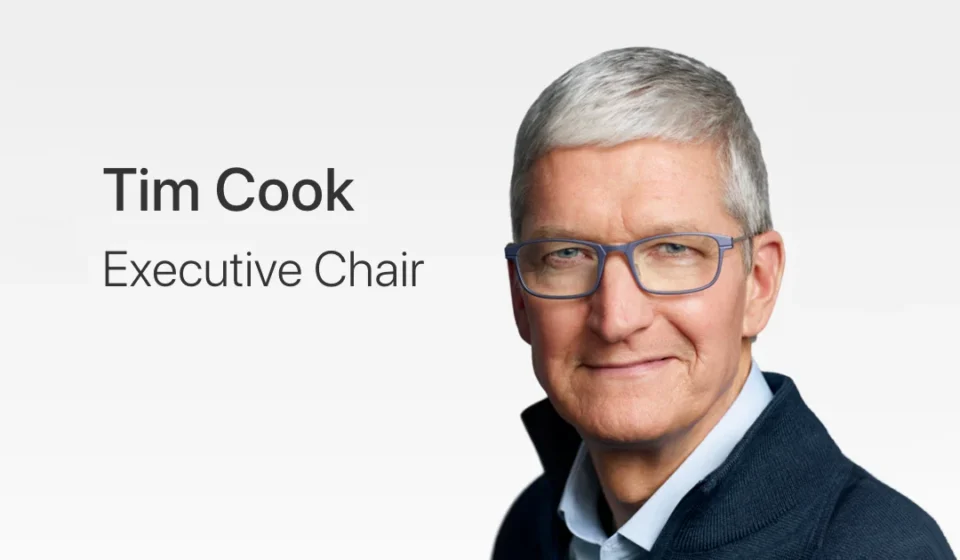
Tim Cook Expected to Attend White House State Dinner for Chinese President Xi Jinping

Apple executive chairman Tim Cook is reportedly slated to attend an upcoming White House state dinner honoring Chinese President Xi Jinping. The invitation, extended by U.S. President Donald Trump, signifies a high-profile engagement for the technology leader amidst ongoing diplomatic relations between the United States and China. The event is scheduled to take place next week during President Xi’s visit to Washington D.C.
This anticipated attendance by Cook carries significant weight, given Apple’s substantial manufacturing operations and market presence in China, as well as the broader geopolitical and economic complexities that define the U.S.-China relationship. Cook’s role as executive chairman, a position he assumed on September 1st following his transition from CEO, places a greater emphasis on his engagement with global policymakers and his representation of Apple’s interests on the international stage. His successor as CEO, John Ternus, now leads Apple’s operational and product development efforts.
The guest list for the state dinner, as reported by Bloomberg, also includes other prominent figures from the technology sector, such as OpenAI CEO Sam Altman and Nvidia CEO Jensen Huang. This selection underscores the increasing influence of the technology industry on international diplomacy and economic policy. The presence of these leaders suggests a deliberate effort to foster dialogue and potentially address critical issues concerning trade, innovation, and global security that are intrinsically linked to the tech landscape.
A History of Diplomatic Engagement
Tim Cook’s participation in high-level diplomatic events involving Chinese leadership is not unprecedented. His presence at this state dinner for President Xi would mark another chapter in his established engagement with Chinese officials. Earlier this year, Cook was in attendance at a state dinner hosted by President Xi for President Trump in Beijing. This earlier event highlighted the reciprocal nature of diplomatic outreach and the importance of key global business leaders in such forums.
Furthermore, Cook’s history with such events dates back to at least 2015, when he was a guest at a state dinner hosted by then-President Barack Obama for President Xi. During that occasion, Cook was notably seated next to President Xi, a placement that, while often ceremonial, can signify a level of recognition and importance afforded to individuals representing significant economic ties. These past engagements suggest a consistent pattern of inviting influential figures from the tech sector to participate in discussions that shape international relations.
The Evolving Role of Technology Leaders in Diplomacy
The inclusion of tech executives like Tim Cook, Sam Altman, and Jensen Huang at a state dinner for a foreign head of state reflects a broader trend of technology’s growing centrality in global affairs. In an era defined by digital transformation, artificial intelligence, and global supply chains, the leaders of major technology companies are increasingly seen as crucial interlocutors in dialogues concerning trade, intellectual property, cybersecurity, and the future of innovation.
Apple, as one of the world’s largest and most influential technology companies, has a deeply intertwined relationship with China. The country serves as a critical hub for Apple’s manufacturing and assembly operations, employing millions of workers and forming a significant part of its global supply chain. Simultaneously, China represents a massive consumer market for Apple’s products, making its economic policies and consumer sentiment vital to the company’s success. This dual role positions Cook as a key figure whose insights and perspectives are invaluable in discussions about economic interdependence, trade practices, and market access.
The presence of OpenAI’s Sam Altman highlights the rapidly evolving landscape of artificial intelligence, a field with profound implications for national security, economic competitiveness, and societal development. Discussions around AI governance, ethical considerations, and the race for AI dominance are increasingly becoming central to international relations. Similarly, Jensen Huang of Nvidia, a company at the forefront of AI hardware development, brings a perspective on the technological underpinnings of AI advancement and its strategic importance.
Geopolitical Context and Potential Implications
The state dinner comes at a time of considerable tension and strategic competition between the United States and China. Issues such as trade imbalances, technological rivalry, human rights concerns, and territorial disputes in the South China Sea have strained the relationship. In such a complex environment, the U.S. administration’s decision to invite prominent tech leaders suggests an intention to leverage their understanding and influence in navigating these multifaceted challenges.
For Tim Cook, attending this dinner presents an opportunity to engage directly with President Xi and other high-ranking Chinese officials. This could provide insights into China’s future economic and technological policies, potentially influencing Apple’s strategic planning. It also offers a platform to subtly advocate for Apple’s interests, whether related to market access, regulatory environments, or intellectual property protection. The delicate balance Apple must maintain between its operational needs in China and U.S. policy objectives is a constant challenge, and direct engagement can be instrumental in managing these dynamics.
The broader implications of such a gathering extend beyond individual companies. The dialogue between U.S. leaders and Chinese officials, potentially informed by the perspectives of tech titans, could shape the trajectory of U.S.-China relations. It may contribute to fostering a more nuanced understanding of the economic and technological interdependence between the two nations, even amidst ongoing geopolitical friction.
A Shift in Leadership and Role
Tim Cook’s transition to executive chairman marks a significant moment for Apple and its leadership. While he has stepped back from the day-to-day operational responsibilities of CEO, his new role is designed to leverage his extensive experience and global standing in strategic areas. This includes engaging with governments and international organizations, a function that aligns perfectly with his expected attendance at the state dinner. This transition allows him to focus on high-level strategic initiatives and external relations, a departure from the intense product and operational focus of the CEO role.
John Ternus, who took over as CEO, is now tasked with steering Apple’s product development and operational execution. This division of labor allows Cook to focus on the broader ecosystem and the company’s place within the global political and economic landscape. His experience in navigating complex international markets and his deep understanding of the technological sector make him a valuable asset in this executive chairman capacity, particularly in high-stakes diplomatic settings.
Historical Precedents and Future Outlook
State dinners are traditional diplomatic events designed to honor visiting heads of state and foster goodwill. They often serve as a backdrop for substantive discussions, both formal and informal, between leaders and their delegations. The inclusion of business leaders, especially from the technology sector, has become increasingly common in recent years, reflecting the interconnectedness of global economies and the significant role of innovation in shaping national interests.
The specific dynamics of the U.S.-China relationship, characterized by both cooperation and competition, make this particular state dinner noteworthy. The participation of figures like Tim Cook, Sam Altman, and Jensen Huang suggests an acknowledgment of the critical role technology plays in this complex bilateral relationship. Their presence may facilitate discussions on issues ranging from supply chain resilience and intellectual property rights to the ethical development and deployment of advanced technologies like artificial intelligence.
As the global economy continues to evolve, driven by technological advancements, the intersection of business, technology, and international diplomacy will only become more pronounced. Tim Cook’s attendance at this White House state dinner is a testament to this evolving landscape and his enduring significance as a key figure in the global technology industry. His engagement, alongside other tech leaders, underscores the strategic importance of dialogue and understanding in navigating the intricate challenges and opportunities that define the relationship between the world’s two largest economies. The outcomes of such high-level interactions, while often not immediately apparent, can have long-lasting implications for global trade, innovation, and international stability.