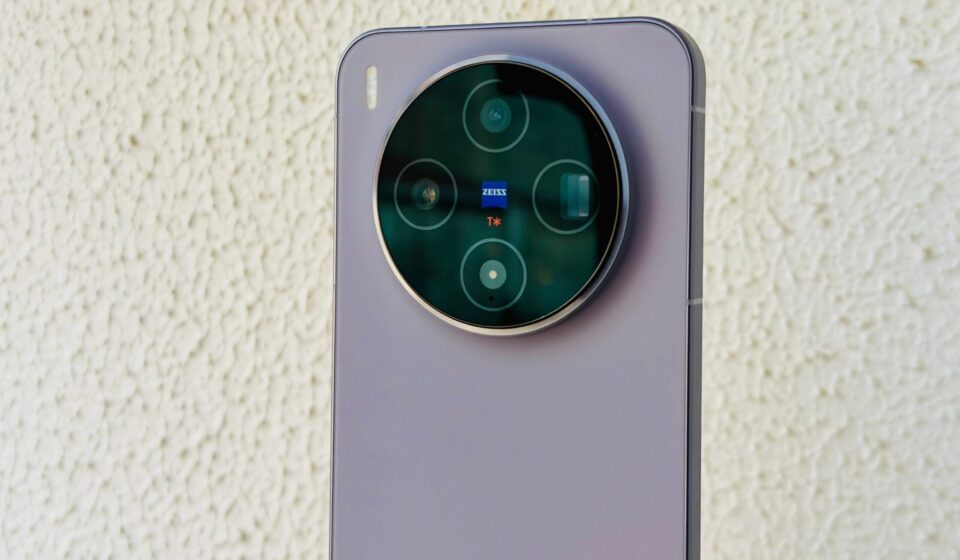
Two 200MP cameras, DSLR-grade stabilization, and a global launch – Vivo’s X300 Ultra is coming for Apple and Samsung’s lunch in 2026.

Vivo is poised to disrupt the high-end smartphone market in 2026 with the upcoming Vivo X300 Ultra, a device engineered with camera technology that rivals professional-grade equipment. The company’s product manager, Han Boxiao, recently revealed details about the X300 Ultra’s advanced imaging capabilities on Weibo, signaling a significant challenge to established players like Apple and Samsung, particularly their flagship iPhone 17 Pro and Galaxy S26 Ultra models. The X300 Ultra is not only slated to feature dual 200-megapixel cameras but also boasts optical image stabilization (OIS) capabilities that set a new benchmark for mobile photography.
The centerpiece of this technological leap is the fifth-generation Zeiss 200-megapixel "Thanos" periscope telephoto lens. This new sensor, developed in collaboration with Samsung, promises substantial improvements in color reproduction, autofocus speed, HDR performance, and power efficiency. However, the most groundbreaking aspect is its optical image stabilization. While typical smartphone telephoto OIS systems offer stabilization in the range of 0.7 to 1 degree, and the previous Vivo X200 Ultra achieved 1.2 degrees, the X300 Ultra is reportedly set to deliver an unprecedented 3 degrees of OIS. This level of stabilization is comparable to that found in professional DSLR cameras and is designated as CIPA 7.0, a rating typically associated with dedicated photography hardware. Han Boxiao’s demonstration video, which showcased the physical movement of the lens, underscored the remarkable engineering involved.

Beyond stabilization, the X300 Ultra introduces a new Blueprint high-refresh-rate autofocus (AF) engine. This system is designed to capture motion at an impressive 60 frames per second (fps) for telephoto shots, doubling the industry standard of 30fps. This enhancement is particularly beneficial for capturing fast-moving subjects, such as wildlife, sports action, or active children, ensuring sharper and more detailed images even in dynamic scenarios.
The camera system’s prowess is further amplified by its dual 200MP configuration. Alongside the revolutionary telephoto lens, the X300 Ultra will feature a 200MP Sony LYT-901 primary sensor. This combination makes the X300 Ultra the only smartphone expected to launch with two 200MP cameras simultaneously, a specification that significantly outpaces current offerings from Apple and Samsung. For context, flagship smartphones from competitors typically feature a primary sensor in the 48MP to 200MP range and a telephoto lens with resolutions often below 50MP, with their stabilization systems not reaching the same degree of optical correction.
The strategic implications of Vivo’s aggressive push into mobile camera technology are significant. By integrating DSLR-grade stabilization and dual ultra-high-resolution sensors, Vivo is not just aiming to compete but to redefine user expectations for smartphone photography. This move could force a reevaluation of camera hardware development strategies by its rivals, potentially accelerating their own innovation cycles in sensor technology, lens design, and image stabilization.

A Timeline of Innovation and Market Entry
The announcement of the Vivo X300 Ultra follows a history of Vivo’s commitment to pushing the boundaries of smartphone camera technology. In recent years, the company has consistently collaborated with Zeiss, a renowned optics manufacturer, to enhance its imaging capabilities. The introduction of the "Thanos" lens and the Blueprint AF engine represents the latest iteration in this ongoing partnership.
The development trajectory for such advanced camera systems typically spans several years, involving extensive research and development in sensor manufacturing, lens optics, image processing algorithms, and mechanical stabilization engineering. The move to a 3-degree OIS suggests a significant breakthrough in miniaturizing and integrating complex stabilization mechanisms into a smartphone form factor.

The planned rollout of the X300 Ultra begins with a launch in China later this month, indicating a strong domestic market focus initially. This is a common strategy for Chinese manufacturers to gauge market reception and refine the product before a wider international release. The global rollout is scheduled for the second quarter of 2026. This marks a significant milestone for Vivo’s Ultra series, as it will be the first time these top-tier models are made available in international markets. This expansion suggests Vivo’s ambition to establish a stronger global presence and directly challenge established brands on their home turf.
Supporting Data and Technological Context
The performance metrics for the Vivo X300 Ultra’s camera system are particularly noteworthy when viewed against the backdrop of current mobile imaging standards.

- Resolution: The dual 200MP sensors represent a significant leap in pixel count for both primary and telephoto lenses. Higher resolution allows for greater detail capture, improved digital zoom capabilities, and more flexibility in post-processing, such as cropping images without substantial loss of quality. The Sony LYT-901 sensor, in particular, is known for its advanced light-gathering capabilities and image quality.
- Optical Image Stabilization (OIS): The reported 3-degree OIS is a critical differentiator. OIS works by physically shifting the lens or sensor to counteract camera shake, resulting in sharper images, especially in low-light conditions or when using longer focal lengths. A 3-degree stabilization rating is substantial, offering a significant advantage in handheld shooting scenarios. For comparison, many professional mirrorless cameras offer 5-axis in-body image stabilization (IBIS) rated at around 5-7 stops, which translates to a theoretical stabilization of several degrees. While a direct comparison is complex due to different measurement methodologies and system types, 3 degrees of OIS on a smartphone is exceptionally advanced.
- Autofocus Speed: The 60fps telephoto motion capture rate of the Blueprint AF engine is a substantial upgrade. Traditional smartphone AF systems often struggle with fast-moving subjects, leading to blurred images. A 60fps capture rate for autofocus ensures that the camera can track and lock onto subjects much more effectively, crucial for sports photography, action shots, and even capturing fleeting moments of everyday life. This speed is achieved through a combination of faster sensor readout and more sophisticated AF algorithms.
The collaboration with Zeiss is not merely a branding exercise; it involves deep integration of Zeiss’s expertise in lens design, coatings, and image quality optimization. This partnership has historically resulted in enhanced optical performance, reduced aberrations, and improved color fidelity in Vivo’s flagship devices. The "Thanos" lens name itself, while evocative, points to a powerful and perhaps intimidating optical capability.
Potential Reactions and Industry Analysis
The announcement of the Vivo X300 Ultra is likely to elicit a measured but attentive response from Apple and Samsung. While both companies have established strong brand loyalty and robust ecosystems, they cannot afford to ignore such a significant technological advancement.

- Apple: The iPhone Pro line has consistently focused on computational photography and user experience. However, the X300 Ultra’s hardware specifications, particularly the advanced stabilization and dual 200MP sensors, present a direct challenge to Apple’s imaging leadership. Apple may be compelled to accelerate its own development in sensor resolution and stabilization technology for future iPhone models, possibly exceeding the 48MP main sensor and existing OIS capabilities.
- Samsung: As a major sensor manufacturer itself, Samsung will be keenly observing the performance of the Sony LYT-901 and the Zeiss telephoto lens. Samsung’s Galaxy S Ultra series has been a leader in zoom photography, but the X300 Ultra’s combination of extreme resolution and stabilization could disrupt this segment. Samsung’s internal R&D teams will likely be analyzing the X300 Ultra’s capabilities to inform their own next-generation flagship devices, potentially leading to more aggressive sensor development or strategic partnerships.
Industry analysts are likely to view this move as a sign of increasing competition from Chinese manufacturers in the premium smartphone segment. Vivo’s willingness to invest heavily in bleeding-edge camera technology, coupled with a global rollout strategy, signals a clear intent to capture market share from established players. The success of the X300 Ultra could also influence broader industry trends, encouraging a greater focus on hardware innovation in smartphone cameras.
Broader Impact and Implications
The introduction of the Vivo X300 Ultra has several far-reaching implications for the smartphone industry and consumers:

- Democratization of Professional Photography: By packing DSLR-level stabilization and high-resolution sensors into a pocket-sized device, Vivo is making professional-grade photographic tools more accessible. This could empower a new generation of mobile content creators and photography enthusiasts.
- Shift in Competitive Landscape: Vivo’s global expansion strategy for its Ultra series indicates a serious bid for international market share. If the X300 Ultra delivers on its promises, it could significantly alter the competitive dynamics in the premium smartphone segment, potentially impacting sales figures for both Apple and Samsung.
- Technological Arms Race: The X300 Ultra’s advanced features are likely to spark a renewed technological arms race in smartphone camera development. Competitors may feel pressured to introduce similar or even more advanced technologies to remain competitive, benefiting consumers with faster innovation cycles.
- Focus on Imaging: This move reinforces the smartphone camera as a primary differentiator in the premium market. Manufacturers will likely continue to prioritize imaging capabilities in their flagship devices, leading to further advancements in sensor technology, lens design, computational photography, and stabilization systems.
The market anticipation for the Vivo X300 Ultra is high, fueled by the company’s track record of innovation and the ambitious specifications revealed. As 2026 approaches, the technology world will be watching closely to see if Vivo can indeed unsettle the giants and redefine the benchmark for smartphone photography.