HONOR Magic 9 Pro Max: Bringing Hollywood’s Cinematic Vision to Your Pocket

The relentless evolution of smartphone technology has long positioned these devices as multi-functional tools, aiming to supplant everything from dedicated point-and-shoot cameras to sophisticated gaming consoles. In its latest flagship, the HONOR Magic 9 Pro Max, HONOR is pushing this ambition further, integrating elements of professional Hollywood filmmaking into a mobile device, a feat accomplished through a significant partnership with ARRI, the esteemed German camera manufacturer synonymous with cinematic excellence. This collaboration marks a pivotal moment in the convergence of consumer electronics and professional filmmaking technology, offering a glimpse into a future where high-end visual storytelling is more accessible than ever.

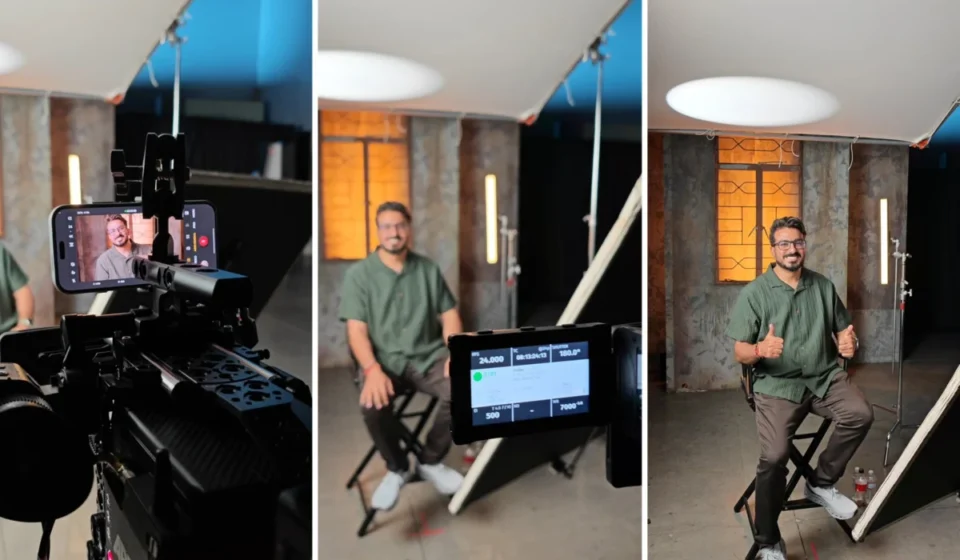
The genesis of this groundbreaking partnership was recently highlighted during an immersive workshop hosted by HONOR at ARRI’s state-of-the-art studio in Los Angeles. This unique event brought together cutting-edge professional cinema cameras and meticulously crafted lighting environments, with the HONOR Magic 9 Pro Max positioned alongside these industry titans. The objective was clear: to demonstrate the smartphone’s capabilities in replicating the visual fidelity and workflow typically associated with professional productions. Following this intensive hands-on experience, and subsequent field testing in diverse locations such as the dramatic landscapes of Yosemite National Park, the initial impressions suggest that this collaboration between HONOR and ARRI is far more than a mere marketing exercise; it represents a tangible step towards democratizing cinematic imaging.
A Smartphone’s Ambitious Encounter with ARRI Cinema Technology
A central element of the Los Angeles workshop involved the creation of two meticulously designed shooting scenarios. The first focused on portraiture within a controlled lighting setup, emphasizing nuanced detail and subtle gradations. The second recreated a more immersive, cinematic living-room environment, complete with ambient mood lighting and curated set dressing, aiming to test the device’s ability to capture atmospheric scenes. In both environments, an authentic ARRI cinema camera and the HONOR Magic 9 Pro Max were tasked with recording identical subjects and scenes simultaneously. This direct comparison served as the crucible for evaluating the smartphone’s imaging prowess.

Crucially, both devices were configured to shoot in ARRI’s LogC3 format. This logarithmic recording profile is a cornerstone of professional digital cinematography, designed to capture the widest possible dynamic range and offer maximum flexibility in post-production color grading. Witnessing the footage side-by-side on a calibrated monitor was a revelation. The HONOR Magic 9 Pro Max demonstrated a remarkable ability to approximate the overall visual character and tonal response of the ARRI cinema camera. The author’s assessment placed the smartphone’s output at approximately 90-95% of the professional camera’s performance within these specific controlled settings. This striking similarity was later corroborated by HONOR, who provided the footage for further in-depth analysis, allowing for a detailed comparison of the visual nuances captured by each device.
While this remarkable achievement does not signal the obsolescence of professional cinema cameras, which possess distinct advantages in lens ecosystems, accessory integration, and finer control over image capture, it undeniably highlights the significant advancements in smartphone imaging. The ARRI camera’s inherent superiority in terms of ultimate detail, clarity, and the breadth of its creative toolkit remains. However, the HONOR Magic 9 Pro Max’s ability to capture footage that closely mimics the aesthetic qualities of a professional ARRI setup presents a compelling proposition for emerging filmmakers and content creators. It offers a pathway to explore advanced cinematic workflows without the substantial financial investment typically required for professional camera systems.

The Tangible Benefits of the ARRI Partnership
The true value of the HONOR and ARRI collaboration lies not in the superficial application of an ARRI logo to the camera interface, but in the deep integration of ARRI’s Image Science principles into the smartphone’s video pipeline. This extends across critical aspects of image capture, sophisticated color management, and real-time preview capabilities, fundamentally altering the mobile video creation process.
At the heart of this integration is ARRI LogC3, a logarithmic recording profile developed by ARRI to maximize image data. When paired with ARRI Wide Gamut 3 (AWG3) and 10-bit color depth, LogC3 provides creators with a "flat" image straight out of the camera. This flat profile is intentionally designed to appear less visually striking initially, but it contains significantly more information, offering unparalleled flexibility for adjustments in color, contrast, and exposure during the editing phase. This approach positions the captured footage not as a final, polished product, but as a highly malleable raw material, akin to traditional film negative, enabling professional-grade post-production manipulation.

Complementing the LogC3 recording is a curated selection of 14 ARRI Looks, which are essentially sophisticated color presets. These include two foundational default options and twelve distinct stylistic treatments designed to evoke specific moods and aesthetics. Furthermore, HONOR provides access to an extended library of 87 ARRI Looks, along with support for third-party LogC3 LUTs (Look-Up Tables). A significant advantage is the ability to preview these ARRI Looks in real-time while recording. This feature allows creators to visualize the potential impact of different color treatments before committing to a specific aesthetic, streamlining the creative decision-making process.
To consolidate these advanced capabilities, HONOR has introduced a dedicated ARRI CINEMA mode. This interface centralizes critical shooting parameters, offering granular control over exposure, shutter speed, ISO, white balance, focus, and recording settings. The mode supports recording at resolutions up to 4K at 60 frames per second, underscoring that this feature extends beyond simple filter application to encompass a comprehensive cinematic recording workflow.

Extending the Cinematic Workflow Beyond the Studio Environment
A particularly noteworthy aspect of the HONOR Magic 9 Pro Max’s ARRI integration is its applicability beyond the highly controlled environment of a professional studio. The author had the opportunity to extend their testing period by taking the device on a trip to Yosemite National Park, a location renowned for its breathtaking natural beauty and challenging lighting conditions. This extended field test allowed for an evaluation of the camera’s performance in real-world scenarios, away from meticulously arranged lighting and professional guidance.
During the Yosemite excursion, the ability to seamlessly switch between the phone’s various focal lengths and experiment with the LogC3 footage proved invaluable. The convenience of applying ARRI Looks directly on the device, rather than needing to transfer clips to a computer for processing, significantly enhanced the workflow efficiency. Among the tested ARRI Looks, "ARRI-5120 (Vibrant)" and "ARRI-3110 (Aesthetic)" emerged as favorites, offering distinct visual treatments that could significantly alter the mood and impact of the captured footage, depending on the desired artistic outcome.

For those who prefer a more traditional post-production workflow, the footage captured by the Magic 9 Pro Max can be seamlessly imported into professional editing software such as DaVinci Resolve. ARRI itself endorsed DaVinci Resolve during the workshop, highlighting its compatibility with ARRI’s proprietary color science. This dual approach—offering both on-device editing convenience and robust desktop workflow integration—significantly broadens the appeal of the feature, particularly for users already familiar with color grading techniques.
A Notable Omission in the Camera Selection
During the exploration of the ARRI CINEMA mode, a curious limitation was identified that seems incongruous with the phone’s strong emphasis on cinematic versatility. The interface presents framing options corresponding to 24mm, 35mm, 48mm, and 85mm focal lengths. While the 24mm, 35mm, and 48mm options utilize the primary camera sensor, the 85mm setting engages the telephoto lens.

The conspicuous absence from this selection is the ultra-wide camera. The 12mm ultra-wide lens is not accessible within the ARRI CINEMA mode. This means that creators cannot leverage the LogC3 workflow or ARRI’s cinematic tools when capturing expansive landscapes, architectural subjects, or dramatic wide-angle scenes. This represents a missed opportunity, particularly for travel photography and videography, where an ultra-wide perspective can be essential for conveying scale and grandeur. Given the significant investment HONOR has made in the video experience, extending the ARRI CINEMA mode to all rear cameras would have been a more comprehensive and user-centric approach.
Beyond this specific limitation, early impressions of the camera system have been overwhelmingly positive. Video stabilization demonstrated robust performance during shooting in Yosemite, ensuring smooth and steady footage. The transition between different focal lengths is intuitive and fluid. The device is further enhanced by HONOR’s dedicated Imaging Chip H1, which works in tandem with the flagship Snapdragon processor. This dedicated imaging hardware plays a crucial role in HONOR’s advanced computational imaging and video processing pipeline, contributing to the overall quality and capabilities of the camera system. A more comprehensive evaluation of image quality, low-light performance, and stabilization will be detailed in the forthcoming full review.

Additional Features and Lingering Questions
HONOR also offers optional accessories designed to augment the capabilities of the Magic 9 Pro Max’s camera system for more demanding creative applications. During a visit to Warner Bros. studio, the author had a brief opportunity to test the larger G500 teleconverter. This accessory demonstrated promising results in extending the phone’s zoom capabilities, though sample images are not yet available for review. A smaller, lighter G200 teleconverter is also available, but has not yet been tested.
Audio capture, a critical component of any video production, is another area where HONOR has focused its efforts. While ARRI’s expertise primarily lies in visual technology, and their cinema cameras support external microphones, ARRI itself does not manufacture microphones. Recognizing this, HONOR has developed its own solutions, including a dedicated directional microphone system. However, due to the constraints of solo travel during testing, a thorough evaluation of the audio capabilities, particularly in comparison to professional solutions, has not yet been possible and will be a key focus for the full review.

HONOR’s ARRI Partnership Sparks Intrigue
Camera partnerships within the smartphone industry are not a novel phenomenon. Collaborations with renowned brands like Hasselblad (OnePlus, OPPO) and Leica (Xiaomi) have become increasingly common. What distinguishes HONOR’s approach with ARRI is its deliberate focus on cinematography and advanced video creation, rather than solely aiming to enhance still photography.
Having experienced the HONOR Magic 9 Pro Max in both the ARRI studio and the natural splendor of Yosemite, the initial impressions are highly encouraging. The LogC3 workflow is remarkably accessible, the ability to experiment with ARRI Looks directly on the device is a significant workflow enhancer, and the direct comparison with ARRI cinema cameras offered a compelling illustration of the progress in smartphone videography. While certain limitations, such as the exclusion of the ultra-wide lens from the ARRI CINEMA mode, and unanswered questions regarding audio performance and overall image consistency remain, the foundational elements of this partnership are undeniably strong.

The HONOR Magic 9 Pro Max is not positioned as a replacement for a professional ARRI cinema camera, nor does it aspire to be. Its true potential lies in its capacity to bring a more serious and professional filmmaking workflow within reach of a significantly broader audience. This represents an exciting and forward-thinking direction for smartphone cameras, and a comprehensive evaluation of its capabilities under more rigorous testing conditions will precede the final verdict. Readers are encouraged to stay tuned for the full, in-depth review.