MacOS Tahoe 26.4 Introduces "Slow Charger" Indicator to Enhance MacBook Charging Transparency

Apple’s latest macOS Tahoe 26.4 update, released on Wednesday, March 25, 2026, brings a significant enhancement to the MacBook user experience by introducing a new "Slow Charger" indicator. This feature aims to provide users with immediate and clear feedback when their charging setup is not delivering optimal power, a move that reflects Apple’s ongoing commitment to user-friendly diagnostics and battery health management. The update, developed by Tim Hardwick, also includes a previously announced Charge Limit feature, further empowering users to maintain their device’s long-term battery performance.
Understanding the "Slow Charger" Indicator
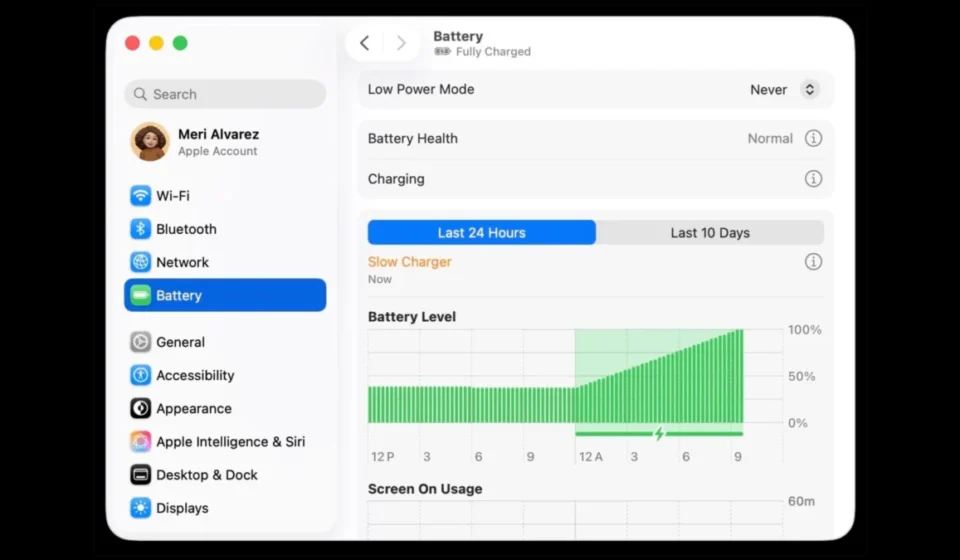
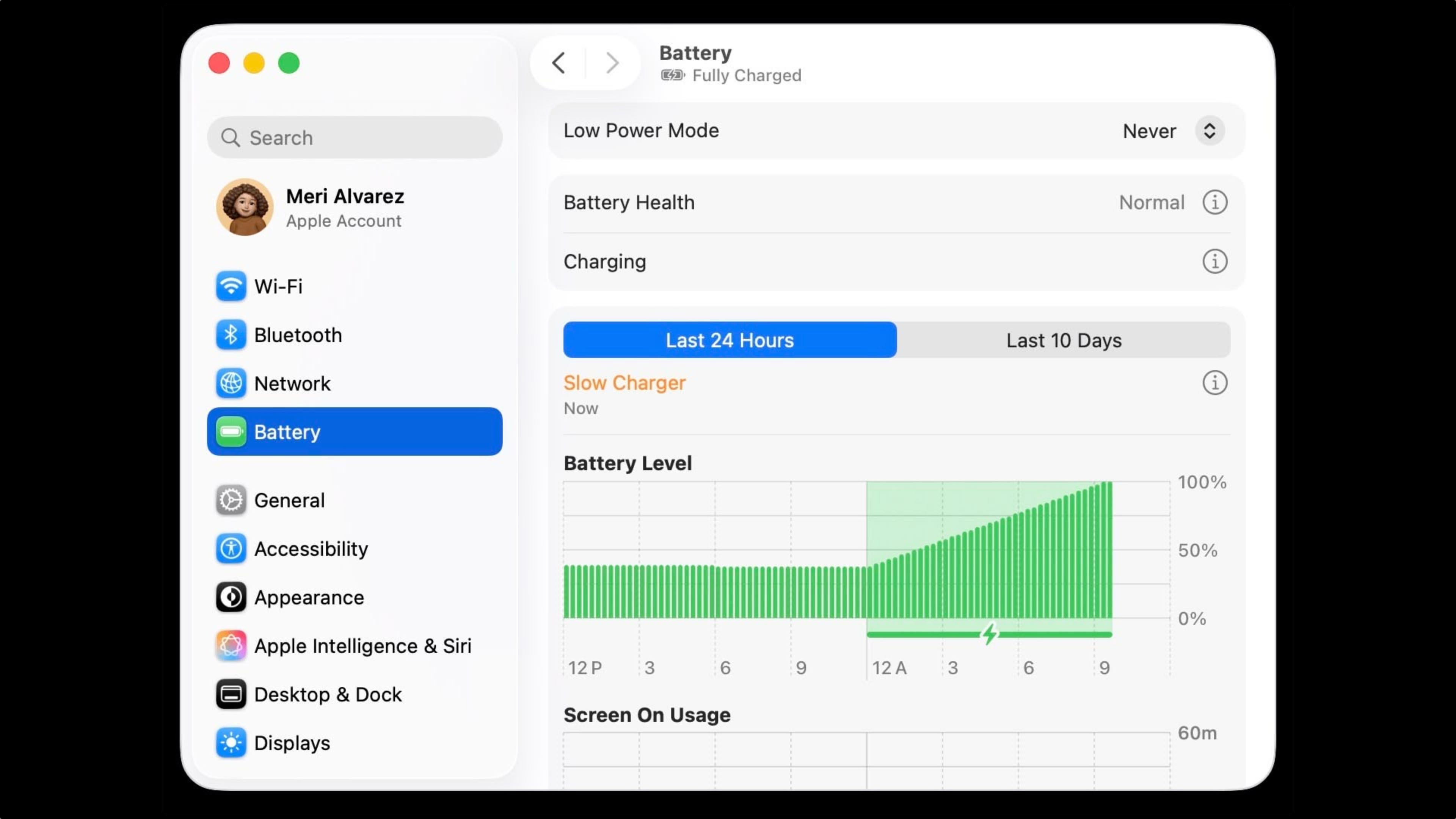
The new "Slow Charger" notification appears directly within the macOS interface, offering a visual cue to users experiencing suboptimal charging speeds. As detailed in an updated Apple support document (support.apple.com/en-us/102397), this indicator is presented in prominent orange text within the battery status menu, a critical hub for users monitoring their MacBook’s power consumption. Additionally, the label is displayed above the Battery Level graph in the Battery settings pane, providing a more detailed overview for those who delve into system preferences. Crucially, each instance of the "Slow Charger" label is accompanied by an information button, offering users immediate access to further explanations and guidance.
Apple’s official guidance accompanying this feature emphasizes the importance of using appropriate charging accessories. The company advises users that to achieve the fastest possible charging speeds, they should utilize a power adapter and cable that meet or exceed the minimum wattage recommended for their specific MacBook model. This recommendation is linked to a comprehensive resource on Apple’s support site (support.apple.com/en-us/109509), which lists the power requirements for a wide range of MacBook configurations. This transparency aims to equip users with the knowledge to select the correct charging equipment, thereby optimizing both charging time and, by extension, their daily productivity.
A Precedent in Mobile Devices
The introduction of the "Slow Charger" indicator on macOS is not an isolated development but rather a logical extension of Apple’s user-centric diagnostic features implemented across its product ecosystem. This functionality closely mirrors a similar feature that Apple integrated into iPhones with the release of iOS 18. In that iteration, periods of slow charging on iPhones are visually represented by an orange bar within the Battery section of the Settings app. This parallel implementation across macOS and iOS suggests a unified strategy by Apple to provide consistent and intuitive feedback regarding charging performance, regardless of the device in hand. This cross-platform approach simplifies the user experience and reinforces Apple’s brand consistency in communicating technical information.
Charge Limit Feature: A Proactive Approach to Battery Health
Beyond the new charging indicator, macOS Tahoe 26.4 also incorporates a significant battery health management tool: the Charge Limit feature. This functionality, first previewed in an earlier macOS Tahoe 26.4 beta release (as reported on macrumors.com/2026/02/16/mac-charge-limit-macos-tahoe-26.4/), empowers MacBook users to proactively manage their device’s battery longevity. The Charge Limit feature allows users to set a maximum charge level for their MacBook’s battery, with options ranging from 80% to 100%.
The primary objective of this feature is to preserve long-term battery health. Lithium-ion batteries, commonly used in modern electronics, can experience degradation over time, particularly when frequently charged to their maximum capacity and maintained at high charge levels for extended periods. By enabling users to set a lower charge limit, Apple aims to reduce the stress on the battery, potentially extending its usable lifespan and maintaining its performance over a greater number of charge cycles. This feature is particularly beneficial for users who typically keep their MacBooks plugged in for most of the day, as it prevents the battery from constantly being held at a 100% charge.
Broader Implications and User Impact
The dual battery-related enhancements in macOS Tahoe 26.4 – the "Slow Charger" indicator and the Charge Limit feature – signify a strategic shift by Apple towards greater user empowerment and transparency in managing device power.
Enhanced User Awareness and Control
The "Slow Charger" indicator directly addresses a common point of user frustration: the ambiguity surrounding charging speeds. Previously, a MacBook charging slowly might have been attributed to various factors, leaving users to troubleshoot through trial and error. The new indicator provides an immediate diagnostic tool, enabling users to quickly identify and rectify issues related to their power adapter, USB-C cable, or even the power source itself. This reduces user confusion and empowers them to take corrective action, such as switching to a higher-wattage adapter or a more robust cable. For professionals and students who rely heavily on their MacBooks, minimizing downtime due to charging issues is paramount, making this feature a valuable addition.
Proactive Battery Management and Sustainability
The Charge Limit feature represents a more proactive approach to battery health. While Apple has long incorporated battery health management systems, this feature provides direct user control. This aligns with a growing trend towards sustainability in consumer electronics, where extending the lifespan of devices is increasingly valued. By enabling users to actively participate in preserving their battery’s health, Apple not only enhances the user’s long-term experience with their MacBook but also contributes to a more sustainable consumption model by reducing the frequency with which users might need to replace their devices due to battery degradation.
Potential for Third-Party Accessory Optimization
The clear indication of charging limitations could also influence the third-party accessory market. Manufacturers of power adapters and USB-C cables will likely see increased demand for products that explicitly meet or exceed Apple’s recommended wattage for various MacBook models. The "Slow Charger" indicator serves as an implicit endorsement for high-quality charging solutions, potentially driving innovation and competition in this sector. Conversely, it may also highlight the limitations of lower-quality or underpowered accessories.
Availability and Installation
macOS Tahoe 26.4 is now available for download and installation for all eligible MacBook models. Users can initiate the update process through the standard macOS software update mechanism. To access the update, users should navigate to System Settings, then select General, followed by Software Update. The system will then check for available updates and present macOS Tahoe 26.4 for download if the user’s device is compatible.
The rollout of these battery-centric features underscores Apple’s continued focus on refining the user experience through thoughtful software updates. As users increasingly rely on their MacBooks for critical tasks, the ability to understand and manage their device’s power performance becomes ever more crucial. The "Slow Charger" indicator and Charge Limit feature, integrated into macOS Tahoe 26.4, represent significant steps in providing users with the tools and information necessary for an optimized and enduring MacBook experience.