
Claws of Awaji: A Deep Dive into Assassin’s Creed Shadows’ Latest Expansion

The island of Awaji, a stunning addition to the Assassin’s Creed Shadows experience, offers a visually captivating environment that beckons exploration. While the narrative of "Claws of Awaji" does not reach the profound emotional depths some might anticipate, it remains an engaging journey. The expansion successfully delivers main missions that resonate with the core tenets of the Assassin’s Creed franchise, presenting players with a series of challenging combat encounters that will undoubtedly test their mettle against formidable adversaries.
As a dedicated follower of the Assassin’s Creed saga, with a history of engaging with nearly every installment, the release of "Assassin’s Creed Shadows" last year was a significant event. The base game managed to secure a coveted spot within my personal top three Assassin’s Creed titles, a testament to its quality, though it still falls just short of the exceptional benchmark set by "Assassin’s Creed Odyssey," a game that remains unparalleled in its comprehensive excellence. Consequently, the opportunity to immerse myself in the downloadable content (DLC) for "Shadows" was one I eagerly embraced.
Expansion Unlocks Post-Main Game Content
It is crucial to note from the outset that "Claws of Awaji" is exclusively post-main game content. This differs from the approach taken by some other major gaming expansions, such as those for "The Witcher 3" and "Cyberpunk 2077," which often allow players to select and engage with expansions independently of their main story progression. In the case of "Assassin’s Creed Shadows," players are required to complete the primary narrative before gaining access to "Claws of Awaji." This decision, while potentially limiting for players who prefer immediate access to new content, is understandable from a narrative perspective. Ubisoft’s implementation ensures that players have a foundational understanding of the game’s world and characters, facilitating a more cohesive experience as the DLC builds upon the established storyline. This strategic choice aims to preserve narrative integrity and prevent potential spoilers or confusion for those not yet familiar with the base game’s conclusion.
The Enduring Allure of Feudal Japan: Awaji’s Scenic Splendor
One of the most lauded aspects of the base game, as detailed in previous analyses of "Assassin’s Creed: Shadows," is its meticulously crafted and breathtaking rendition of feudal Japan. The "Claws of Awaji" expansion continues this tradition, presenting the island of Awaji as an equally captivating and rewarding environment for players to traverse. The scenery is consistently stunning, offering a visual feast that enhances the overall gameplay experience. Particular commendation is due to the game’s depiction of dense forests and expansive water vistas, which provide moments of serene contemplation amidst the action. The environmental design team has masterfully balanced the size of Awaji, ensuring it feels neither overwhelming nor insignificant, striking an ideal proportion that complements the gameplay loop. This deliberate environmental design contributes significantly to the player’s sense of immersion and discovery.
Player Choice and Combat Dynamics: Yasuke vs. Naoe

Mirroring the flexibility of the base game, "Claws of Awaji" allows players to choose between two distinct protagonists: Yasuke and Naoe. While both characters offer unique gameplay experiences, the author expresses a strong personal preference for Naoe, citing her agility and refined combat style as particularly appealing. Yasuke, with his more direct and aggressive combat approach, serves as a valuable counterpoint, offering a welcome change of pace from Naoe’s stealth-oriented tactics. Regardless of the chosen character, the combat mechanics in "Claws of Awaji" retain the satisfying aggression and tactical depth that characterized the base game, ensuring that each encounter remains a dynamic and engaging challenge. The combat system’s emphasis on aggression and skillful execution is a core element that makes the gameplay particularly rewarding.
Narrative Arc: A Mother’s Reunion and Emotional Resonance
In adherence to ethical review practices, sensitive narrative spoilers are generally avoided. However, it is pertinent to address the narrative’s emotional impact within "Claws of Awaji." The expansion’s central storyline revolves around Naoe’s long-awaited reunion with her mother. While this premise inherently suggests significant emotional weight, the execution of this reunion falls somewhat short of the profound emotional payoff that many players might anticipate, especially considering Naoe’s lifelong yearning for this moment.
Despite this perceived lack of peak emotional resonance, the narrative itself is far from unengaging. The story provides ample opportunities for players to enact justice and confront a tyrannical faction that has seized control of the island. The primary antagonist, Kimura Yukari, a Japanese Templar and leader of the Sanzoku Ippa, is portrayed as a thoroughly detestable figure, effectively fulfilling her role as a compelling villain. However, the characterization of her subordinates, such as her enforcer Imagawa Tomeji and other allies, lacks the same depth, leaving them as less memorable adversaries.
Mission Structure and Enemy Encounters: Familiar Assassin’s Creed Tropes
"Claws of Awaji" largely adheres to the established mission design principles of the Assassin’s Creed franchise. Players will encounter a diverse array of enemies, with certain enemy types posing a significant challenge. The expansion features a progression system that involves eliminating a series of captains, a mechanic reminiscent of the cultist elimination gameplay found in "Assassin’s Creed Odyssey." This structure effectively guides players toward confronting the primary threat on Awaji. The main missions themselves are archetypal Assassin’s Creed fare, encompassing classic objectives such as targeted assassinations, tracking targets, stealthy infiltration of enemy outposts, and information gathering. For established fans of the series, these missions are designed to be familiar and enjoyable, offering a sense of purpose and investment in liberating Awaji from Templar dominion.
DLC Duration and Value Proposition
The "Claws of Awaji" expansion offers an estimated playtime of eight to ten hours for players who engage with its content comprehensively. This duration can be reduced to approximately six to seven hours for those who prioritize completing the main story missions and exploring less of the island’s optional content. This playtime raises questions regarding the expansion’s value proposition, particularly when compared to other substantial DLC offerings in the gaming landscape. While the expansion may not match the extensive playtime of titles like "The Witcher 3’s Blood and Wine," its more focused scope is not necessarily a detractor. The author finds the runtime of "Claws of Awaji" to be agreeable, suggesting that not all DLCs need to be epics in scale. However, the $25 price point might lead some consumers to expect a greater volume of content for their investment, a sentiment that is entirely understandable.
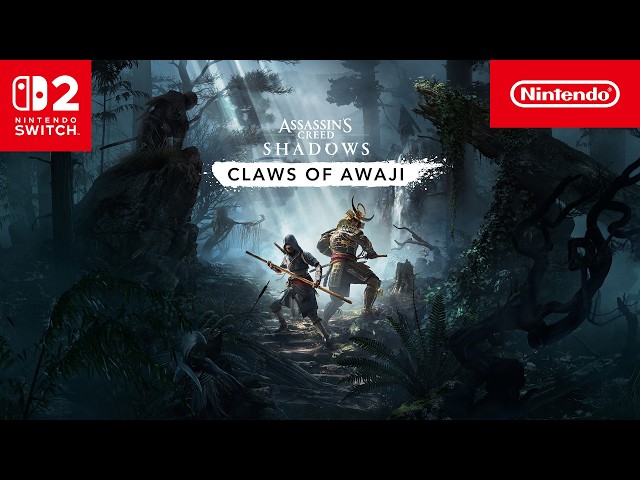
The Bo Staff: A New Weaponry Option
A notable addition to the gameplay mechanics in "Claws of Awaji" is the introduction of the bo staff as a new weapon choice. This addition is particularly welcomed by fans of the Teenage Mutant Ninja Turtles, specifically the character Donatello, who is famously associated with this weapon. The author expresses a long-standing appreciation for the bo staff and questions its omission from the base game. The inclusion of this weapon in the DLC is seen as a positive development, even serving as a potential incentive for players to embark on a New Game Plus playthrough to experience its unique combat utility. The satisfying "bonk" of the bo staff against enemies is a small but enjoyable detail that enhances the combat experience.
Technical Performance on Nintendo Switch 2
From a technical standpoint, "Claws of Awaji" performs admirably on the Nintendo Switch 2, mirroring the stable performance observed in the base game. The expansion runs smoothly in both docked and handheld modes, providing a consistent and enjoyable visual experience. While occasional minor rendering glitches were encountered, these instances were infrequent and did not significantly detract from the overall gameplay, nor did they warrant a recommendation against purchasing the DLC. The technical stability is a crucial factor for players on the Nintendo Switch platform, and "Claws of Awaji" largely delivers in this regard.
Conclusion: A Worthwhile Expansion Despite Minor Reservations
In summation, "Claws of Awaji" stands as a commendable expansion for "Assassin’s Creed: Shadows," even if it does not ascend to the pinnacle of DLC achievements, a position still firmly held by "The Witcher 3’s Blood and Wine." The expansion successfully extends the narrative of "Assassin’s Creed: Shadows," offering a visually appealing new island to explore and introducing engaging new combat options, most notably the bo staff. While the emotional impact of the central storyline might not be as potent as anticipated, the overall experience remains enjoyable and is likely to resonate with fans of the franchise. The blend of familiar Assassin’s Creed gameplay elements, coupled with the beauty of the Awaji island setting, makes "Claws of Awaji" a DLC that is certainly worthy of players’ time and consideration. The expansion’s ability to further the established narrative and provide a visually rich environment solidifies its place as a valuable addition to the "Assassin’s Creed: Shadows" experience.