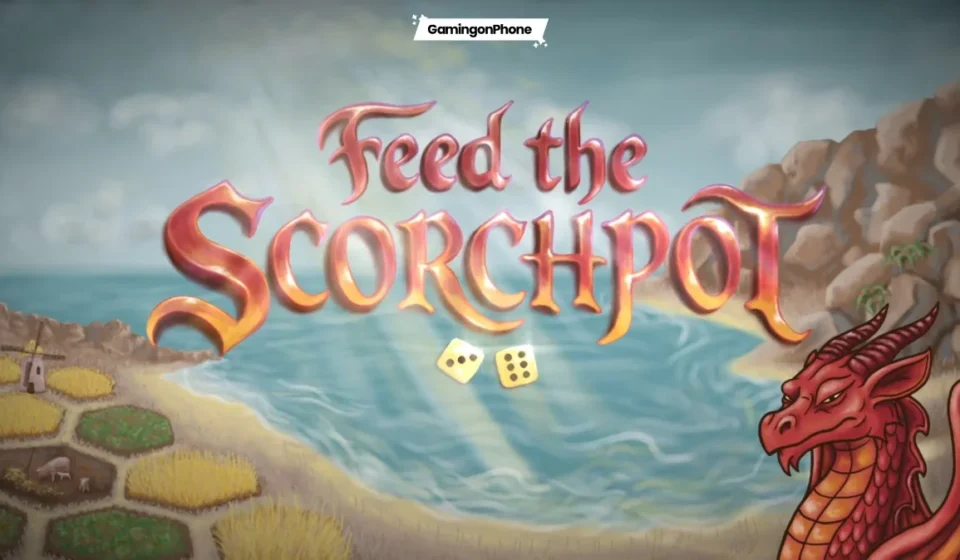
Feed the Scorchpot is a dragon-friendly dice-based strategy and cooking game on mobile, now open for pre-registration.

The mobile gaming landscape is poised for a unique culinary and strategic adventure with the official pre-registration opening for Feed the Scorchpot on Android. Developed by Moravian and published by Short Circuit Studio, known for their distinctive puzzle titles like Tiny Connections and Teeny Tiny Trains, this forthcoming title promises an intricate blend of dice-based mechanics, island-building, resource management, and an unconventional approach to dragon appeasement through gastronomy. The game distinguishes itself by offering players a compelling narrative premise: a pact with a formidable dragon to protect their island, contingent upon a steady supply of increasingly elaborate meals. This core dynamic establishes a high-stakes environment where strategic planning and resourcefulness are paramount, as the dragon’s escalating appetite and pickiness introduce a constant threat of catastrophic failure, with the islander becoming the ultimate undesirable dish.
Unpacking the Core Gameplay Loop: Dice, Deeds, and Dragon Dinners
At its heart, Feed the Scorchpot presents a sophisticated gameplay loop that marries several popular mechanics into a cohesive and engaging experience. Players primarily interact with the game through dice rolls, which serve as the fundamental engine for all in-game actions. These dice dictate the resources gathered, the actions available, and ultimately, the ingredients acquired for the dragon’s meals. This reliance on dice introduces an element of chance, demanding adaptability and strategic foresight to mitigate potential setbacks and capitalize on fortuitous rolls.
Resource management forms another critical pillar of the gameplay. The island itself is a dynamic, evolving entity represented by a hex-grid building system. Players must carefully consider the placement and development of various structures—such as farms to yield ingredients, shrines to influence dice outcomes, and harbors for trade or specific resource generation—to optimize their production pipelines. With over 50 distinct buildings available, each contributing uniquely to the island’s ecosystem and resource generation capabilities, the strategic depth of island development is substantial. The goal is to transform a modest starting island into a highly efficient "scoring machine" capable of meeting the dragon’s ever-growing demands.
The culinary aspect, while central to the narrative, is deeply integrated into the strategic layer. Players must combine collected ingredients according to a vast repertoire of over 80 recipes. These recipes are not merely a checklist; successful combinations cooked in the eponymous "Scorchpot" yield higher scores, influenced by "Flavor" and "Essence" multipliers. This system incentivizes experimentation and careful ingredient selection, pushing players beyond simple recipe completion to mastering the art of high-scoring dragon cuisine. The interplay between resource acquisition (dice rolls), infrastructure development (island building), and culinary execution creates a complex decision-making process that rewards long-term planning and tactical adjustments.
Strategic Depth and Replayability: Mastering the Fickle Feast
The strategic depth of Feed the Scorchpot extends beyond individual gameplay turns, embedding itself in long-term progression and replayability. A significant factor in this is the choice of over 20 unique dice types, each offering different probabilities and outcomes. Players can customize their "dice tray," selecting specific dice combinations to influence the likelihood of acquiring desired ingredients or executing particular island actions. This meta-strategy of dice selection adds another layer of planning, allowing players to tailor their approach to different challenges or preferred playstyles.
Moreover, the game introduces a dynamic challenge curve tied to the duration of the player’s contract with the dragon. Opting to complete the contract in fewer seasons promises a greater payoff, encouraging high-risk, high-reward gameplay. Conversely, extending the contract length, while potentially allowing for more robust island development, simultaneously escalates the difficulty. The dragon’s demands become more stringent, its palate increasingly refined, and its patience shorter. Occasional "tantrums" can manifest as destructive events, setting portions of the meticulously built island ablaze and forcing players to adapt and rebuild under pressure. This escalating challenge ensures that no two playthroughs feel identical and provides a powerful incentive for players to refine their strategies and optimize their island designs. The variability in contract length, combined with the extensive array of buildings, recipes, and customizable dice, guarantees a high degree of replay value, inviting players to continually experiment with new approaches to conquer the dragon’s insatiable hunger.
Artistic Vision and Collaborative Development
A striking feature of Feed the Scorchpot is its vibrant, hand-drawn artwork, which imbues the game with a distinctive charm and personality. Every element, from the majestic dragon and the intricate island buildings to the bizarre ingredients and the inviting environments, has been meticulously illustrated by Daniela, the developer’s wife. This collaborative effort between husband and wife underscores a passion project ethos often found in indie game development, where personal investment translates into unique artistic expression. The consistent visual style not only enhances the game’s aesthetic appeal but also contributes to its immersive quality, creating a whimsical yet challenging world that is a pleasure to explore. This familial collaboration highlights a trend in indie development where small, dedicated teams can achieve high levels of artistic polish and conceptual originality, often surpassing the perceived limitations of smaller budgets through sheer creative drive.
The Studios Behind the Scorchpot: Moravian and Short Circuit Studio
Feed the Scorchpot emerges from the creative vision of Moravian, an independent developer whose previous works, though not explicitly detailed in the provided information, are implied to have cultivated the unique blend of mechanics seen in this title. The partnership with Short Circuit Studio as publisher for the mobile version is particularly noteworthy. Short Circuit Studio has established a reputation for identifying and bringing to market innovative and often minimalist puzzle games that resonate with a dedicated audience. Their track record includes critically acclaimed titles such as Tiny Connections, a spatially oriented puzzle game that challenges players to link diverse elements, and Teeny Tiny Trains, a rail-connecting puzzle that focuses on logistical problem-solving.
This publishing decision signals a strategic expansion for Short Circuit Studio into a slightly broader genre—strategy and resource management—while maintaining their commitment to games that offer intellectual engagement and novel mechanics. Their experience in optimizing user experience and monetization for mobile platforms will be crucial in ensuring Feed the Scorchpot reaches a wide audience and offers a compelling mobile gaming experience. The move also highlights the increasing trend of indie developers partnering with specialized mobile publishers who can navigate the complexities of app store visibility, marketing, and platform-specific optimizations, allowing the developers to focus on their core creative strengths.

Market Context: The Mobile Strategy Landscape
The mobile gaming market, valued at over $90 billion annually and projected to continue its robust growth, represents a highly competitive yet lucrative environment. Strategy games, in particular, constitute a significant segment of this market, appealing to players who seek depth, intellectual challenge, and long-term engagement. Within this segment, there’s a growing appetite for titles that innovate beyond traditional combat or city-building tropes. Feed the Scorchpot appears strategically positioned to capture a niche within this expansive market by blending elements from popular genres—dice-rolling, island management, and cooking—into a fresh, thematic package.
The game’s "dragon-friendly" premise offers a whimsical twist on common fantasy tropes, potentially attracting players looking for something lighter in tone yet still strategically demanding. This kind of genre hybridization has proven successful in recent years, as players increasingly seek unique experiences that defy easy categorization. The success of titles like Slay the Spire (a deck-building roguelike) or Cult of the Lamb (a roguelite management sim) on other platforms demonstrates a strong player base for games that creatively combine disparate mechanics. On mobile, the challenge is to distil these complex systems into an intuitive touch interface, a task that Short Circuit Studio’s experience with Tiny Connections and Teeny Tiny Trains likely prepares them for. The game’s vibrant art style also sets it apart in a market often dominated by more realistic or generic fantasy aesthetics, contributing to its discoverability and appeal.
Monetization Model and Accessibility
Feed the Scorchpot adopts a player-friendly monetization model designed to maximize accessibility while offering a complete premium experience. The first part of the game will be available for free, allowing prospective players to engage with the core mechanics, understand the premise, and experience the unique charm of the game without an initial financial commitment. This "try before you buy" approach is a proven strategy in the mobile market, reducing barriers to entry and enabling organic player acquisition through positive word-of-mouth.
For those who wish to delve deeper into the full narrative and unlock the entire strategic depth, the complete experience can be accessed through a single, one-time in-app purchase (IAP). This model stands in stark contrast to many free-to-play mobile games that rely on continuous microtransactions, loot boxes, or energy systems, which can often lead to player fatigue or a perception of "pay-to-win." By offering a clear, upfront purchase for the full game, Moravian and Short Circuit Studio signal a commitment to a premium gaming experience, appealing to players who value content over continuous monetization and prefer to avoid predatory practices. This decision aligns with a growing segment of the mobile gaming audience that is willing to pay a fair price for a complete, high-quality game, mirroring the success of premium indie titles on other platforms.
Pre-registration and Global Rollout
The opening of pre-registration for Feed the Scorchpot on Android via the Google Play Store marks a significant milestone in its journey to market. Pre-registrations are crucial for mobile games as they generate early interest, allow for marketing push notifications upon launch, and contribute to initial visibility on app store charts. The timing of this Android launch suggests a phased rollout strategy, with an iOS pre-registration "expected soon," indicating a commitment to reaching the broader mobile gaming audience across both major platforms.
Furthermore, the game’s availability on PC via Steam prior to or concurrent with its mobile launch demonstrates a multi-platform strategy. This approach allows the developers to tap into the established PC indie gaming community, gather feedback, and build a foundational player base, which can then cross-pollinate interest into the mobile versions. The multi-platform release strategy maximizes reach and leverages different market segments, acknowledging that players often engage with games across various devices depending on their preferences and lifestyle. This comprehensive rollout plan positions Feed the Scorchpot for a potentially broad and successful launch, appealing to a diverse global audience seeking a fresh and engaging strategy title.
Broader Implications for Indie Mobile Gaming
Feed the Scorchpot represents more than just another game release; it signifies several important trends within the independent and mobile gaming sectors. Firstly, it underscores the continued vitality and innovation of indie developers like Moravian, who are pushing creative boundaries and blending genres in novel ways. The game’s unique concept—a "dragon-friendly" cooking and strategy game—is a testament to the freedom and originality often found outside larger, more risk-averse studios.
Secondly, the partnership with Short Circuit Studio highlights the evolving role of mobile publishers. They are increasingly acting as curators and enablers for quality indie titles, providing the necessary marketing, platform optimization, and business acumen that smaller development teams often lack. This symbiotic relationship allows creative visions to reach wider audiences and thrive in a competitive market.
Finally, the chosen monetization model (free-to-play initial segment with a single IAP for the full game) reflects a growing maturity in the mobile market. It caters to a segment of players who are discerning and prefer premium experiences over exploitative monetization schemes. This model could serve as a benchmark for other indie developers aiming to establish sustainable revenue streams while maintaining artistic integrity and player goodwill. As the mobile gaming industry continues to evolve, titles like Feed the Scorchpot demonstrate that there is ample room for originality, strategic depth, and player-centric design, proving that mobile platforms can deliver experiences as rich and rewarding as their console or PC counterparts. The anticipation surrounding its full launch suggests a bright future for this uniquely appetizing strategic adventure.