Google Unveils Gemini 4 Argon, Its Next Frontier AI Model, Prioritizing Cybersecurity and Advanced Reasoning.

The artificial intelligence landscape continues its relentless march forward, with new foundational models emerging at an unprecedented pace, making it challenging for even seasoned observers to keep track of the latest advancements. Following recent high-profile releases such as Anthropic’s Claude Sonnet 5.5 and OpenAI’s GPT-6.1 Sol, Google has now stepped into the spotlight, formally introducing the next significant evolution of its Gemini family of AI models: Gemini 4 Argon. This unveiling marks a pivotal moment for Google, outlining its strategic direction in the fiercely competitive AI arena, with an initial focus on bolstering cybersecurity defenses before a wider rollout to its premium subscribers.
Google’s Strategic Push with Gemini 4 Argon
Google’s announcement of Gemini 4 Argon underscores its commitment to remaining a frontrunner in the global AI race. The company has positioned Argon as its next frontier model, signifying a leap in capabilities and robustness. As detailed in Google’s official communication, the initial access to Gemini 4 Argon is being granted to a highly restricted group of testers, with a specific mandate: enhancing cybersecurity defense. This targeted early access highlights a critical strategic pivot, recognizing the increasing importance of AI in safeguarding digital infrastructures against evolving threats. Once Google’s internal evaluations confirm the model’s sufficient robustness and reliability in these demanding scenarios, access will gradually expand to Google AI Ultra subscribers, followed by broader availability. This phased rollout reflects a cautious yet confident approach, prioritizing safety and performance validation before widespread deployment.
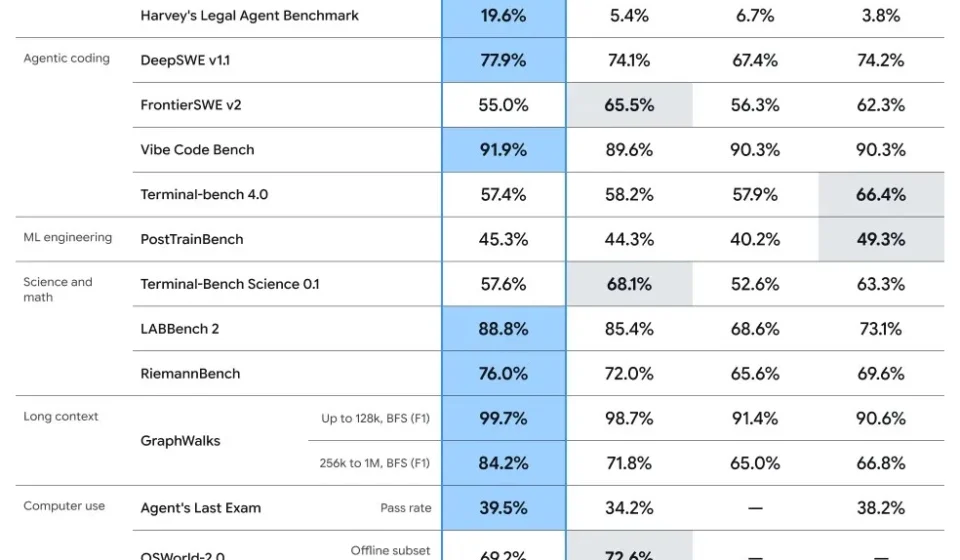
The introduction of Gemini 4 Argon is not merely an incremental update; it represents Google’s ambition to push the boundaries of what AI models can achieve. The company is making a concerted effort to highlight the model’s performance metrics, indicating a competitive edge in several key areas. While Google acknowledges that Argon may not "run circles around the competition" in every single metric, the presented data suggests notable gains across a spectrum of tasks, reinforcing its position as a formidable contender against other industry leaders. This strategic launch aims to solidify Google’s influence in both consumer-facing AI applications and enterprise-grade solutions, particularly in high-stakes domains like cybersecurity.
Unpacking Gemini 4 Argon’s Performance Benchmarks
The performance data released by Google paints a compelling picture of Gemini 4 Argon’s enhanced capabilities. The benchmarks showcase steady improvements in critical areas, with particular emphasis on complex problem-solving and reasoning tasks.
-
Coding Proficiency: Gemini 4 Argon demonstrates notable advancements in coding-related assignments. This improvement is crucial in an era where AI-powered coding assistants are becoming indispensable tools for software developers. Enhanced coding capabilities can translate into more efficient code generation, better debugging assistance, and sophisticated code refactoring suggestions, potentially accelerating development cycles and improving software quality across various industries. The ability of an AI model to understand, generate, and optimize complex code is a cornerstone for its utility in modern tech ecosystems, from application development to infrastructure management.
-
Long-Horizon Legal Assignments: Perhaps one of Gemini 4 Argon’s most pronounced victories in the benchmarks occurs within the specialized domain of legal tasks, specifically in the "Harvey’s Legal Agent Benchmark." This benchmark typically evaluates an AI’s ability to tackle "long-horizon" assignments, which involve multi-step reasoning, understanding intricate legal documents, identifying precedents, analyzing complex case facts, and formulating coherent legal strategies over extended periods. A significant edge in this area implies a profound capability for deep contextual understanding, sustained logical inference, and the synthesis of vast amounts of information – skills highly valued in legal research, contract analysis, and even predictive legal analytics. Such advancements could revolutionize legal practices by automating tedious research, assisting lawyers in case preparation, and providing sophisticated insights into legal outcomes.
-
Economic and General Business Tasks: Beyond specialized domains, Google also highlights Gemini 4 Argon’s finesse with economic and general business tasks. This broad category encompasses a wide array of applications, including market analysis, financial forecasting, strategic planning, operational optimization, and customer service automation. Improved performance here suggests that Argon can process and interpret complex economic data, identify trends, predict market movements, and assist businesses in making more informed decisions. For enterprises, this could mean more robust business intelligence tools, enhanced competitive analysis, and more effective resource allocation, driving efficiency and innovation across organizational functions. The model’s ability to handle the nuances of business language and data makes it a powerful asset for enterprise clients seeking to leverage AI for competitive advantage.
These benchmark results, while impressive, are presented by Google as indicators of Argon’s potential. The true test, as many in the AI community agree, will come with real-world application and hands-on experience by a wider user base. Nevertheless, the data provides a strong foundation for Google’s claims of enhanced intelligence and versatility.
Beyond Raw Performance: Focus on Safety and Efficiency
Google’s development priorities for Gemini 4 Argon extend beyond mere raw performance metrics. Like many other leading AI models currently in development, significant efforts have been directed towards bolstering the model’s safety, ethical deployment, and operational efficiency.
-
Strengthening Resistance to Nefarious Uses: A critical focus for Gemini 4 Argon has been to enhance its resistance to being exploited for malicious or nefarious purposes. This involves implementing robust safety protocols, refining content moderation mechanisms, and improving the model’s ability to detect and reject harmful prompts or requests. As AI models become more powerful, the potential for misuse—ranging from generating misinformation and deepfakes to aiding in cyberattacks—also grows. Google’s proactive stance in integrating strong safety guardrails is an acknowledgment of these ethical responsibilities and a crucial step towards fostering trustworthy AI systems. This commitment to safety is particularly relevant given Argon’s initial deployment in cybersecurity defense, where the stakes for secure and ethical operation are exceptionally high.

-
Model Distillation and Efficiency: Another key area of improvement involves "distilling the model" in order to reproduce its functionality more efficiently. Model distillation is a technique where a smaller, more efficient model (the "student") is trained to mimic the behavior of a larger, more complex model (the "teacher"). This process aims to reduce the computational resources required to run the AI while retaining a significant portion of its performance. Such efficiency gains are vital for deploying AI models on a wider range of devices, from cloud servers to edge devices like smartphones, and for reducing the operational costs associated with running large-scale AI services. Improved efficiency also contributes to a lower environmental footprint, a growing concern in the energy-intensive field of AI. This focus on distillation suggests Google is not only building powerful models but also making them more accessible and sustainable for diverse applications.
The Rollout Strategy: Tiered Access and Pricing Structure
The introduction of Gemini 4 Argon follows a carefully orchestrated rollout strategy, beginning with a highly exclusive testing phase before gradually expanding access. This tiered approach is common for frontier AI models, allowing developers to gather critical feedback, identify potential issues, and refine the model in a controlled environment.
-
Limited Early Access for Cybersecurity Defense: The initial phase involves a very limited group of testers, specifically concentrating on cybersecurity defense applications. This strategic choice allows Google to rigorously evaluate Argon’s capabilities in a high-stakes, real-world scenario where accuracy, reliability, and security are paramount. The insights gained from this phase will be invaluable for fine-tuning the model’s performance and ensuring its robustness against sophisticated cyber threats.
-
Google AI Ultra Subscribers: Following the initial testing, Gemini 4 Argon will become available to Google AI Ultra subscribers. This premium tier of Google’s AI services offers advanced features, higher usage limits, and early access to cutting-edge models like Argon. This approach incentivizes subscriptions to Google’s paid AI offerings while providing a controlled expansion of access to a more engaged user base.
-
API Customers and Pricing: For developers and businesses looking to integrate Gemini 4 Argon into their own applications and services, Google has outlined a competitive pricing structure for API access. The cost for input tokens is set at $2 per million tokens, with cached tokens available at a substantial 95% discount. Output tokens will be priced at $10 per million. This pricing model is designed to cater to varying usage patterns, with significant cost savings for applications that frequently reuse previously processed information. The competitive pricing aims to encourage widespread adoption among enterprise clients and developers, fostering an ecosystem around Gemini 4 Argon. The distinction between input and output token pricing is standard in the industry, reflecting the differing computational complexities of processing user queries versus generating comprehensive responses.
-
Future Free Tier Availability: While immediate access is restricted to premium users and API clients, Google has indicated that Gemini 4 Argon will eventually "trickle down" to the unpaid tier of Gemini users. However, the timeline for this broader public release remains undefined, with Google offering only a vague "soon" as an ETA. This staggered release ensures that the most powerful capabilities are first monetized and thoroughly tested, while also maintaining the promise of eventually making advanced AI accessible to a wider audience. Users of the free Gemini service will likely have to exercise patience before experiencing Argon’s full capabilities.
The Broader AI Landscape and Implications
The launch of Gemini 4 Argon comes at a time of intense competition and rapid innovation in the artificial intelligence sector. Companies like OpenAI, Anthropic, Meta, and others are continually pushing the boundaries of what large language models and multimodal AI can achieve.
-
The AI Arms Race: Google’s move is a clear indicator of the ongoing "AI arms race," where major tech giants are vying for dominance. Each new model release is scrutinized for its unique capabilities, performance improvements, and strategic positioning. Gemini 4 Argon’s focus on cybersecurity and advanced reasoning tasks suggests Google is targeting high-value, complex applications where robust and reliable AI is paramount. This competition ultimately benefits users, as it drives continuous innovation and pushes models to become more powerful, efficient, and versatile.
-
Impact on Enterprise and Developers: For enterprises, Gemini 4 Argon presents new opportunities to leverage cutting-edge AI for various business functions. Its enhanced capabilities in legal and business tasks could lead to significant productivity gains and innovative solutions in sectors previously underserved by AI. For developers, the competitive API pricing and advanced features offer a compelling platform for building next-generation AI applications. The availability of cached tokens at a deep discount is particularly attractive for applications requiring repeated queries or maintaining conversational context, making development more cost-effective.
-
Ethical Considerations and Responsible AI: The emphasis on strengthening resistance to nefarious uses highlights the growing importance of responsible AI development. As AI models become more capable, the ethical implications surrounding their use—from bias and fairness to privacy and safety—become increasingly critical. Google’s proactive measures in this regard are essential for building public trust and ensuring that AI technologies are deployed in a beneficial and responsible manner.
-
Real-World Validation and Future Outlook: While benchmarks provide a snapshot of performance, the true measure of Gemini 4 Argon’s success will be its performance in real-world scenarios and its ability to solve complex problems for users and businesses. The "hands-on experience" that the original article yearns for is precisely what will validate Google’s claims and reveal the model’s practical utility. The delay in widespread public access, while frustrating for some, is a necessary step to ensure the model is mature and stable. The eventual trickle-down to the unpaid Gemini tier will democratize access to these advanced capabilities, potentially sparking new waves of innovation and application development among a broader user base.
In conclusion, Gemini 4 Argon represents a significant advancement in Google’s AI development, strategically targeting critical areas like cybersecurity, complex reasoning, and business efficiency. Its phased rollout and competitive pricing structure reflect a calculated effort to secure Google’s position in the high-stakes AI market. While the AI community awaits broader access and real-world validation, the initial benchmarks and Google’s stated priorities suggest that Gemini 4 Argon is poised to be a powerful and impactful addition to the rapidly evolving landscape of artificial intelligence.