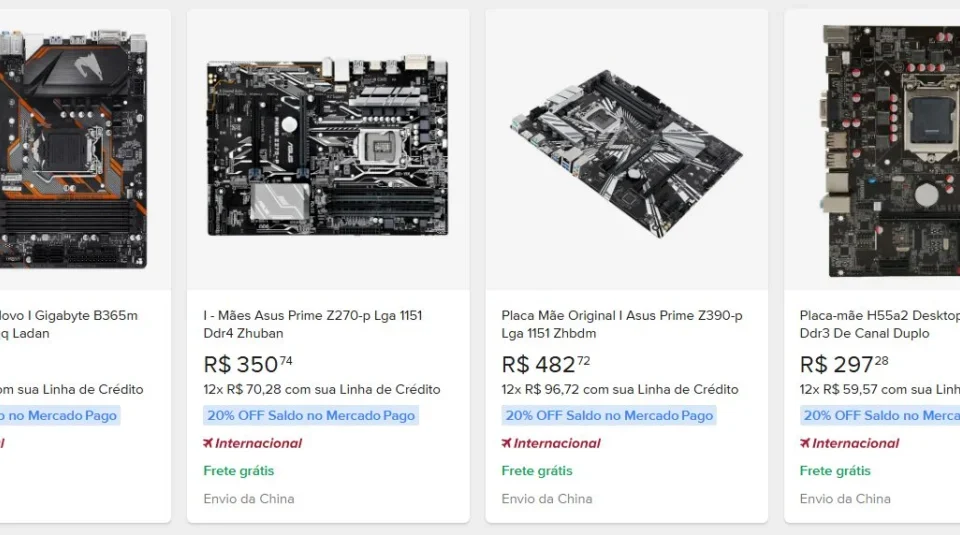
Mercado Livre Solidifies Dominance in Gaming PC Segment as International Listings Surge to Record Levels

The landscape of Latin American e-commerce is undergoing a seismic shift as Mercado Livre, the region’s largest online marketplace, aggressively expands its international footprint, particularly within the high-growth gaming sector. A comprehensive study recently released by JoomPulse, an analytics and data intelligence platform powered by artificial intelligence, reveals that PC gaming accessories now account for a staggering 82% of active listings within their specific category on the platform. This data underscores a strategic pivot toward cross-border trade, positioning Mercado Livre as a formidable competitor against global giants in the electronics and hardware niches.
The JoomPulse report highlights a period of unprecedented growth for the marketplace’s international operations. In April 2026 alone, Mercado Livre integrated 14.1 million new international listings, a figure that nearly matched the record-breaking 14.6 million listings recorded in March 2026. This surge represents a fundamental change in how the platform manages its inventory and caters to a consumer base that is increasingly looking beyond national borders for specialized technology and competitive pricing.
The Strategic Ascent of the Gaming Category
The dominance of international listings in the PC gaming accessory segment—reaching 82%—is not an isolated incident but the result of a deliberate alignment with consumer demand. The gaming industry has proven to be remarkably resilient to broader economic fluctuations, with "hardcore" and "enthusiast" gamers willing to invest significant capital in specialized peripherals such as mechanical keyboards, high-polling-rate mice, and high-fidelity headsets.
According to market analysts, the reliance on international sellers for these items is driven by two primary factors: variety and technological lifecycle. Many niche gaming brands or the latest iterations of hardware often debut in international markets (specifically in Asia and North America) months before they are picked up by local distributors. By facilitating a direct-to-consumer international model, Mercado Livre has bypassed traditional supply chain delays, allowing gamers to access the latest technology in real-time.
Furthermore, the data suggests that the "gaming" label has become a primary engine for the platform’s cross-border volume. While traditional electronics remain stable, the hyper-specific nature of gaming gear—where a consumer might seek a specific type of optical switch or a particular mouse sensor—makes the vast inventory of international sellers more attractive than the more limited, standardized stock of local retailers.

A Chronology of Cross-Border Expansion
The acceleration of international offerings on Mercado Livre did not begin with recent tax adjustments but was part of a long-term infrastructure play. To understand the current volume of 14 million new listings per month, it is necessary to look at the timeline of the platform’s logistics and administrative evolution:
- Late 2024 – Early 2025: Mercado Livre began optimizing its "Mercado Envios Extra" and international logistics hubs, streamlining the customs clearance process for sellers based in China and the United States.
- Mid-2025: The platform introduced AI-driven translation and listing optimization tools, allowing international sellers to automatically adapt their catalogs to the linguistic and cultural nuances of the Brazilian and Hispanic American markets.
- March 2026: The platform hit a milestone of 14.6 million new international listings in a single month. This volume exceeded the cumulative growth of the preceding 14 months combined, signaling a breakthrough in seller onboarding efficiency.
- April 2026: Maintenance of the surge with 14.1 million new listings, confirming that the March spike was not an anomaly but a new baseline for the company’s operations.
This timeline indicates that the marketplace was preparing for a high-volume cross-border environment long before the regulatory landscape shifted. The infrastructure was already in place to handle millions of SKUs (Stock Keeping Units) simultaneously, ensuring that the influx of international goods did not overwhelm the platform’s search algorithms or delivery networks.
Regulatory Context and the Impact of Tax Reforms
A significant catalyst for the continued growth of international listings is the evolving tax environment in Brazil and other Latin American territories. João Sartini, Head of Sales at JoomPulse, notes that the movement toward international expansion was already well underway before recent legislative changes regarding federal import rates.
In recent years, the "Remessa Conforme" program in Brazil and similar initiatives elsewhere sought to regularize international e-commerce by providing a clear tax framework for purchases. More recently, discussions surrounding the "taxa das blusinhas" (a colloquial term for taxes on low-value international purchases) have dominated the retail discourse. While some feared that increased taxation would stifle international trade, the data suggests the opposite.
"The change in the tax structure tends to accelerate a movement that the marketplaces have been structuring for months," Sartini explained. He noted that even with adjusted rates, the sheer variety and the price-to-performance ratio offered by international sellers remain superior in categories where consumers are highly sensitive to specific features. "The reduction of friction in the buying process, even with clearer tax obligations, increases consumer confidence. They are now more willing to buy internationally because the delivery times are predictable and the total cost is transparent at the point of sale."
Beyond Gaming: Diversification of the International Portfolio
While PC gaming accessories lead the pack with an 82% international listing share, the JoomPulse study identifies several other categories where cross-border trade has become the dominant force. This diversification is crucial for Mercado Livre’s goal of becoming an "everything store" that can compete with the likes of Amazon and AliExpress.

Key categories with high international participation include:
- Jewelry (77%): Driven by artisanal sellers and specialized manufacturers who offer designs not typically found in mass-market local retail.
- Plush Toys and Collectibles (75%): A category heavily influenced by global trends and media franchises, where international sellers can offer a wider array of licensed products.
- Medical Equipment (71%): This includes specialized home-care devices, monitors, and wellness technology that often benefit from the advanced manufacturing hubs in Asia.
- Automotive GPS and Electronics (70%): As vehicle technology becomes more modular, consumers are looking for specific aftermarket upgrades that are primarily produced by international tech firms.
The high percentage of international listings in medical equipment and automotive electronics is particularly noteworthy, as these are "high-trust" categories. The fact that consumers are turning to international listings for these items indicates a significant shift in the perceived reliability of Mercado Livre’s cross-border logistics and buyer protection programs.
Logistical Infrastructure and AI Integration
The ability to process over 14 million new listings in a single month is a feat of engineering that Mercado Livre has achieved through heavy investment in Artificial Intelligence. JoomPulse’s analysis suggests that IA is being used not only by the analytics firms to track these trends but by the marketplace itself to manage the "long tail" of inventory.
To maintain a professional journalistic standard, it must be noted that the sheer volume of listings presents challenges in quality control and anti-fraud measures. Mercado Livre has reportedly implemented automated vetting systems to ensure that international sellers meet specific performance metrics before their listings are prioritized in search results. This "quality-first" approach for international goods is intended to combat the historical stigma associated with long shipping times and low-quality products often found in unregulated cross-border trade.
The logistics side, "Mercado Envios," has also expanded its partnership with international air carriers to create "green lanes" for high-demand categories like gaming. By predicting demand for specific mechanical switches or GPU components, the platform can pre-position popular international stock in bonded warehouses closer to the end consumer, effectively blurring the line between local and international shipping speeds.
Broader Economic Implications and Future Outlook
The rise of international listings on Mercado Livre has profound implications for the local retail ecosystem. Local sellers are increasingly finding themselves in direct competition with global manufacturers. However, industry experts suggest that this competition is driving a "flight to quality" among local vendors, who are now focusing on categories where local presence offers a distinct advantage, such as white goods, heavy furniture, and perishable items.

For the consumer, the surge in international listings means lower prices through increased competition and access to a global inventory that was previously difficult to navigate. The 82% figure in the gaming category serves as a bellwether for other sectors; as logistics continue to improve, it is expected that categories like home automation and professional photography equipment will follow a similar trajectory.
Looking ahead to the remainder of 2026, JoomPulse projects that the volume of international listings will stabilize at these record levels, with a focus shifting from "quantity" to "conversion." The challenge for Mercado Livre will be to ensure that its search algorithms can effectively surface the most relevant of these 14 million new items to the right users without overwhelming the shopping experience.
In conclusion, Mercado Livre’s evolution into a cross-border powerhouse is no longer a future projection but a current reality. By capturing the majority of the gaming accessory market through international listings, the platform has demonstrated its ability to pivot toward high-value, high-demand niches. As the distinction between local and international shopping continues to erase, Mercado Livre’s strategic infrastructure investments appear to have secured its position as the primary gateway for global trade in Latin America.