
Navigating Black Friday: Expert Strategies to Uncover Genuine Tech Deals Amidst Marketing Hype

For over a decade, tracking technological deals for prominent publications has illuminated a critical distinction: a substantial percentage discount does not inherently equate to a genuine bargain. This insight is particularly pertinent during the annual Black Friday sales period, a commercial phenomenon characterized by pervasive marketing that often obscures the true value of advertised offers. While undoubtedly some products reach their lowest historical prices during this month-long shopping extravaganza, many others are presented with "Black Friday deal" labels despite their current price being higher than just a few months prior. Discerning between these genuine opportunities and calculated pricing strategies is crucial for consumers, and thankfully, a straightforward methodology exists to facilitate this discernment.
The cornerstone of a robust Black Friday shopping strategy is the judicious use of price tracking tools. These sophisticated utilities provide a historical snapshot of a product’s cost over various timeframes, from recent months to several years, enabling consumers to independently verify the authenticity and magnitude of any advertised discount. Integrating these tools into the shopping process is remarkably simple, and their efficacy far outweighs the minimal effort required. Understanding the mechanics of these trackers and applying them systematically can transform a potentially frustrating shopping experience into a genuinely rewarding one.
The Evolution and Psychology of Black Friday Sales
Black Friday, traditionally the day after Thanksgiving in the United States, has metamorphosed from a single-day retail event into an expansive, global phenomenon stretching across weeks, often commencing in early November and culminating with Cyber Monday. Its origins trace back to the mid-20th century, initially marking the unofficial start of the Christmas shopping season and the point when retailers would supposedly move "into the black" financially. Over time, the event’s scale expanded dramatically, fueled by aggressive marketing, the rise of e-commerce, and a competitive retail landscape.

The psychological underpinnings of Black Friday are deeply ingrained in consumer behavior. Retailers leverage concepts such as scarcity (limited stock), urgency (time-limited deals), and the allure of "massive savings" to drive impulse purchases. The human brain is inherently wired to seek out perceived value, and large percentage discounts, even if applied to an artificially inflated "original price," can trigger a powerful sense of opportunity. This emotional response often overrides rational assessment, leading shoppers to overlook critical details about a product’s true price history. The collective anticipation built around Black Friday also contributes to a "fear of missing out" (FOMO), pressuring consumers to act quickly before deals purportedly vanish.
Decoding Amazon Deals: The Role of Price History Trackers
Amazon, as one of the world’s largest online retailers, is a central battleground for Black Friday deals. Navigating its vast catalog of products and seemingly endless discounts requires specialized tools. One of the most reliable and widely utilized is CamelCamelCamel. This free service has become an indispensable resource for seasoned deal hunters, serving as a critical checkpoint against misleading promotions.
Operating CamelCamelCamel is exceedingly user-friendly. Consumers can either install a browser extension (e.g., for Chrome) for instant price checks directly on Amazon product pages or simply copy and paste the Amazon product URL into the search bar on the CamelCamelCamel website. The tool then generates a comprehensive price history graph, visually depicting how the product’s price has fluctuated over various periods: one month, three months, six months, a year, or its entire recorded history. This visual data is invaluable, allowing for an immediate assessment of whether a current "deal" represents a genuine low point or merely a temporary fluctuation.
The graphs provided by CamelCamelCamel offer granular detail, often distinguishing between prices offered directly by Amazon and those from third-party sellers. Below the graph, a detailed table typically lists the highest, lowest, and current recorded prices, providing a quantitative context for the visual data. Furthermore, the platform offers a price alert feature, allowing users to specify a target price and receive notifications when the product drops to or below that threshold, a proactive measure against impulsive buying.
It is important to acknowledge that while CamelCamelCamel is highly accurate, no single tool is infallible. Minor discrepancies can occasionally arise due to the complexities of real-time price changes and varied product configurations. For the most precise and immediate recent price movements, Amazon’s own built-in price history feature, accessible via a "Price history" button on eligible listings, can serve as a valuable cross-reference, typically covering up to a year of data. However, CamelCamelCamel often provides a longer historical perspective, which is crucial for identifying long-term pricing trends and true historical lows.
Illustrative Case Studies: Separating Fact from Fiction
To underscore the practical application of price tracking, consider two contrasting examples:
Case Study 1: The Genuine Bargain – Amazon Fire HD 10 Tablet
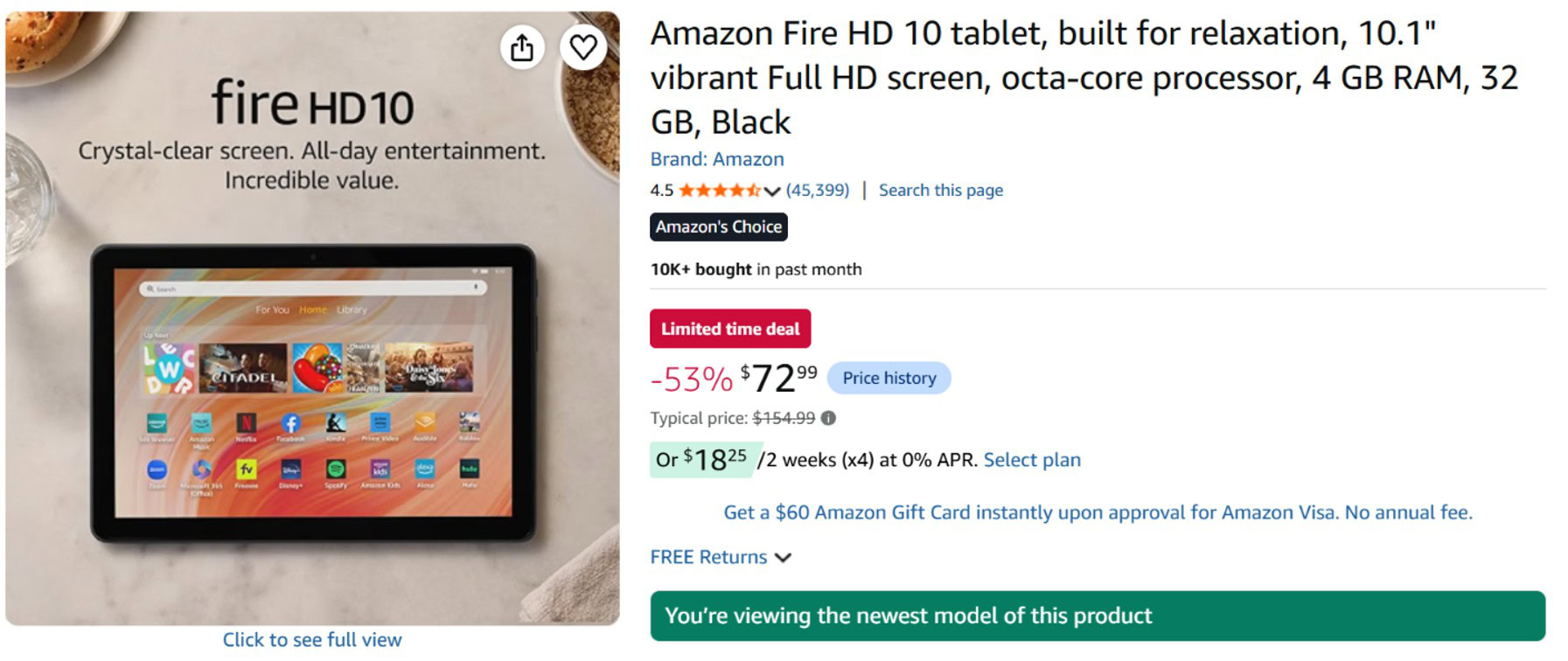
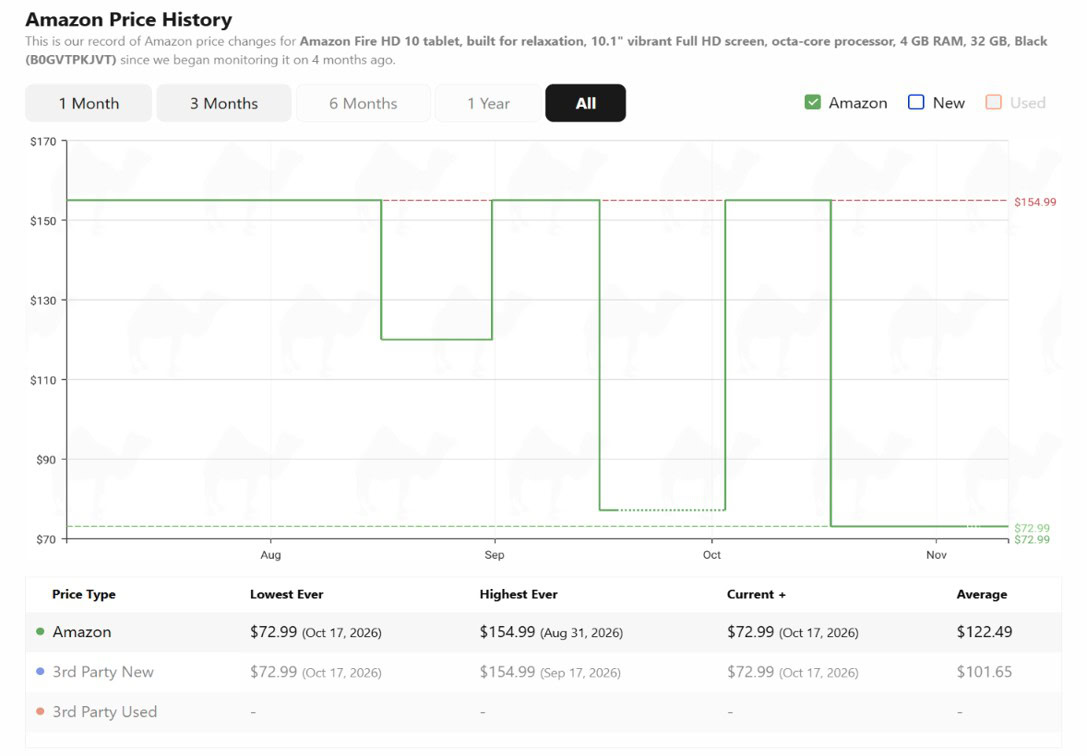
The Amazon Fire HD 10 tablet might be advertised at $72.99, presented as a 53% discount from its "typical price" of $154.99. This appears to be a substantial saving, prompting immediate consumer interest. A check with CamelCamelCamel confirms the veracity of this offer. The price history graph for this device reveals that it consistently retailed at or near $154.99 for significant periods, with only occasional, brief dips to approximately $120 and $78. The current price of $72.99 represents the lowest recorded price since tracking began in July. Amazon’s internal price history also corroborates this, confirming $72.99 as the lowest price in the preceding three months.
This scenario exemplifies a genuine discount. While the price might have first reached this low point in October, preceding the official Black Friday sales, its classification as a "deal" is entirely justified, offering consumers a significant and verifiable saving against the product’s established market value. This is the type of offer bargain-hunters actively seek.
Case Study 2: The Misleading Offer – Sony WH-CH520 Wireless Headphones
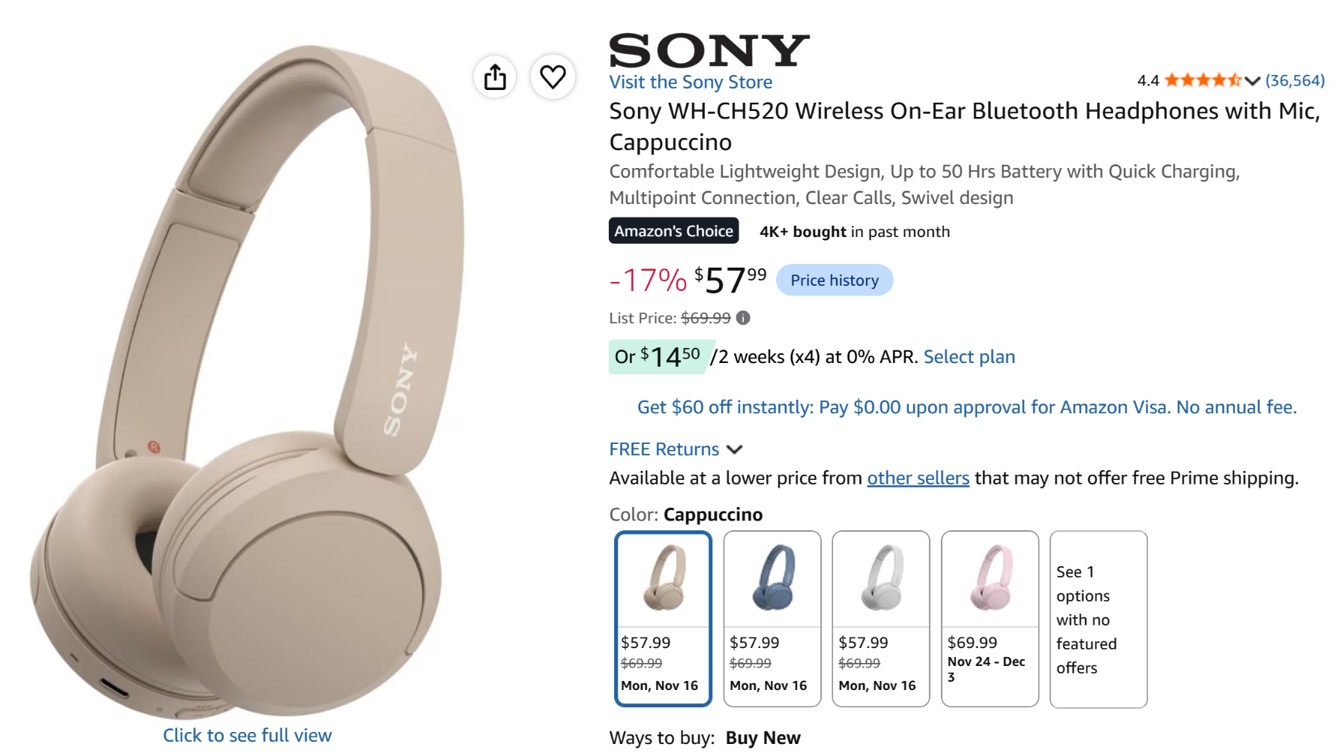
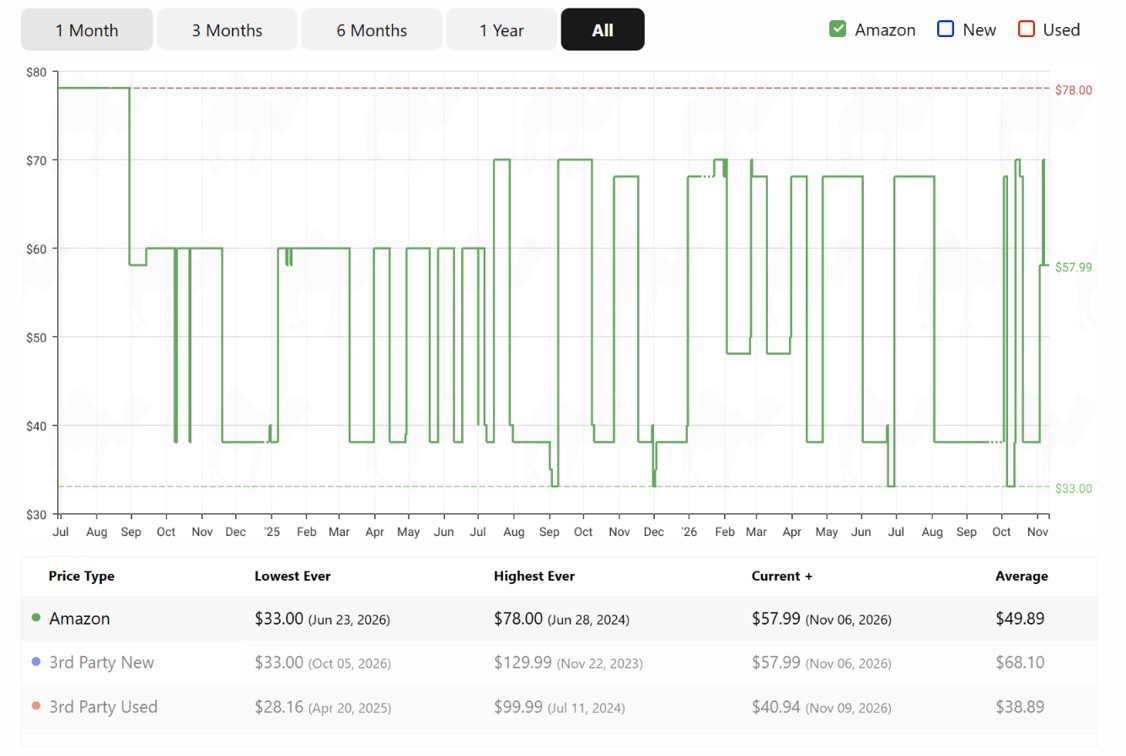
Conversely, the Sony WH-CH520 wireless headphones might be listed at $57.99, with a reported 17% discount from their "list price" of $69.99. On the surface, this presents as a modest yet acceptable saving, suggesting a reasonable purchase. However, a deeper dive into the price history reveals a different narrative.
Consulting the CamelCamelCamel graph for these headphones exposes a critical discrepancy. Over the past year, these headphones have frequently been available for approximately $38, and at one point as recently as the previous month, they were priced at $33. This stark contrast between the current "discounted" price of $57.99 and its frequent selling price of $38 or less highlights a common retail tactic. While the 17% reduction from the list price of $69.99 is technically accurate, the list price often bears little resemblance to the actual market selling price. Amazon’s own tracker further confirms that the headphones have sold for $38 within the last three months.
In this instance, while a discount is technically applied against an arbitrary "list price," the consumer is not receiving a genuine bargain relative to the product’s actual market value. An informed shopper, armed with price history data, would likely hesitate before purchasing at $57.99, knowing they could likely acquire the same product for around $20 less at other times or with more patience. This illustrates the importance of distinguishing between a discount from a manufacturer’s suggested retail price (MSRP) and a discount from a product’s true, historical selling price.
Expanding Vigilance Beyond Amazon: Other Retailers and Universal Trackers
While CamelCamelCamel excels for Amazon, Black Friday shopping extends far beyond a single retailer. A comprehensive approach requires tools capable of monitoring prices across a broader spectrum of e-commerce platforms, including major players like Best Buy, Walmart, Target, and others.
Google Shopping emerges as a powerful universal price tracking solution. When searching for a specific product, Google Shopping often features a "Price Insights" section. This section displays how the product’s price has fluctuated across various retailers over recent months. Crucially, Google also provides an assessment of the current price, indicating whether it is "low," "typical," or "high" based on its extensive aggregated pricing data from sellers across the web. This broad overview is invaluable for comparing offers from different stores simultaneously.
For consumers in supported regions, particularly the US, Google’s Shopping Insights feature integrated directly into the Chrome browser offers an even more seamless experience. When browsing an eligible product listing on a retailer’s website, such as Best Buy, a Shopping Insights icon may appear in the address bar. Clicking this icon reveals a panel displaying the product’s price history and its typical price range across a multitude of retailers. This feature requires users to be signed into Chrome with relevant settings enabled, but it significantly streamlines the price comparison process.
Beyond these primary tools, several other browser extensions and websites offer similar price tracking capabilities, though their accuracy and scope may vary. While no system is absolutely infallible, especially when dealing with complex promotions involving coupons, bundled offers, or specific product configurations, the overarching principle remains consistent: a quick consultation of historical price data usually suffices to determine whether an advertised deal is genuinely exceptional or merely a standard price adorned with Black Friday branding.
Broader Implications and Consumer Empowerment
The widespread practice of manipulating prices during peak sales periods like Black Friday carries significant implications for consumer trust. When shoppers repeatedly encounter "deals" that are not what they seem, their confidence in retail advertising erodes. This can lead to increased cynicism and a more cautious approach to future promotions, potentially impacting retailers’ long-term brand loyalty.
From an economic perspective, while Black Friday drives massive sales volumes, the prevalence of misleading discounts suggests that a portion of consumer spending may not be translating into genuine value. This can distort market perceptions of fair pricing and potentially contribute to a cycle where consumers feel compelled to purchase during sales out of fear of missing out, even if the "deal" is suboptimal.
The rise of price tracking tools represents a significant shift in the power dynamic between retailers and consumers. Previously, retailers held a near-monopoly on pricing information, dictating perceived value through strategic advertising. Now, consumers are empowered with unprecedented access to historical market data, allowing them to make informed decisions that align with their actual budget and needs. This technological advancement fosters greater transparency in the marketplace, pushing retailers towards more ethical and straightforward pricing practices. Some regions, notably within the European Union, have even introduced regulations requiring retailers to display the lowest price a product was sold for in the preceding 30 days when advertising a discount, a direct response to the issue of misleading price drops.
Recommendations for Savvy Black Friday Shopping
To maximize the benefits of Black Friday and avoid falling victim to deceptive marketing, consumers should adopt a strategic approach:
- Plan Ahead: Create a detailed shopping list of desired items. Research these products well in advance, noting their typical selling prices before the sales period begins.
- Utilize Price Trackers Religiously: Integrate tools like CamelCamelCamel and Google Shopping into every purchase decision. Make it a routine to check price history before clicking "add to cart."
- Compare Across Retailers: Do not assume a deal at one store is the best available. Use universal trackers to compare prices for the same product across multiple vendors.
- Understand "List Price" vs. "Selling Price": Be wary of discounts presented against a rarely-used "list price." Focus on how the current price compares to the product’s actual, historical selling price.
- Read Reviews and Specifications: A low price on a poor-quality product is never a good deal. Ensure the item meets your needs and has positive reviews.
- Check Return Policies: During high-volume sales, familiarize yourself with each retailer’s return policy to avoid complications if a purchase proves unsatisfactory.
In conclusion, while the allure of Black Friday’s deep discounts is undeniable, the landscape is fraught with strategic pricing that can obscure genuine value. The biggest percentage discount is not always the best deal, and an item labeled "Black Friday Special" might have been cheaper just weeks before. By leveraging readily available price tracking tools and adopting a discerning mindset, consumers can navigate the marketing hype, identify truly advantageous offers, and make informed purchasing decisions that genuinely benefit their wallets. As the holiday shopping season progresses, staying vigilant and informed will be key to making the most of your Black Friday budget.