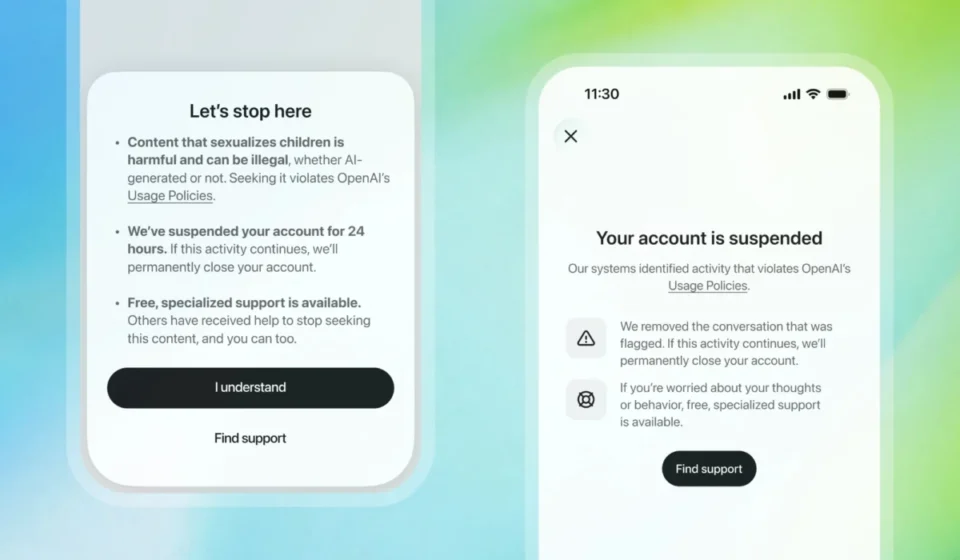

OpenAI is significantly intensifying its commitment to safeguarding children online by introducing a suite of advanced AI-powered detection tools, implementing more stringent interventions within its popular ChatGPT platform, and bolstering support for developers and law enforcement agencies. This multifaceted initiative, detailed in an announcement on November 16, includes a sophisticated image classifier designed to identify potential child sexual abuse material (CSAM), with a particular focus on detecting AI-generated imagery. These measures are strategically designed to proactively interrupt and prevent harmful online behaviors before they can escalate.
The urgency and importance of this development are underscored by the increasing ease with which generative AI can create synthetic content, presenting novel and complex challenges for platforms and organizations tasked with protecting minors in the digital realm. OpenAI asserts that these latest efforts build upon its established Child Safety Blueprint, aiming to empower organizations with enhanced capabilities for detecting abuse, responding effectively to reports, and supporting ongoing investigations. Crucially, the company emphasizes a collaborative approach, working in concert with child safety organizations and law enforcement rather than viewing the problem as an isolated challenge for individual technology platforms.
Enhanced CSAM Detection Through Advanced Image Classification
At the forefront of OpenAI’s new protective measures is a cutting-edge image classifier. This tool is engineered to scrutinize images for visual indicators associated with potential abuse, crucially including material that may have been synthetically generated by AI. The system assigns confidence scores to identified images, enabling safety teams to prioritize their review efforts efficiently. OpenAI is making this powerful tool accessible via its API, offering complimentary access to vetted organizations, which include dedicated child safety advocacy groups and other technology companies operating in the online space.

Initial evaluations of the new classifier have yielded promising results. Reports indicate that the tool has the potential to reduce the volume of images requiring manual review by an estimated 48%, while simultaneously maintaining a comparable detection rate for abusive images compared to OpenAI’s existing systems. Furthermore, images flagged by the new system were found to be approximately twice as likely to contain actual abuse, suggesting a significant improvement in the accuracy and effectiveness of its detection capabilities.
External partners who participated in pilot testing of the classifier have reported encouraging outcomes. For instance, Fal noted that human reviewers confirmed 72% of its high-confidence flags as novel CSAM. Similarly, invideo AI observed that one in four flagged cases resulted in user bans. SafetyKit’s evaluation demonstrated that the tool successfully detected 90% of cases involving drawings or animations that sexualize children, highlighting its versatility across different forms of problematic content.
The development of this advanced detection tool was undertaken with significant input and collaboration from the National Center for Missing and Exploited Children (NCMEC), a leading authority in the fight against child exploitation. OpenAI is also actively engaged with other prominent organizations, such as the Tech Coalition and ROOST, to foster improved information sharing and coordinated responses across various online platforms. This collaborative ecosystem is vital for building a robust and unified defense against online child abuse.

Stricter ChatGPT Interventions and New Tools for Investigators
Beyond its advancements in content detection, OpenAI is also introducing more direct interventions within ChatGPT to deter harmful user behavior. The platform will now display new warnings when users attempt to solicit or generate abusive material. These warnings are designed to educate users about the profound harm associated with such content and to provide direct pathways to specialized support resources. Conversations flagged for such violations will be terminated, and the offending user’s access to ChatGPT will be temporarily suspended for 24 hours. The company has made it clear that repeated violations will result in more severe consequences, including extended restrictions, permanent account closure, and potential reporting to law enforcement authorities.
To further empower those on the front lines of child protection, OpenAI is also providing new AI tools specifically for authorized child-safety investigators. These tools are designed to streamline the analysis of extensive chat logs and legal records, facilitating the identification of potential connections between individuals and events, and the construction of comprehensive timelines linked to source material. This capability is crucial for building strong cases and bringing perpetrators to justice.
Additionally, OpenAI has published practical safety guidance for developers. This guidance covers essential aspects of online platform safety, including best practices for content detection, implementing effective user reporting mechanisms, robust moderation strategies, and clear escalation procedures for handling serious incidents.

The broader implications of OpenAI’s expanded initiative are significant. Detecting abusive content is demonstrably only one facet of comprehensive child protection. Equally critical are measures to prevent the misuse of AI technologies, provide effective support for victims, and equip investigators with the necessary tools and information to act decisively on evidence. OpenAI has stated its ongoing commitment to refining these tools and strengthening its partnerships with external organizations. The ultimate success and impact of these new measures will hinge on their reliability in real-world operational settings and the extent to which vetted child-safety groups can effectively integrate and leverage them in their critical work.
Context and Background: The Evolving Landscape of Online Child Safety
The announcement from OpenAI arrives at a pivotal moment in the evolution of artificial intelligence and its societal impact. The rapid advancements in generative AI, particularly in image and text generation, have opened up unprecedented creative possibilities but have also introduced new avenues for malicious actors. The ability to create highly realistic synthetic media, including deepfakes and photorealistic imagery, poses a significant threat, as it can be exploited to generate and disseminate CSAM or to facilitate grooming and exploitation.
Historically, efforts to combat online child exploitation have relied on a combination of technological solutions, legislative frameworks, and collaborative partnerships between law enforcement, non-governmental organizations, and the private sector. However, the emergence of sophisticated AI tools has necessitated a rapid adaptation of these strategies. Traditional detection methods, often reliant on identifying known patterns or signatures of abuse, can struggle to keep pace with the ever-evolving nature of AI-generated content.

The Child Safety Blueprint, which OpenAI references, was first introduced in late 2022, signaling the company’s early recognition of the specific challenges posed by its own technologies. This blueprint outlined a commitment to developing safety measures, engaging with experts, and sharing best practices. The current announcement represents a substantial expansion and operationalization of those initial commitments, moving beyond policy statements to the deployment of tangible, advanced tools.
Timeline of Key Developments
- Late 2022: OpenAI releases its initial Child Safety Blueprint, acknowledging the potential risks associated with its AI models and outlining a commitment to developing safety measures.
- Ongoing: OpenAI engages with child safety organizations, researchers, and law enforcement to understand emerging threats and develop mitigation strategies.
- November 16, [Current Year]: OpenAI announces the launch of new AI-powered detection tools, stricter ChatGPT interventions, and enhanced support for developers and law enforcement, specifically targeting online child sexual exploitation. This includes the release of a new CSAM image classifier and updated platform policies.
Supporting Data and Research
The scale of the online child exploitation crisis is vast and deeply concerning. According to the National Center for Missing and Exploited Children (NCMEC), in 2022, they received over 3.1 million reports of potential child sexual exploitation. The increasing sophistication of methods used by perpetrators, including the integration of AI, presents a significant challenge for reporting and investigation agencies. The ability of AI to generate novel and convincing imagery makes it harder for both automated systems and human reviewers to identify illicit content. This underscores the need for advanced detection tools that can adapt to these new forms of abuse. Research from organizations like the Internet Watch Foundation (IWF) also highlights the continuous increase in reported CSAM, emphasizing the urgent need for proactive and robust technological solutions. The challenge is compounded by the global nature of the internet, requiring international cooperation and standardized approaches to effectively combat this crime.
Broader Impact and Implications
OpenAI’s proactive stance and the deployment of these advanced tools have several critical implications for the broader technology landscape and the ongoing fight against online child abuse.

Firstly, by making its CSAM detection tool available to vetted organizations, OpenAI is fostering a more collaborative and informed ecosystem for child safety. This sharing of technology and expertise can significantly amplify the impact of individual organizations and create a more unified front against exploitation.
Secondly, the integration of stricter interventions within ChatGPT serves as a powerful deterrent. By clearly outlining the consequences of misuse and providing direct access to support, OpenAI is not only aiming to prevent harmful content generation but also to educate and potentially rehabilitate users who may be engaging in harmful online behaviors.
Thirdly, the development of AI tools for investigators represents a significant leap forward in forensic capabilities. The ability to efficiently analyze vast amounts of data can accelerate investigations, leading to more timely interventions and increased success in prosecuting offenders.

However, the effectiveness of these measures will be subject to continuous scrutiny. The ability of AI to generate novel forms of abuse means that detection tools will need to be constantly updated and refined. Furthermore, the ethical considerations surrounding AI development and deployment, particularly in sensitive areas like child safety, will remain a critical point of discussion. Ensuring transparency, accountability, and the robust protection of privacy rights will be paramount as these technologies become more integrated into our digital lives. The ongoing partnership between AI developers, safety organizations, and law enforcement will be key to navigating these complex challenges and ensuring that AI is a force for good in protecting the most vulnerable.