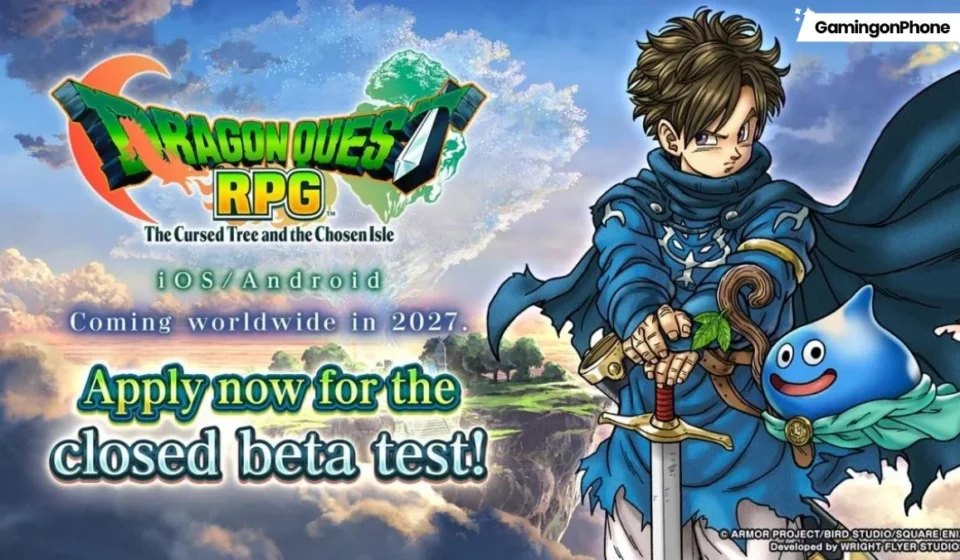
DRAGON QUEST RPG The Cursed Tree and the Chosen Isle is coming to mobile in 2027; closed beta starts in December.

Square Enix, a titan in the video game industry renowned for its seminal role-playing game franchises, has officially announced a new mobile-exclusive entry in its iconic DRAGON QUEST series. Titled DRAGON QUEST RPG The Cursed Tree and the Chosen Isle, this upcoming classic turn-based RPG is slated for a global launch on both Android and iOS platforms in 2027. Ahead of its anticipated release, the publisher has also confirmed a closed beta test scheduled for December 2026, offering a select group of players an early glimpse into the game’s world. This strategic move underscores Square Enix’s continued investment in the burgeoning mobile gaming sector, bringing one of its most cherished intellectual properties to a wider, mobile-first audience.
A New Chapter in Classic RPG Gameplay for Mobile
DRAGON QUEST RPG The Cursed Tree and the Chosen Isle is being meticulously designed from the ground up to cater specifically to smartphone users, promising an optimized experience without compromising the series’ core tenets. Players will embark on an expansive journey through a sprawling, vibrant world, encountering a diverse array of monsters synonymous with the DRAGON QUEST universe, famously designed by Akira Toriyama. The combat system will adhere to the traditional turn-based mechanics that have defined the franchise for decades, emphasizing strategic decision-making over brute force.
Key combat features highlighted include "Fast Strike skills" and "Pep Powers." Fast Strike skills suggest agile, quick-response abilities that could offer tactical advantages in immediate turns, potentially dealing burst damage or applying crucial status effects. Pep Powers, a beloved mechanic introduced in DRAGON QUEST VIII: Journey of the C Cursed King and prominently featured in DRAGON QUEST XI S: Echoes of an Elusive Age, allow characters to enter an empowered state after taking or dealing sufficient damage. This state grants access to powerful, often cinematic, abilities and cooperative attacks, adding a layer of strategic depth as players manage their party’s "Pep" gauges to unleash devastating combinations at critical moments. The reintroduction of this system suggests a commitment to maintaining the strategic nuances that veteran players expect, while adapting them for touch interfaces.
Beyond battles, the game integrates elements of base development and resource management. Adventurers will collect various spoils from their explorations and victories, which can then be utilized to develop and enhance their personal base. This could involve constructing new facilities, upgrading existing structures, crafting powerful equipment, or even recruiting non-player characters (NPCs) to provide services or additional quests. This feature often serves to deepen player engagement by providing a persistent sense of progression outside of the main narrative, allowing for customization and strategic investment of collected resources. The game promises to connect its diverse adventures through new discoveries, suggesting a non-linear exploration experience where uncovering secrets and expanding one’s territory directly impacts the unfolding narrative and unlocks further opportunities for growth and exploration. This approach aims to foster a sense of continuous discovery and reward, encouraging players to delve deep into every corner of the chosen isle.
Closed Beta Test: An Early Glimpse into the Chosen Isle
To fine-tune the gameplay experience and gather invaluable feedback from the community, Square Enix has organized a closed beta test for DRAGON QUEST RPG The Cursed Tree and the Chosen Isle. Applications for participation are currently open and will conclude on November 23, 2026. The beta period itself is scheduled to run from December 8 to December 15, 2026. This limited-time engagement offers a critical opportunity for up to 25,000 selected participants to explore early sections of the game, test its mechanics, and contribute to its final development.
The selection process for beta participants is expected to be highly competitive given the fervent global fanbase of the DRAGON QUEST series and the limited number of available slots. Interested players typically register through an official portal, providing details about their device, gaming habits, and sometimes their experience with other DRAGON QUEST titles. The primary objectives of such a beta test are multi-faceted: to identify and rectify bugs, assess server stability and performance, gather qualitative feedback on gameplay mechanics and user interface, and gauge player reception to the overall design and progression loop. The data collected during this one-week period will be instrumental in guiding Square Enix’s development team as they move towards the 2027 global launch, ensuring the game meets both the high standards of the franchise and the expectations of its dedicated player base. This iterative development approach, incorporating direct player input, is a testament to Square Enix’s commitment to delivering a polished and engaging mobile RPG experience.
The Enduring Legacy of Dragon Quest: A JRPG Pillar
The announcement of DRAGON QUEST RPG The Cursed Tree and the Chosen Isle arrives against a rich tapestry of history, underscoring the enduring appeal and cultural significance of the DRAGON QUEST franchise. Originating in Japan in 1986 with Dragon Quest (known as Dragon Warrior in North America for many years), the series is widely credited, alongside Final Fantasy, with establishing the foundational conventions of the modern Japanese Role-Playing Game (JRPG) genre. Conceived by creator Yuji Horii, with iconic character designs by Dragon Ball artist Akira Toriyama and memorable musical scores by Koichi Sugiyama, DRAGON QUEST quickly became a cultural phenomenon in Japan, where new mainline entries often lead to national holidays or early school dismissals for fans to purchase the game.
Over nearly four decades, the DRAGON QUEST saga has spanned numerous console generations, delivering a consistent blend of accessible mechanics, charming narratives, and challenging turn-based combat. From the NES and SNES classics to the PlayStation era’s innovations like DRAGON QUEST VII: Fragments of the Forgotten Past and the fully 3D world of DRAGON QUEST VIII: Journey of the Cursed King on PlayStation 2, the series has continually evolved while retaining its core identity. More recently, DRAGON QUEST XI S: Echoes of an Elusive Age garnered critical acclaim worldwide, demonstrating the franchise’s ability to captivate both long-time fans and new players with its vibrant world, compelling story, and refined gameplay mechanics. The series’ consistent success across various platforms speaks volumes about its timeless appeal and its ability to adapt while staying true to its roots. The move to a dedicated mobile title signifies a new frontier for this storied franchise, aiming to introduce its magic to a demographic that primarily interacts with games via smartphones.
Square Enix’s Strategic Vision in the Mobile Gaming Landscape
Square Enix’s decision to develop a new, original DRAGON QUEST RPG exclusively for mobile platforms aligns with a broader industry trend and its own established strategy. The mobile gaming market has exploded into a multi-billion dollar industry, dwarfing traditional console and PC gaming in terms of revenue and player count. For a publisher with a vast catalog of beloved IPs, tapping into this market is not merely an option but a strategic imperative.
Square Enix has a long history of engaging with the mobile sector, albeit with varying degrees of success. This includes:
- Porting Classics: Numerous DRAGON QUEST titles, from the original Dragon Quest to DRAGON QUEST VIII, along with many Final Fantasy games, have been meticulously ported to mobile devices. These premium ports often offer a full, console-like experience for a one-time purchase.
- Developing Mobile-First Originals: The company has also invested heavily in creating original mobile games based on its IPs. Examples include Dragon Quest Tact, a tactical RPG, Final Fantasy Brave Exvius, a gacha-based RPG, Octopath Traveler: Champions of the Continent, a prequel to the console game, and Echoes of Mana. While some of these have been highly successful, others have faced challenges in maintaining player engagement or profitability, leading to server shutdowns in some cases.
The announcement of DRAGON QUEST RPG The Cursed Tree and the Chosen Isle appears to represent a refined approach. By designing the game "specifically for smartphones," Square Enix can integrate mobile-centric design principles from the outset, rather than adapting a console experience. This could imply intuitive touch controls, streamlined user interfaces, potentially shorter play sessions conducive to mobile use, and an optimization for performance across a wide range of devices. While the exact monetization model has not been disclosed, the description of "base development" and "collecting various spoils" could suggest a free-to-play model with in-app purchases, a common and highly profitable structure in the mobile RPG space. However, given the emphasis on "classic RPG gameplay," there remains a possibility of a premium, pay-once experience, which would differentiate it in a crowded market dominated by free-to-play titles. This approach seeks to balance the expectations of a core JRPG audience with the realities of the mobile ecosystem.
Implications for the Franchise and the Mobile RPG Market
The impending launch of DRAGON QUEST RPG The Cursed Tree and the Chosen Isle carries significant implications for both the DRAGON QUEST franchise and the broader mobile gaming industry.
For the DRAGON QUEST Franchise:
- Expanded Reach: A dedicated mobile-exclusive title can introduce the series to millions of new players who may not own traditional gaming consoles. This is crucial for expanding the franchise’s global footprint, particularly in markets where mobile gaming is dominant.
- New Narrative Avenues: Developing a game specifically for mobile allows for unique storytelling and gameplay mechanics tailored to the platform, potentially exploring themes or structures that differ from mainline console entries.
- Maintaining Brand Identity: The challenge will be to adapt to the mobile environment without diluting the core elements that define DRAGON QUEST – its charming aesthetic, engaging turn-based combat, and heartwarming narratives. Success here could cement mobile as a viable and respected platform for future canonical entries.
For the Mobile RPG Market:
- Raising the Bar: As a major IP from a renowned developer, The Cursed Tree and the Chosen Isle is likely to feature high production values, compelling storytelling, and deep gameplay. This could elevate expectations for what constitutes a "premium" mobile RPG, pushing other developers to innovate.
- Legitimizing Mobile as a Core Gaming Platform: The continuous release of high-quality, original titles from established console developers further legitimizes mobile gaming as a platform capable of delivering deep, immersive experiences, rather than just casual diversions.
- Market Diversification: Depending on its monetization model, the game could either reinforce the free-to-play gacha model’s dominance or, if premium, offer a refreshing alternative in a market saturated with microtransaction-heavy titles.
The 2027 release date positions DRAGON QUEST RPG The Cursed Tree and the Chosen Isle as a forward-looking project, indicating a multi-year development cycle aimed at delivering a highly polished product. This extended timeline, coupled with the early closed beta, signals Square Enix’s meticulous approach to ensuring that this new mobile chapter lives up to the revered legacy of the DRAGON QUEST series. As the countdown to the beta and eventual global launch begins, anticipation will undoubtedly build among fans eager to experience the next evolution of this beloved JRPG saga on their mobile devices.