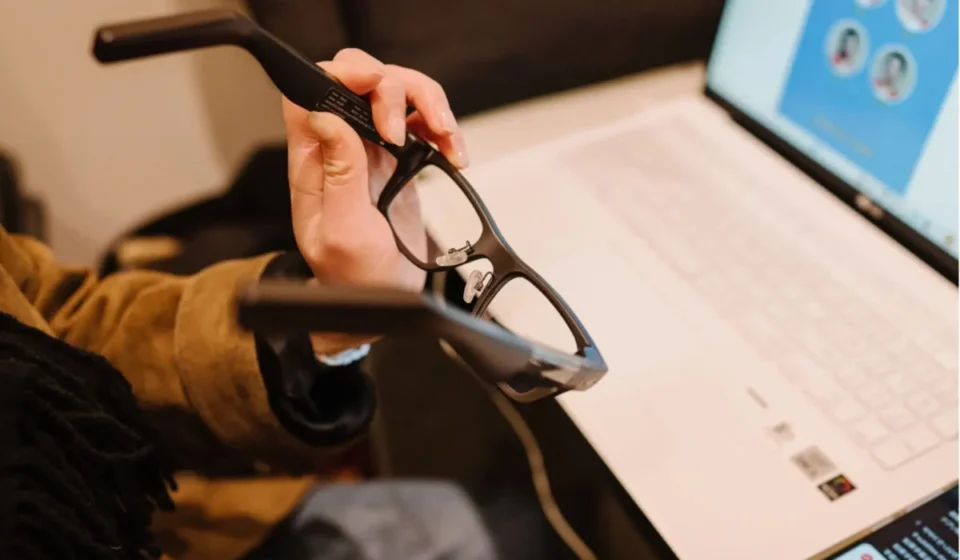

The challenge of experiencing live theater in a language one doesn’t understand has long been a significant barrier for global audiences. While film and music have readily embraced translation technologies, the ephemeral nature of live performance, with its inability to be paused or rewound, has presented a unique hurdle. Now, a South Korean startup, Xpert Inc., believes it has found a solution, one that could revolutionize how international audiences engage with cultural productions, particularly from South Korea. Yuroy Wang, a 22-year-old retail worker from Taipei and a devoted fan of Korean culture, was among the first to experience this technological breakthrough firsthand. Attending the touring play "The Second Chance Convenience Store," based on a popular Taiwanese bestseller, Wang anticipated traditional supertitles. Instead, he was presented with a pair of AI-powered smart glasses. These glasses, when worn, displayed real-time translations of the dialogue directly onto the lenses, allowing him to remain fully immersed in the performance without diverting his gaze. "As soon as I found out they were available, I couldn’t wait to try them," Wang remarked, highlighting the eagerness of a growing demographic to access Korean content in its original form. This innovation positions smart glasses, a technology category that has historically struggled for widespread adoption, as a potential game-changer for live Korean theater.

The technology underpinning this experience is known as "Owl," developed by Xpert Inc. The system operates via a smartphone application, allowing users to select their preferred language – currently supporting Korean, English, Japanese, and Chinese. Users can also customize the font size and the placement of the translated text on the lenses, ensuring a personalized viewing experience. When actors speak, the AI within the system identifies cue words and synchronizes the corresponding translations in real time. This method fundamentally differs from traditional supertitles or tablet-based subtitles, which often necessitate a disruptive shift in focus between the stage and a separate display. Owl’s integrated approach keeps the audience’s attention fixed on the performance, fostering a more natural and engaging theatrical encounter.
Despite its innovative nature, the Owl system is not without its current limitations. Occasional sync issues have been reported, and spontaneous, ad-libbed dialogue from actors can sometimes pose a challenge for the AI’s accuracy. Furthermore, wearing the smart glasses over existing prescription eyewear can feel cumbersome. Xpert Inc. acknowledges these challenges and confirms that human intervention is sometimes still required to ensure seamless operation. However, the company is actively working on improvements, with a lighter model slated for release in the spring and enhanced translation accuracy identified as a primary development priority.

The specific focus on Korean theater is not arbitrary. South Korea has been a significant exporter of cultural content across Asia for over a decade, but recent years have seen a notable surge in its global theatrical influence. The musical "Maybe Happy Ending," which first premiered in a small Seoul theater in 2016, achieved a significant milestone by reaching Broadway in 2024. Its subsequent triumph at the Tony Awards, where it secured six wins, has served as a powerful catalyst, opening doors for numerous Korean productions to explore international markets. This critical acclaim and subsequent global recognition have spurred a wave of investment and ambition within the Korean theater industry.
The South Korean government, recognizing the burgeoning potential of its cultural exports, has made substantial investments in promoting its theatrical productions. The Ministry of Culture, Sports and Tourism has allocated an estimated $18 million in funding for Korean musicals in the current year, a significant increase from the $14 million allocated in 2025. The Korea Tourism Organization, through its "Smart Theater" program, has been instrumental in subsidizing AI glasses at select venues in Seoul and overseas events. Productions are carefully chosen for this program based on their potential to attract international audiences, with factors such as accessible themes, use of international source material, and the inclusion of K-pop music giving certain shows a competitive edge. The impact of these initiatives is already evident. Productions like "The Second Chance Convenience Store," "Inside Me," and "Finding Mr. Destiny," which previously had minimal non-Korean attendance, are now experiencing a consistent influx of international visitors on a daily basis. This data underscores a tangible shift in global engagement with Korean live performances.

A core philosophical underpinning of this technological integration in Korean theater is the commitment to presenting productions in their original language. Hwang Ki Hyun, the producer of "The Second Chance Convenience Store," has notably rejected proposals to stage his play in other languages, instead placing his faith in the efficacy of AI translation glasses. This strategic decision is rooted in the belief that international audiences are increasingly seeking authentic Korean cultural experiences, and that maintaining the original language is crucial to preserving the integrity and appeal of these productions. This perspective aligns with broader trends observed in the global appreciation of Korean culture, from K-pop music to cinema and cuisine, where authenticity is often cited as a primary draw for international fans. The argument is that translation, while facilitating understanding, can inadvertently dilute the very essence that makes Korean culture so captivating.
The scalability of this model presents a complex but intriguing prospect. Significant hurdles remain before a widespread Korean theatrical wave can be established on Western stages. For instance, union regulations in cities like New York might necessitate English-language performances for Broadway runs, irrespective of audience-facing translation technologies. Nevertheless, researchers and industry professionals internationally are closely observing developments in South Korea. Sarah Bay-Cheng, a professor specializing in emerging technologies in theater at the University of Toronto, views South Korea’s approach as a significant test case. If the smart glasses technology gains traction and proves effective in overcoming language barriers, it could unlock live performance for audiences worldwide who have previously been excluded due to linguistic limitations.

Beyond Xpert Inc.’s Owl system, other companies are also making strides in applying smart captioning technology to live performances. British firms Built for Good and Xrai Glass are already deploying their smart glasses in theaters across the United States and Europe, indicating a broader trend toward this technological integration in live entertainment. However, South Korea stands out as a unique convergence point where cultural ambition and technological experimentation are aligning simultaneously. This confluence of factors makes the Korean theater scene a compelling case study for the future of global performing arts accessibility. While the smart glasses technology is still in its nascent stages and the theater industry remains highly competitive, with established markets like Broadway not yet fully embracing such innovations, the experience of individuals like Yuroy Wang suggests a promising path forward. For Wang, who simply desired to follow the narrative of the play, the AI glasses functioned effectively enough to warrant their use again, underscoring their immediate practical value.
The potential implications of this technology extend far beyond the current applications in Korean theater. The prospect of attending a live theatrical performance in a language unfamiliar to the audience and yet comprehending every nuance through the use of smart glasses is a truly transformative idea. It dismantles the invisible linguistic barriers that have historically limited access to such cultural experiences. Instead of relying on external subtitles or pre-existing language proficiency, the narrative unfolds seamlessly, allowing for complete immersion without the audience feeling like outsiders. If this technology becomes widely accessible, it has the potential to fundamentally alter how individuals engage with art and culture across national borders, fostering greater understanding and appreciation of diverse global narratives. The ongoing advancements in AI and wearable technology, coupled with a growing global appetite for authentic cultural experiences, suggest that this is a sector to watch closely in the coming years, promising a future where live performance is truly a universal language.