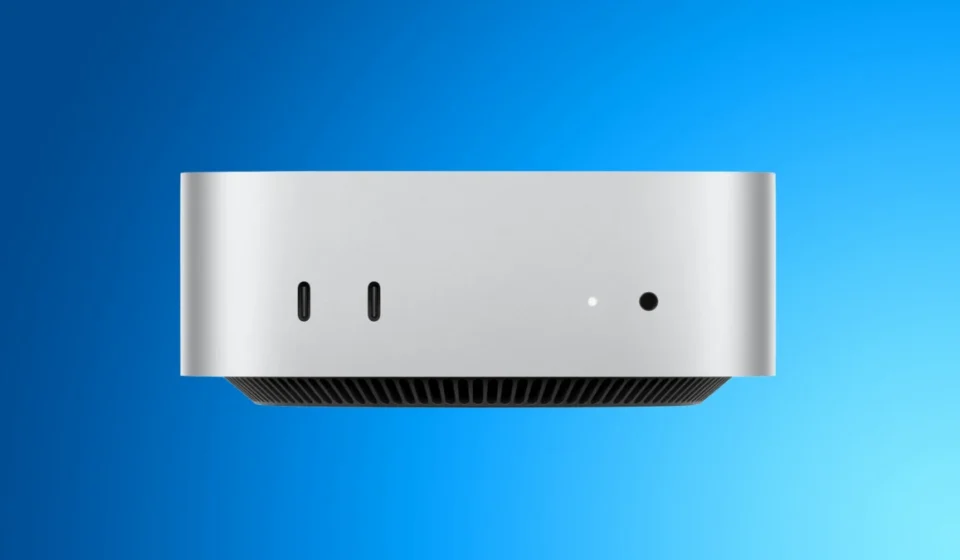

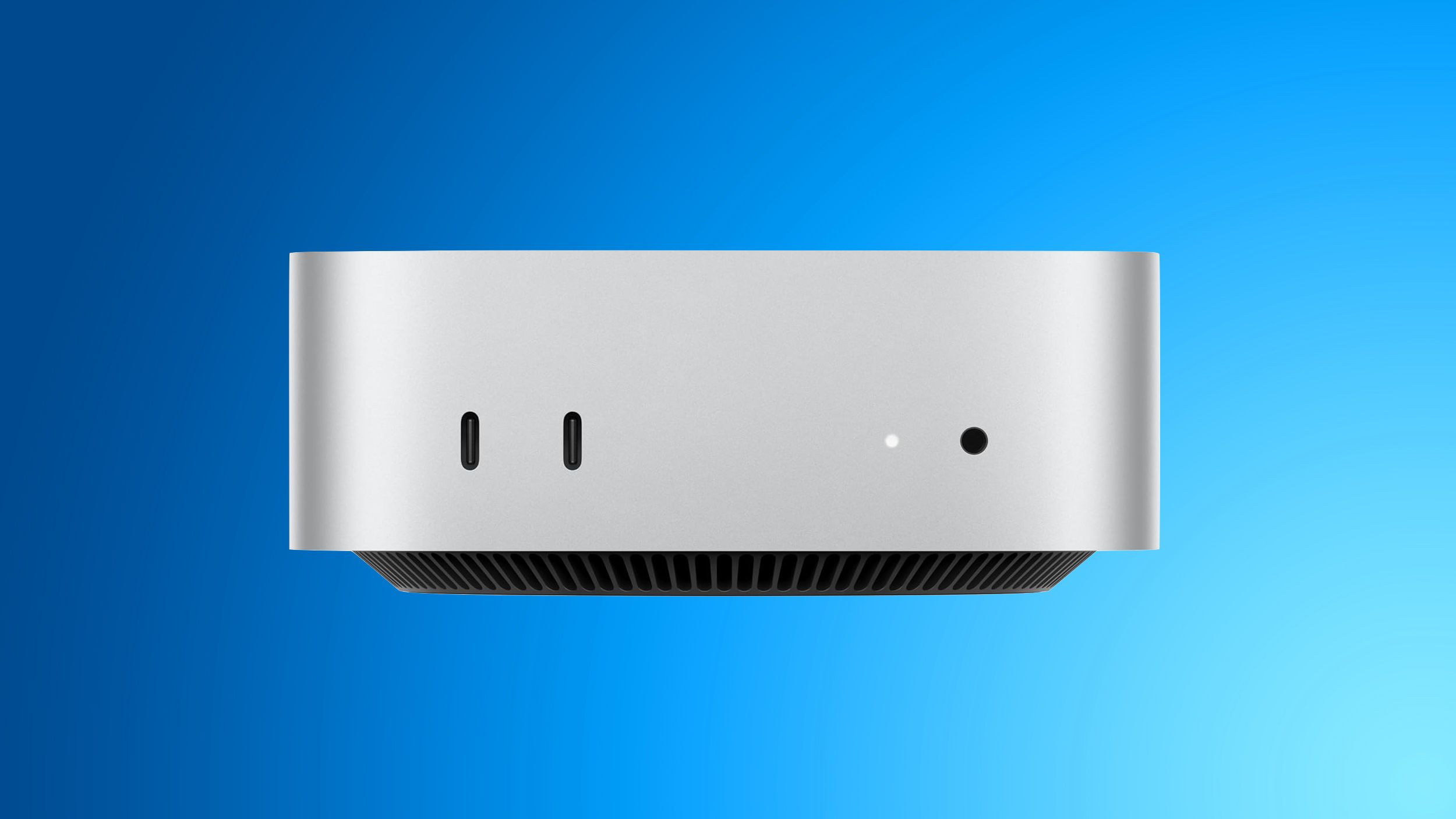
The latest iteration of Apple’s Mac mini, now featuring the M6 and M5 Pro chips, has introduced a significant shift in its internal architecture: the NAND storage is now soldered directly to the logic board, a departure from previous generations that allowed for user-upgradable SSDs. This change, confirmed by third-party repair and upgrade specialists like "Expand Mac mini," means that users can no longer expand their storage capacity through aftermarket modules, a practice that had become a popular cost-saving measure for many Mac mini enthusiasts.
This architectural alteration marks a notable divergence from the M4 and M4 Pro chip models, which had temporarily reintroduced the possibility of removable storage. The decision to revert to soldered SSDs raises questions about Apple’s long-term strategy for the Mac mini line and its relationship with the user upgradeability community. For years, the Mac mini has been positioned as a more accessible and customizable entry point into the Apple ecosystem, particularly for those who could leverage third-party upgrades to achieve higher storage capacities at a more palatable price point.
The Era of the Soldered SSD: A Return to Form?
Historically, the Mac mini has seen fluctuations in its storage upgradeability. Early Intel-based models offered more user-serviceable components. However, with the transition to Apple’s silicon, the trend has largely leaned towards integrated components. The M1 and M2/M2 Pro chip generations of the Mac mini, for instance, also featured NAND storage soldered to the logic board. The brief period of user-upgradable storage with the M4 and M4 Pro chips had therefore been viewed as a welcome, albeit temporary, concession. The current decision to revert to soldered storage suggests that this feature might have been a one-off exception rather than a sustained shift towards greater user flexibility.
"Expand Mac mini," a website specializing in providing plug-and-play SSD modules for Macs, has been a key resource for Mac mini owners seeking to enhance their storage. Their modules are designed to be functionally equivalent to Apple’s proprietary offerings but come at a considerably lower cost. This allowed users to purchase Mac mini models with the base storage configuration, often 256GB, and then install a higher-capacity aftermarket SSD for a fraction of the price of an official Apple upgrade. With the new M6 and M5 Pro models, this cost-effective upgrade path has been effectively closed.
"We will keep looking for an opening, but support for the M6 and M5 Pro now looks unlikely," stated a representative from "Expand Mac mini" in a recent blog post, signaling the challenges faced by third-party providers in adapting to Apple’s evolving hardware designs. The implication is that the internal interfaces and proprietary connectors may have undergone changes that prevent compatibility with existing upgrade solutions.
Performance Discrepancies: The Impact of Single NAND Chips
Beyond the issue of upgradeability, the new Mac mini configurations also present performance considerations related to storage. Reports indicate that all new Mac mini configurations equipped with 256GB of storage now utilize a single NAND chip. This contrasts with configurations offering 512GB of storage or more, which continue to employ dual NAND chips. This architectural difference has a tangible impact on SSD speeds.
According to testing conducted by AAPL Ch., utilizing Blackmagic’s Disk Speed Test benchmark, the 256GB models exhibit significantly slower read and write speeds compared to their higher-capacity counterparts. Specifically, the M6 Mac mini with 512GB of storage achieved read speeds of approximately 6,371.5 MB/s and write speeds of around 6,577.4 MB/s. In stark contrast, the 256GB M6 model recorded read speeds of about 3,216.8 MB/s and write speeds of approximately 3,000.2 MB/s.
For context, the previous generation M4 Mac mini with 256GB of storage, which also featured a single NAND chip, showed read speeds of around 2,792.5 MB/s and write speeds of about 2,014.5 MB/s. While the new 256GB M6 configuration offers an improvement over the M4 generation, it still lags considerably behind the dual-chip configurations.
| Mac mini Configuration | Read Speed | Write Speed |
|---|---|---|
| M6, 512GB | 6,371.5 MB/s | 6,577.4 MB/s |
| M6, 256GB | 3,216.8 MB/s | 3,000.2 MB/s |
| M4, 256GB | 2,792.5 MB/s | 2,014.5 MB/s |
The disparity in speeds means that while the average consumer might not notice the difference in day-to-day tasks, power users who frequently handle large files, edit videos, or run demanding applications will likely experience a performance bottleneck with the 256GB configuration. This necessitates a more strategic approach to configuration, with users needing to opt for at least 512GB of storage to ensure optimal SSD performance.
Interestingly, the use of a single NAND chip in 256GB configurations is not entirely new. Mac mini models equipped with the M2/M2 Pro chips and 256GB of storage also utilized a single NAND chip, resulting in slower SSD speeds compared to higher-capacity variants. This suggests that the M4/M4 Pro models with removable storage and potentially dual-chip configurations at 256GB might have been the anomaly, rather than the current soldered single-chip approach.
Broader Implications for the Mac Ecosystem
The decision to solder the SSD on the new Mac mini models is part of a broader trend observed across Apple’s product lines, including MacBooks and iMacs, where components are increasingly integrated and difficult to replace or upgrade. This strategy often allows for more compact designs, potentially improved thermal management, and tighter integration between hardware and software, which can lead to performance optimizations. However, it also reduces the lifespan of devices for users who require more storage than initially configured and increases the environmental impact associated with electronic waste.
The lack of user-upgradable storage can also influence purchasing decisions. Customers who anticipate needing more storage in the future may be compelled to purchase a higher-capacity model upfront, even if it means a significant initial cost increase. This can make devices less accessible to budget-conscious consumers or those who prefer a modular approach to their technology investments.
Apple has historically remained silent on specific design choices related to component integration and upgradeability. The company’s focus tends to be on the seamless user experience and the performance benefits derived from its integrated hardware and software. Without official comment, the exact rationale behind the soldered SSDs in the M6 and M5 Pro Mac mini models remains subject to interpretation, though it aligns with Apple’s established trajectory of hardware integration.
A Shift Driven by AI Demand?
Recent industry reports have hinted at a surge in demand for Mac mini and Mac Studio models, particularly within the enterprise sector, driven by the burgeoning field of artificial intelligence. According to The Information, Apple’s unusually early announcement of updated Mac mini and Mac Studio models, occurring before the typical autumn refresh cycle and just prior to new iPhone releases, was a direct response to this unexpected demand for AI hardware.
This AI-driven appetite could offer a potential explanation for the architectural changes. The integration of components like soldered SSDs might be seen as a way to optimize for performance, power efficiency, or specific configurations tailored for AI workloads. The increased demand also suggests a strategic imperative for Apple to deliver these machines efficiently, and soldered components can sometimes streamline manufacturing processes.
The M6 chip itself, which powers the new Mac mini, has shown promising performance gains in early benchmarks. A leaked Geekbench 7 result for the M6 chip indicated a single-core score of 4,071 and a multi-core score of 22,783, suggesting a significant leap in processing power over its predecessors. This emphasis on raw performance for AI tasks could have influenced design decisions regarding storage, prioritizing speed and integration over user-serviceability.
Conclusion: A Trade-Off for the Modern Mac mini
The shift to soldered SSDs in the latest Mac mini models represents a significant trade-off for consumers. While Apple continues to push the boundaries of performance with its M-series chips, the company is also consolidating its control over the internal architecture of its devices. This move effectively closes the door on aftermarket storage upgrades, a practice that had provided a valuable avenue for cost savings and customization for a dedicated segment of Mac mini users.
Furthermore, the performance disparity between 256GB and higher-capacity configurations highlights the importance of careful configuration for users with demanding storage needs. While the new 256GB Mac mini offers improved speeds over its M4 predecessor, power users will need to invest in 512GB or more to achieve the full potential of the Mac mini’s SSD capabilities. As the Mac mini continues to evolve, its appeal to different user segments will likely hinge on how effectively Apple balances raw performance, integration, and the enduring desire for user choice and flexibility. The absence of user-upgradable storage may alienate some, but for many within the burgeoning AI landscape, the enhanced performance and integrated design of the new Mac mini might prove to be a compelling proposition.