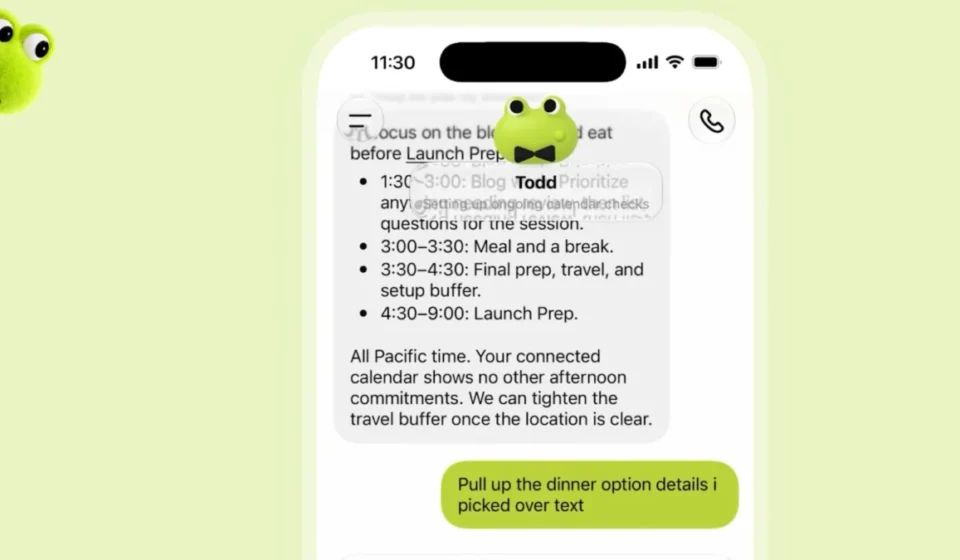
OpenAI Launches "Dots" to Revolutionize Personal AI Agents, Directly Challenging Meta’s Muse

OpenAI has officially unveiled "Dots," a groundbreaking initiative poised to redefine the landscape of personal artificial intelligence assistants. Announced on Tuesday, September 29, 2026, Dots are envisioned as "always-on agents built to handle everything," directly positioning OpenAI as a formidable competitor to Meta’s increasingly popular Muse agent. This strategic move by OpenAI signifies a significant escalation in the ongoing race to develop and deploy sophisticated, context-aware AI companions that seamlessly integrate into users’ daily lives.
The core of the Dots system is powered by the advanced GPT-6 Astra model, a testament to OpenAI’s continuous push in large language model development. Each Dot functions as a cloud-based entity equipped with a web browser, mirroring the operational architecture of Meta’s Muse. This architecture allows Dots to access and process information from the vast expanse of the internet, enabling them to perform a wide array of tasks and provide comprehensive support. A key feature highlighted by OpenAI is the agents’ capacity for continuous learning through user feedback. This iterative process ensures that Dots become increasingly personalized over time, adapting to individual preferences, thought processes, and the specific definition of "good" for each user. OpenAI emphasizes that these agents are designed to operate "24/7," offering round-the-clock assistance and proactive support for user goals.
The integration capabilities of Dots are extensive, with the system designed to connect with over 4,000 different applications. This broad compatibility suggests a future where Dots can act as a central hub for managing digital workflows, from scheduling appointments and managing emails to conducting in-depth research and automating complex tasks across various platforms.
A New Era of AI Interaction
OpenAI’s announcement detailed the multifaceted ways users can interact with their Dots. Communication can be initiated through the familiar ChatGPT interface, offering a direct and intuitive entry point. Furthermore, Dots will be accessible via popular communication platforms such as Slack and Microsoft Teams, facilitating seamless integration into existing professional and personal communication channels. While text-based interaction is already a core feature, OpenAI has indicated plans to introduce voice-based communication options, further enhancing the natural and fluid nature of human-AI collaboration.
The ability for Dots to "carry context across different channels" is a particularly significant advancement. This means that an agent can retain information and understanding from a conversation on one platform and apply it to an interaction on another, eliminating the need for users to repeatedly re-explain their situation or task. This persistent context awareness is crucial for building truly effective and efficient AI agents that can operate with a deep understanding of ongoing projects and user needs.
Beyond reactive assistance, Dots are also engineered for proactive engagement. The system is designed to perform "proactive research" on projects in the background, meaning users can delegate exploratory tasks and receive synthesized information without constant direct supervision. This feature has the potential to significantly boost productivity by offloading time-consuming research and analysis to the AI.
In terms of governance and control, Dots will adhere to ChatGPT’s existing permission structures, ensuring a familiar and secure environment for users. OpenAI is also implementing support for custom rules, allowing users to define specific tasks that require explicit approval before the Dot can proceed. This granular control mechanism is vital for building trust and ensuring that users remain in command of their AI assistants.
Phased Rollout and Future Expansion
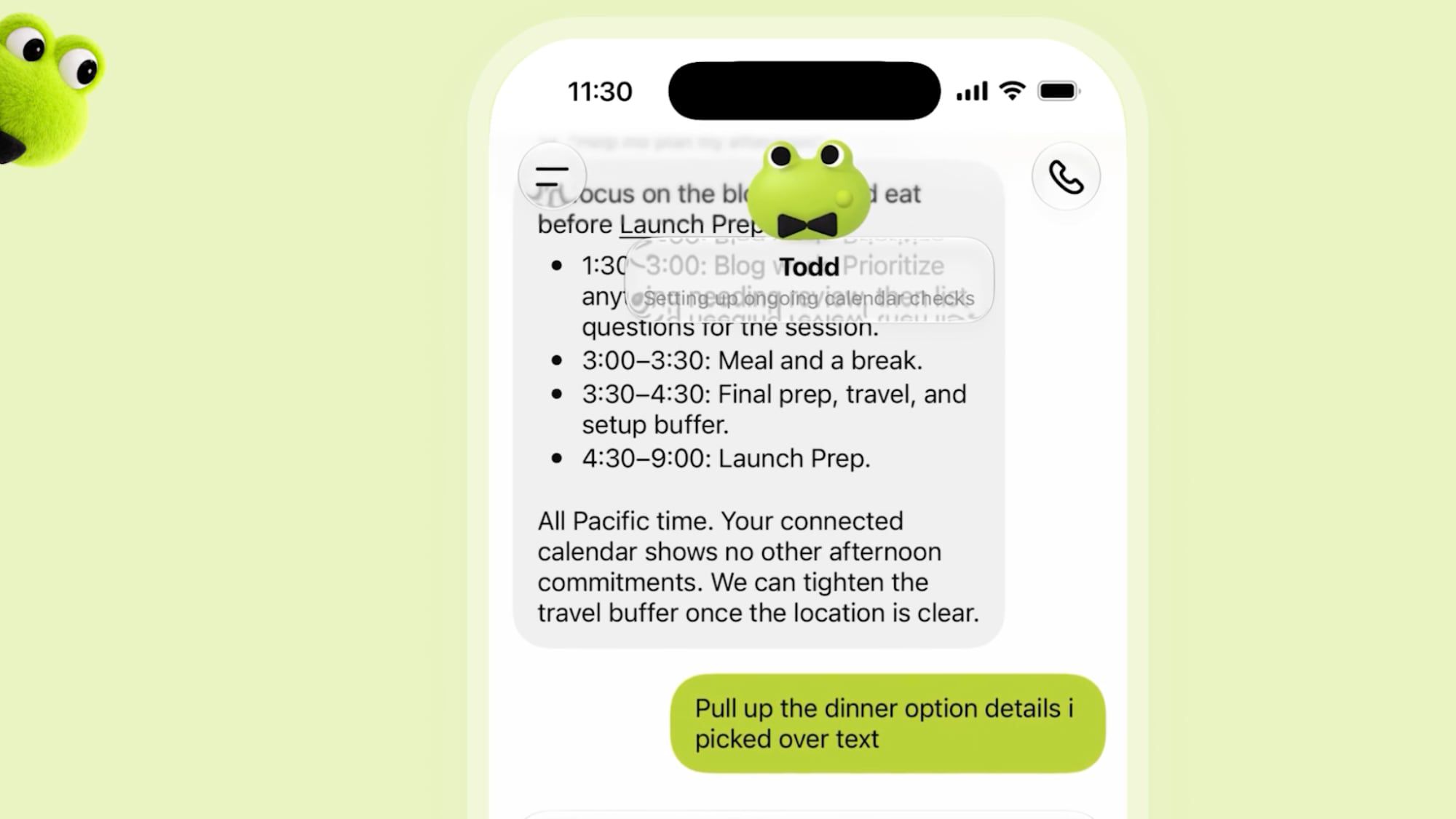
The initial rollout of Dots will focus on creating a "primary dot" for individual users, who can name their agent starting immediately. This personal agent is the first step in what OpenAI envisions as a more complex ecosystem, with plans for "teams of Dots" to emerge later. This suggests a future where specialized AI agents can collaborate to tackle larger or more complex tasks, further expanding the potential of AI assistance.
Currently, Dots are being made available to users subscribed to OpenAI’s Pro, Business Premium, and Enterprise plans in select markets. The company has stated that broader access for other user tiers will follow soon, indicating a strategic approach to scaling the new service. Eligible users will receive one Dot at no additional cost, a move likely intended to encourage widespread adoption and gather initial user feedback.
While conversations with the Dots will not count towards standard ChatGPT usage limits, the execution of tasks performed by the agent will draw from existing plan allowances. This tiered approach to resource allocation suggests that more complex or resource-intensive AI operations will be managed within the framework of paid plans. Setup for Dots will initially be available through the ChatGPT desktop application, with subsequent access to be integrated into the mobile app.
The Underlying Technology: GPT-6.1 Sol
Coinciding with the launch of Dots, OpenAI also announced the introduction of GPT-6.1 Sol. This latest iteration of their flagship model is described as a "major upgrade" to the previous GPT-6 Sol. The enhancements focus on key areas critical for advanced AI agents: agentic coding capabilities, improved computer use, and more sophisticated professional work execution. This signifies that the underlying intelligence powering Dots has been significantly refined, equipping them with the advanced reasoning and execution abilities necessary for complex, real-world applications.
Competitive Landscape and Industry Implications
The introduction of Dots by OpenAI is a direct challenge to Meta’s burgeoning AI agent ecosystem, particularly its Muse platform. Meta has been actively investing in personal AI hardware and software, with devices like the Muse Charm, an AI companion resembling a Tamagotchi, signaling their commitment to this emerging market. Apple, while reportedly exploring AI pendant concepts, has faced its own set of challenges, including ongoing legal disputes with OpenAI. Recent filings in Apple’s lawsuit against OpenAI have revealed accusations of trade secret theft by former Apple engineers who subsequently joined OpenAI. The lawsuit, filed in July 2026, alleges that these engineers used stolen proprietary data to train AI agents, a claim that casts a shadow over the competitive environment.
Furthermore, OpenAI’s own internal assessments of its integration with Apple’s Siri have revealed performance issues. Court documents indicate that the ChatGPT integration in Siri has been "persistently underperforming," with early results described as disappointing. This suggests that while OpenAI is pushing the boundaries of AI agent technology, the practical application and integration into established user interfaces can present significant hurdles.
The launch of Dots by OpenAI, coupled with the advancements in GPT-6.1 Sol, marks a pivotal moment in the evolution of personal AI. The ability for AI agents to operate autonomously, learn from user interactions, and integrate across a vast array of applications has the potential to fundamentally alter how individuals manage their digital lives and professional responsibilities. As these intelligent agents become more sophisticated and ubiquitous, questions surrounding data privacy, security, and the ethical implications of pervasive AI will undoubtedly move to the forefront of public discourse and regulatory scrutiny. The coming years will likely see an intense period of innovation and competition as companies like OpenAI and Meta vie for dominance in this transformative field, ultimately shaping the future of human-computer interaction.