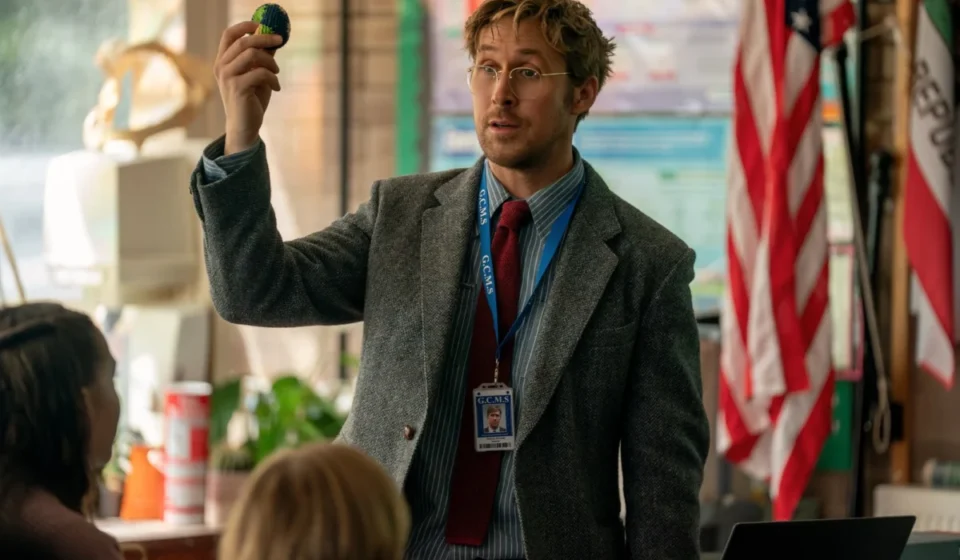

The highly anticipated science fiction comedy, Project Hail Mary, directed by the acclaimed duo Phil Lord and Christopher Miller, has officially landed in cinemas, marking it as a standout cinematic event of 2026. Based on the best-selling novel by Andy Weir, the film plunges audiences into an interstellar adventure with Dr. Ryland Grace, portrayed by Ryan Gosling, who awakens aboard a spaceship with a profound case of amnesia. As his memories gradually resurface, he recalls his critical mission: to venture into the cosmos to avert the imminent demise of both the Sun and humanity. His solitary journey takes an unexpected turn when he encounters Rocky, an enigmatic extraterrestrial described as a "crab-rock" alien, voiced by James P. Ortiz, who is engaged in a parallel quest to save his own civilization.
This ambitious production, driven by a stellar cast and a masterful crew, delivers a sweeping and majestic blockbuster experience. It masterfully intertwines a pulse-pounding alien adventure with deeply resonant human drama, drawing parallels to beloved classic sci-fi films such as The Martian, 2001: A Space Odyssey, and Interstellar. Early critical reception and audience reactions have already cemented Project Hail Mary as a modern masterpiece in the genre.

The Unlikely Astronaut: Ryan Gosling’s Transformative Role
At the heart of Project Hail Mary is Ryan Gosling’s compelling portrayal of Dr. Ryland Grace. Echoing the spirit of Andy Weir’s previous adaptation, The Martian, the film centers on an everyman thrust into extraordinary circumstances, navigating the perils of deep space with a blend of wit and resilience. Unlike the seasoned astronaut Mark Watney in The Martian, Grace initially appears to be the least likely candidate for a mission of such cosmic significance. Gosling imbues Grace with a palpable sense of vulnerability and ordinariness from the outset, effectively conveying the character’s profound disorientation and the immense pressure of being humanity’s last hope.
Gosling, who has previously demonstrated his prowess in complex sci-fi roles such as in Blade Runner 2049 and First Man, takes a different approach here. Grace is not the stoic, confident hero often seen in these films. Instead, Gosling taps into a more comically inept yet endearing persona, reminiscent of his performance in The Nice Guys. This allows him to showcase a remarkable range as an actor, proving his versatility beyond more traditional heroic archetypes. The film’s narrative arc sees Grace evolve from a bewildered individual to a courageous savior, a transformation that is as emotionally engaging as it is thrilling.
Rocky: A Galactic Companion of Unprecedented Charm
A significant highlight of Project Hail Mary is the introduction of Rocky, a truly memorable alien character brought to life by the vocal talents of James P. Ortiz. The chemistry between Grace and Rocky is nothing short of extraordinary, forming the emotional core of the film. Rocky’s arrival aboard Grace’s ship is marked by an infectious curiosity and enthusiasm, akin to that of an eager golden retriever. Their initial interactions quickly evolve into a camaraderie that mirrors that of close college roommates, as they learn to coexist and collaborate under the immense strain of their shared mission.

Rocky’s dialogue, delivered in a rapid-fire, garbled cadence, provides abundant comic relief, evoking the charm of memorable robotic characters from films like The Mitchells vs. The Machines. Beyond his humor, Rocky exhibits profound loyalty and deep affection for Grace, demonstrating an unwavering commitment to the survival of both their species. Despite his alien physiology, Rocky’s character is defined by an unwavering purity of heart and a spirit of boundless generosity. This unique interspecies friendship serves as a powerful testament to the universal nature of connection and cooperation.
The Visionary Touch of Lord and Miller
The directorial reins of Project Hail Mary were shared by the celebrated filmmaking duo Phil Lord and Christopher Miller. This marks their first feature film directorial collaboration since their brief involvement with Solo: A Star Wars Story in 2018. While their output as directors has been selective, their distinctive style of clever, subversive storytelling has been consistently evident in their animated work, particularly the critically acclaimed Spider-Man: Into the Spider-Verse films. These projects are characterized by a blend of quirky humor, self-referential wit, and a deep understanding of genre conventions, all of which are hallmarks of Project Hail Mary.
The film can be categorized as a metamodern space opera, a genre that Lord and Miller expertly navigate. They pay homage to a rich lineage of science fiction classics, including Apollo 13, Close Encounters of the Third Kind, and 2001: A Space Odyssey. Rather than aiming for outright groundbreaking innovation, Project Hail Mary focuses on delivering a fresh, engaging, and thoroughly enjoyable cinematic experience. The sheer originality of seeing Ryan Gosling engage in karaoke on a holodeck with an alien creature underscores the film’s unique and delightful approach.

Phil Lord, in a conversation with BFI, elaborated on the film’s thematic underpinnings: "One thing about this story that’s unique is that a lot of films are about someone who feels at home on Earth, wakes up in space, and they feel lonely. This is a movie about someone who feels lonely on Earth. They go to space and find a friend. We wanted space to be, in a funny way, inviting. The old vacuum of space is actually warm and inviting. You’re closer to heaven. The way the film is textured visually, we wanted it to feel more homey." This directorial philosophy imbues the vastness of space with a sense of warmth and accessibility, subverting typical sci-fi tropes.
Lord and Miller continue their legacy of infusing comedic narratives with profound emotional depth and unwavering optimism. Beneath the surface of Grace’s interstellar odyssey lies a poignant exploration of a man confronting crippling self-doubt and discovering his inner courage. Grace emerges not as a flawless hero, but as an unconventional protagonist who finds his strength through self-belief and the profound connection he forms with his alien companion.
The film’s exceptional writing is a testament to the talent of Oscar-nominated screenwriter Drew Goddard. Having previously penned scripts for influential sci-fi films such as Cloverfield and The Martian, Goddard skillfully translated Andy Weir’s narrative to the screen, infusing it with both humor and genuine humanity. Goddard, in an interview with Variety, commented on the film’s central premise: "In Project Hail Mary, the main character is a fish out of water. You need it to feel rough around the edges, even a little sloppy. We don’t want to feel like he’s a perfect astronaut. And then there’s the character of Rocky… Phil and Chris thrive in finding the humanity inside of these crazy characters. That’s what this film required." This collaborative synergy between director and writer has resulted in a story that is both scientifically intriguing and deeply emotionally resonant.

A Spectacle of Cinematic Craftsmanship
The success of Project Hail Mary is also attributable to the exceptional artistic contributions from its production team. Cinematographer Greig Fraser, renowned for his breathtaking work on films like Rogue One: A Star Wars Story, The Batman, and the Dune saga, once again delivers a visually stunning experience. Fraser’s masterful use of light and composition captures the epic scale and profound beauty of Grace and Rocky’s cosmic journey. A particularly awe-inspiring sequence occurs when Grace harvests Astrophage from the planet Adrian, with the visuals of him floating amidst a sparkling red stream leaving audiences captivated.
Remarkably, Lord and Miller revealed to The Hollywood Reporter that the film achieved its spectacular visuals without the use of any green or blue screens. This innovative approach to filmmaking adds a layer of authenticity and immersion to the audience’s experience. Complementing the stunning cinematography is an evocative original score by composer Daniel Pemberton, known for his work on Spider-Man: Into the Spider-Verse. Pemberton’s music masterfully blends diverse styles, creating a unique auditory landscape that mirrors the film’s eclectic narrative. From the whimsical strains of a French accordion accompanying Grace and Rocky’s celestial waltz to the energetic pulse of The Beatles fueling a probe launch, the score enhances the emotional arc and thematic richness of the film.
In an era saturated with science fiction releases, Project Hail Mary has undeniably emerged as a beacon of originality and excellence in 2026. As audiences anticipate further cinematic offerings such as Spider-Man: Brand New Day, Dune: Part Three, Disclosure Day, and Avengers: Doomsday, it is clear that Project Hail Mary has already secured its place as one of the year’s most significant and celebrated blockbusters, a testament to its innovative storytelling, captivating performances, and groundbreaking filmmaking. The film’s blend of scientific plausibility, heartfelt character development, and imaginative spectacle has resonated deeply with critics and audiences alike, solidifying its status as a modern sci-fi classic.