
The landscape of online interaction, particularly in the realm of dating, is poised for a significant evolution as Tinder announces a groundbreaking partnership with Worldcoin, the biometric identity company founded by OpenAI CEO Sam Altman. This collaboration aims to introduce a novel method of human verification within the popular dating app: an iris scan conducted via a physical orb device. This development signals a proactive response to the escalating challenge of distinguishing genuine users from sophisticated bots and AI-generated profiles that increasingly populate digital spaces.
The Genesis of World ID and the Orb Verification Process

The partnership between Tinder and Worldcoin is rooted in Worldcoin’s overarching mission to establish a global digital identity system that can reliably verify human uniqueness in an era where artificial intelligence is rapidly advancing. Founded on the premise that proving one’s humanity online will become critically important as AI bots proliferate, Worldcoin has developed a proprietary solution: the Orb. This specialized scanning device captures high-resolution images of a user’s irises at physical Worldcoin outlets. This biometric data is then used to generate a unique World ID, serving as a decentralized, pseudonymous digital passport that attests to an individual’s real-world existence.
The concept behind World ID is to create a verifiable credential that can be used across various online platforms and services, offering a more robust alternative to traditional login methods or CAPTCHA tests, which are becoming increasingly susceptible to AI circumvention. The underlying technology leverages zero-knowledge proofs, a cryptographic method that allows one party to prove to another that a given statement is true, without revealing any information beyond the truth of the statement itself. In this context, it means a user can prove they are a unique human without necessarily disclosing sensitive personal data beyond what is required for the initial verification.
Tinder’s Integration and User Incentives

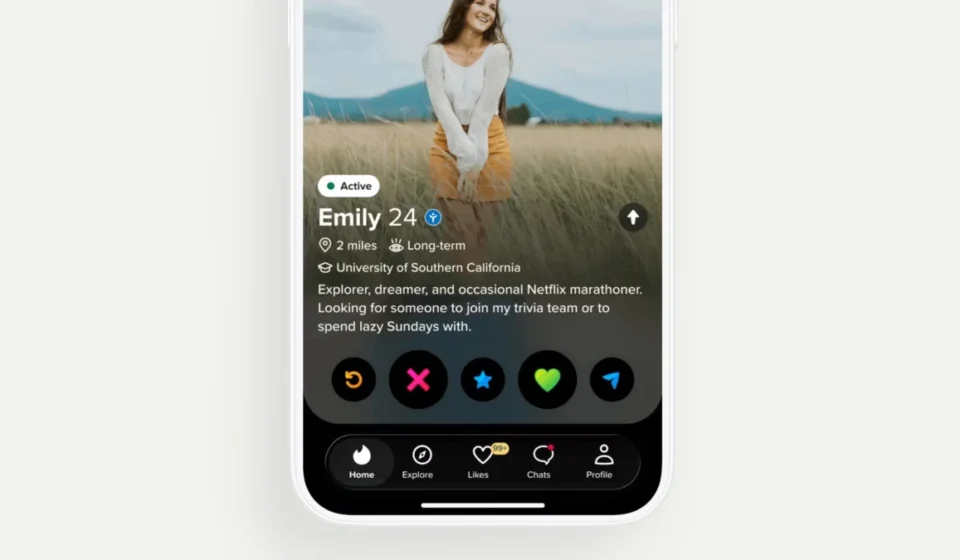
This is not the first foray into biometric verification for Tinder and Worldcoin. The two entities conducted a pilot program in Japan earlier this year, which reportedly yielded positive results, paving the way for the current global rollout. For Tinder users, the adoption of World ID verification presents an optional pathway to enhance their profile’s credibility. Those who opt to undergo the iris scan and obtain a World ID will be able to display a special badge on their Tinder profile, signifying their verified human status.
To incentivize user participation in this new verification process, Tinder is offering a tangible benefit: five complimentary Boosts. Boosts are a premium feature that temporarily increases a user’s profile visibility, thereby enhancing their chances of making connections. By linking this valuable in-app perk to the World ID verification, Tinder aims to encourage a significant number of its user base to embrace this novel approach to identity confirmation. The company’s strategy hinges on the belief that the prospect of increased visibility and a more trustworthy profile will outweigh any initial reservations users might have about submitting biometric data.
Beyond Dating: World ID’s Expanding Ecosystem

The implications of Tinder’s partnership with Worldcoin extend far beyond the realm of online dating. World ID is strategically positioning itself as a foundational layer for digital identity across a wide spectrum of applications and services. This ambition is already being realized through a series of integrations with prominent technology companies and platforms.
Zoom, the ubiquitous video conferencing service, has begun integrating World ID to enable meeting hosts to verify the identities of participants before they join a call. This feature could be particularly valuable for sensitive or private meetings, ensuring that only authenticated individuals gain access. Similarly, DocuSign, a leader in electronic signatures, is incorporating World ID technology, allowing users to mandate World verification for the signing of contracts. This could introduce an additional layer of assurance in digital agreements, mitigating risks associated with impersonation or fraudulent submissions.
The fight against online misinformation and manipulation is another area where World ID is being deployed. Reddit, the popular social aggregation platform, is reportedly considering the adoption of World ID as a tool for bot detection. By requiring users to have a verified World ID, Reddit could significantly reduce the prevalence of automated accounts used for spamming, spreading disinformation, or artificially amplifying content.

Furthermore, Worldcoin is actively addressing the issue of ticket scalping and bot-driven market manipulation. Through its Concert Kit initiative, the company is empowering artists and event organizers to reserve concert tickets exclusively for verified humans. This innovative solution aims to circumvent the practice of bots purchasing large quantities of tickets and reselling them at inflated prices, thereby making live events more accessible to genuine fans. The Concert Kit is slated for an initial test run at an upcoming Bruno Mars World Tour performance in San Francisco, offering a real-world demonstration of its efficacy.
The Broader Implications and Emerging Concerns
The rapid expansion of World ID into diverse sectors underscores a significant shift in how digital identity and human verification might be managed in the future. The core premise is to combat the growing threat of AI and bots, which can undermine the integrity of online platforms, influence public discourse, and create unfair market conditions. By providing a verifiable proof of humanity, World ID aims to restore a degree of trust and authenticity to the digital world.

However, this ambitious vision is not without its critics and challenges. Privacy advocates and regulatory bodies have raised significant concerns regarding the collection and storage of sensitive biometric data. The potential for misuse, data breaches, or government surveillance remains a paramount concern for many. In fact, governments in Brazil and several other countries have already moved to ban Worldcoin operations, citing privacy violations and the potential for mass surveillance.
The ethical considerations are multifaceted. While the promise of a more secure and authentic online experience is appealing, the trade-off involves entrusting a private entity with highly personal biometric information. The long-term implications of such a centralized system for identity verification are yet to be fully understood. Questions about data ownership, consent, and the potential for exclusion or discrimination based on access to or willingness to use this technology are crucial and will undoubtedly continue to fuel debate.
As World ID continues its expansion, its success will likely depend on its ability to navigate these complex ethical and regulatory landscapes while demonstrating tangible benefits to users and platforms alike. The partnership with Tinder represents a significant step in this journey, bringing biometric verification into the highly personal and social sphere of online dating, and setting a precedent for how we might prove our humanity in an increasingly automated world. The question of whether this dystopian-sounding future, where an eyeball scan is the key to human connection and online interaction, is ultimately a step forward or backward remains a subject of ongoing scrutiny and public discourse.